Padua Churches Beyond The Santo
Padua's churches hold two UNESCO stories: Giotto's Scrovegni Chapel and the fourteenth-century fresco cycles spread across eight monuments. Here is what each one is, what entry costs where a price is published, and how to plan the walk.
Short answer
The five church stops that define Padua are the Scrovegni Chapel (timed entry, EUR 15 full including three civic museums), the Basilica of Saint Anthony (free entry), the Cathedral Baptistery, the Chiesa degli Eremitani and the Oratorio di San Giorgio, all but the first two linked by the UNESCO Padova Urbs Picta fresco listing.
Padua, the inland city in the Veneto about 36 km in a straight line from Venice, holds one of the densest concentrations of frescoed church interiors in Italy. Two UNESCO World Heritage listings touch its religious buildings directly: the Orto Botanico was inscribed in 1997, and in 2021 eight monuments of the old centre, several of them churches, entered the list together as Padova Urbs Picta, the fourteenth-century fresco cycles. The Basilica of Saint Anthony, with free entry and the saint's tomb, draws pilgrims year round. Giotto's cycle in the Scrovegni Chapel, painted between 1303 and 1305, needs a timed booking made in advance. This guide covers the major churches, what entry costs where a price is published, the rules that apply inside, and a sensible order for seeing them on foot.
What Are The Most Important Churches In Padua?
The churches that define Padua are the Scrovegni Chapel with Giotto's frescoes of 1303 to 1305, the Basilica of Saint Anthony with the saint's tomb, the Cathedral and its Baptistery with Giusto de' Menabuoi's frescoes, the Chiesa degli Eremitani, and the Oratorio di San Giorgio, with the Basilica of Santa Giustina beside Prato della Valle as the large fifth stop. Four of these appear on the UNESCO Padova Urbs Picta list of 2021, which groups eight monuments of the old centre under one inscription.
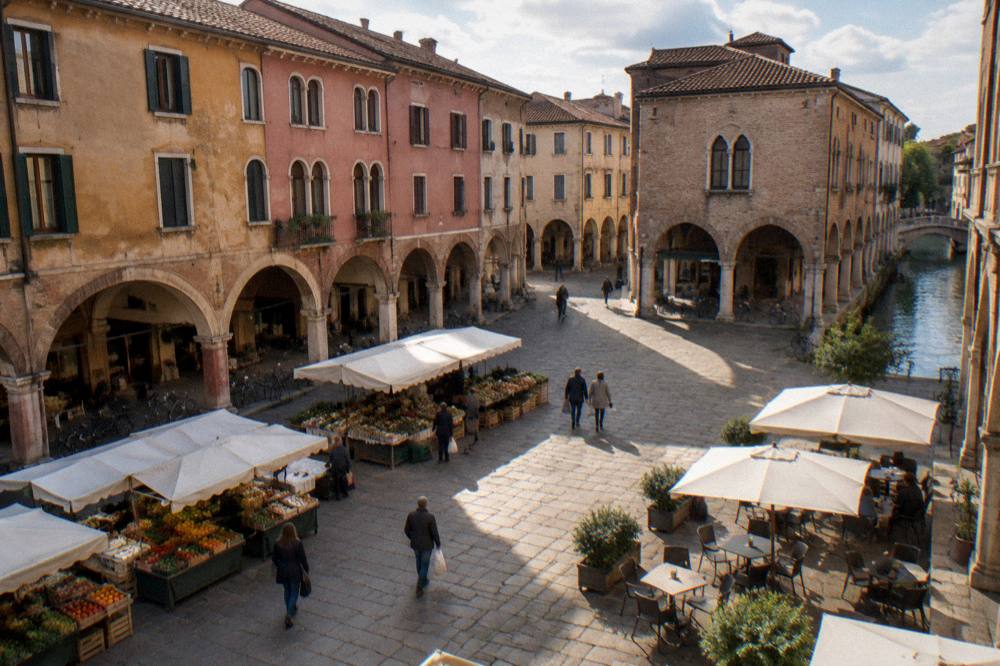
The list rewards reading closely, because the churches cluster. The Scrovegni Chapel, the Eremitani church and the Musei Civici stand within a two-minute walk of each other in the north of the centre. The Cathedral and Baptistery sit between them and the two market squares, Piazza delle Erbe and Piazza dei Frutti, whose stalls run Monday to Saturday. The Santo and Santa Giustina face each other across the Santo and Prato district in the south east, with Prato della Valle's canal and statue ring beside them. A churches walk of Padua is therefore really three short legs, and the full picture is on the site's one day Padua itinerary.
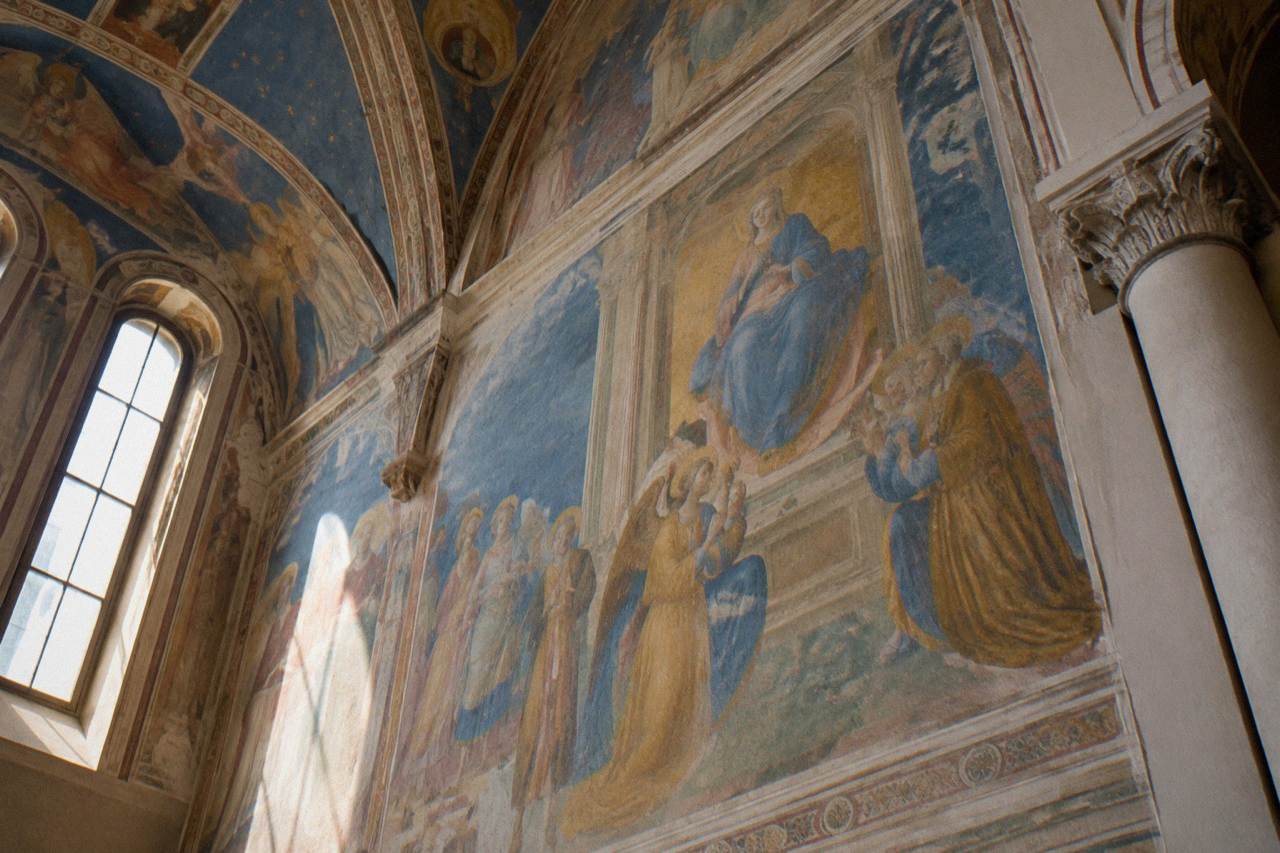
What surprises readers who know only the headline names is how much of the story is fourteenth-century wall painting. The UNESCO inscription covers the Cappella degli Scrovegni, the Chiesa dei Santi Filippo e Giacomo agli Eremitani, Palazzo della Ragione, the Cappella della Reggia Carrarese, the Battistero della Cattedrale, the Basilica e Convento di Sant'Antonio, the Oratorio di San Giorgio and the Oratorio di San Michele. The site's Padova Urbs Picta guide unpacks the full list; the pages below focus on the buildings you actually walk into.
How Do You Visit The Scrovegni Chapel?
The Scrovegni Chapel is timed entry only, with groups of at most 25 people admitted every 15 minutes from 9:00 to 19:00, last entry 18:45, and a full daytime ticket costs EUR 15 plus a EUR 1 booking fee, also covering the Musei Civici Eremitani and Palazzo Zuckermann, per the museums' own price list. You book a slot in advance on the chapel's own site or by phone; same-day online booking does not exist, and unbooked visitors must ask at the museum ticket office about leftover availability.
The visit itself is short and strictly staged. You arrive five minutes before the time on your ticket and pass first through a climate-controlled waiting room, the ticket office standing about 100 m from the chapel. After that you get roughly 15 minutes inside with the frescoes. Latecomers are not admitted and must make a new paid booking, so the five-minute rule is worth treating as a hard one. Groups are asked to be there at least 45 minutes early.
Two calendar facts matter for 2026 and early 2027. The chapel is closed 16 to 27 November 2026 for the annual fresco inspection, and evening visits under the "Giotto sotto le stelle" programme run 25 March to 1 November, 19:00 to 22:00 every 20 minutes, last entry 21:20, chapel only. The daytime ticket, unlike the evening one, bundles in the Eremitani museums, including on non-holiday Mondays, and Palazzo Zuckermann. Advance slots are bookable as far as 10 February 2027. Full booking detail, including the call-centre number, is on the site's Scrovegni Chapel tickets guide.
| Ticket | Full price | Reduced | Notes |
|---|---|---|---|
| Musei + Cappella daytime | EUR 15 (+ EUR 1 booking fee) | EUR 11 | Covers chapel, Musei Civici Eremitani, Palazzo Zuckermann |
| Musei only | EUR 11 | EUR 9 | Eremitani museums and Palazzo Zuckermann, no chapel |
| Residents of Padua | EUR 5 | Chapel and museums | |
| Family card | EUR 30 (+ EUR 1 per person chapel booking) | Up to two adults and two under-18s | |
| Evening visit "Giotto sotto le stelle" | Separate ticket | 25 Mar to 1 Nov, 19:00 to 22:00, chapel only |
What Should You Know Before Entering The Basilica Of Saint Anthony?
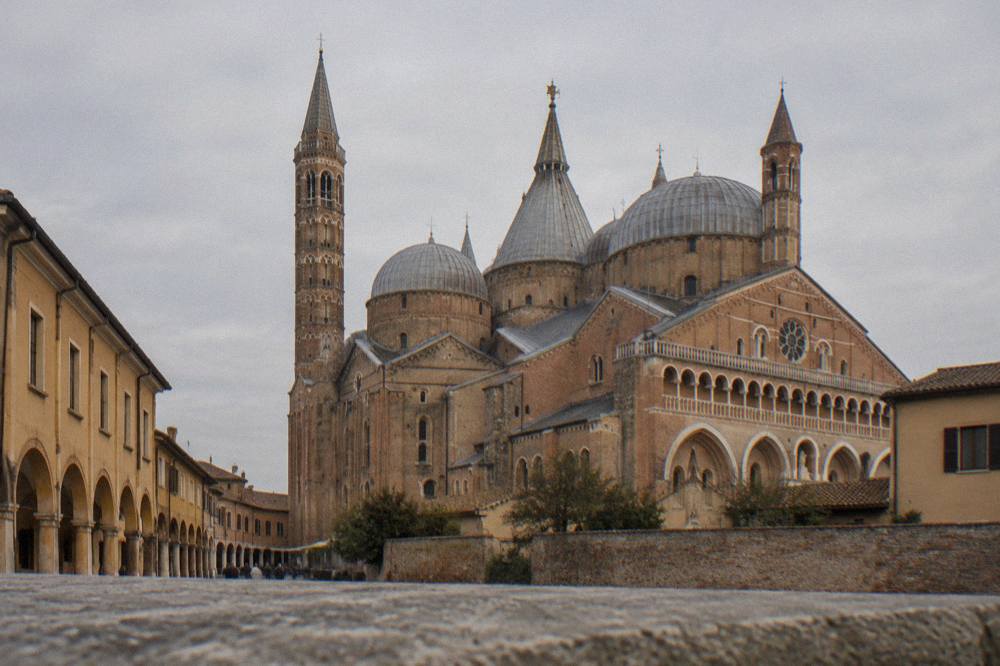
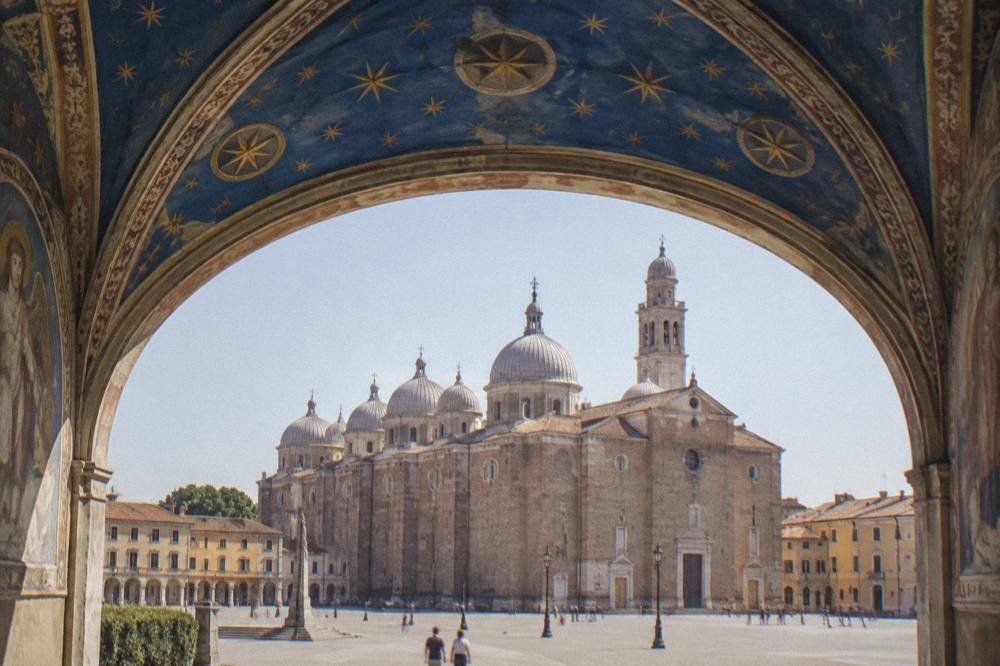
The Basilica of Saint Anthony, the Santo, has free entry and holds the saint's tomb and the Chapel of the Relics, and its opening hours change around religious services, so the basilica's own site is the place to check times before you go. Saint Anthony died on 13 June 1231 in Arcella on the edge of Padua, and construction of the basilica began in 1232. The building is one of the eight monuments of the UNESCO Padova Urbs Picta inscription.
The dress rule on the basilica's own regulation page asks for clothing suitable to a church environment. Photography and visiting are suspended during functions, which is the practical reason hours vary. The two points inside that the site's sources name are the Chapel of Saint Anthony, where the tomb stands, and the Chapel of the Relics. Outside, in Piazza del Santo, stands Donatello's equestrian statue of the condottiere Erasmo da Narni, known as the Gattamelata, and Donatello's work on the high altar is reported by the basilica's own pages.
The basilica anchors the city's main religious festival. The Tredicina, thirteen days of preparation, ran 31 May to 12 June in 2026, with the feast of Saint Anthony on 13 June, an annual event whose 2027 dates had not been announced. If your trip falls in late spring, the Saint Anthony of Padua guide covers the history in full, and the basilica's own page covers the building. A local-led walk is one way to see the Santo and the other churches with the story attached: Check availability for the Live Padua as a local walk on its operator listing.
Which Padua Churches Are Part Of The UNESCO Fresco Listing?
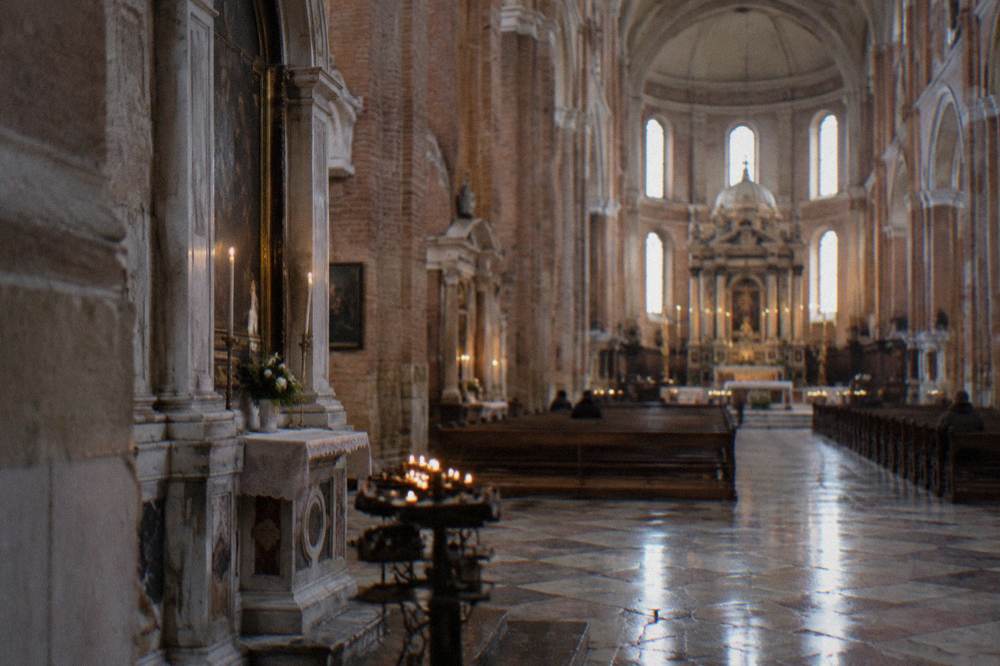
Padova Urbs Picta, inscribed in 2021 under criterion (ii), groups eight monuments of Padua's old centre with fourteenth-century fresco cycles: the Scrovegni Chapel, the Eremitani church, Palazzo della Ragione, the Carrarese chapel, the Cathedral Baptistery, the Basilica of Saint Anthony, the Oratorio di San Giorgio and the Oratorio di San Michele. Five of the eight are churches or chapels you can visit, and the inscription is what ties them into one itinerary.
The logic of the listing, as UNESCO frames it, is that Padua's fourteenth-century wall painting marks a turning point in the figurative art of the period, beginning with Giotto's cycle of 1303 to 1305 and continuing with later masters working across the city's civil and religious buildings. Giotto painted the Scrovegni cycle "in just two years, between 1303 and 1305", in the chapel's own words, for Enrico degli Scrovegni, on land bought on 3 February 1300 that included remains of the Roman amphitheatre, which is why the building is also called the Arena Chapel, Padua's arena, never Verona's.
| Urbs Picta monument | Type | What the frescoes are |
|---|---|---|
| Cappella degli Scrovegni | Chapel | Giotto's cycle of 1303 to 1305: Lives of the Virgin and Christ, Vices and Virtues, Last Judgment |
| Chiesa dei SS. Filippo e Giacomo agli Eremitani | Church | Church of the Hermits, partly lost Mantegna frescoes after the 1944 bombing |
| Palazzo della Ragione | Civic hall | Frescoed halls above the market, EUR 8 full entry |
| Cappella della Reggia Carrarese | Chapel | Chapel of the Carrarese palace |
| Battistero della Cattedrale | Baptistery | Giusto de' Menabuoi's fresco cycle |
| Basilica e Convento di Sant'Antonio | Basilica | The Santo, free entry, saint's tomb |
| Oratorio di San Giorgio | Oratory | Frescoed oratory near the Santo |
| Oratorio di San Michele | Oratory | Small oratory in the centre |
For a combined ticket across the eight sites, the city markets a card under the Urbs Picta name; the site's Urbs Picta card guide tracks what is confirmed. Note that even card holders still need the Scrovegni Chapel's own timed booking with its EUR 1 fee.
What Can You See Inside Padua's Cathedral And Baptistery?
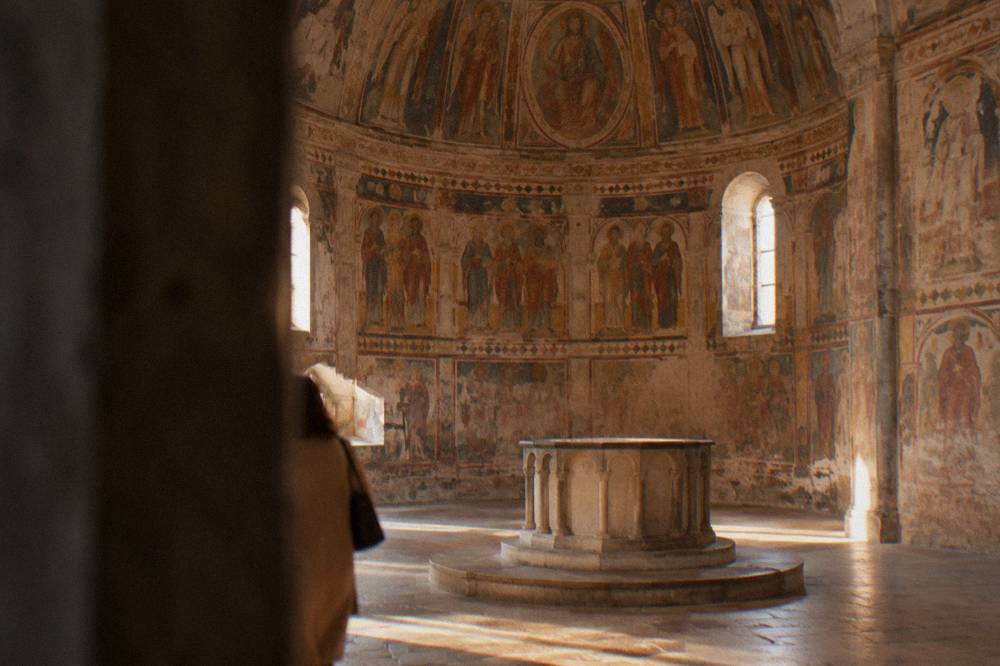
Padua's Cathedral Baptistery, one of the eight UNESCO Urbs Picta monuments, carries Giusto de' Menabuoi's fourteenth-century fresco cycle across its walls and dome, while the Cathedral itself stands beside it on Piazza Duomo; no published price or hours for either building appear in the sources this site uses, so check the current details on the official ticket page before visiting. The pair sits a short walk south of the Scrovegni Chapel and the Eremitani complex, between the fresco north and the market squares.
The Baptistery is the one to plan around. Its interior is painted almost without a break, scenes stacked from floor to dome, and it is a scheduled stop on a bookable combined ticket with the Diocese museum, whose live listing carries the current price. The Cathedral, rebuilt in later centuries, is a working church rather than a fresco site, and its interior rewards a short unhurried look rather than a long one. Everything else covered here is indexed on Padua Travel Guide.
Because the site's facts carry no price or timetable for the Cathedral and Baptistery, the practical move is to treat the Baptistery as part of the Urbs Picta circuit and confirm entry details on the day. The surrounding quarter, the centro storico, is compact enough that a detour costs minutes, not an afternoon; the site's centro storico overview and the areas pages cover the geography.
What About Santa Giustina, The Eremitani And The Smaller Churches?
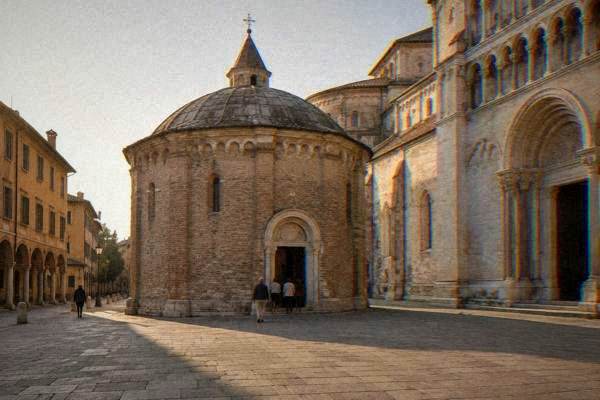
The Basilica of Santa Giustina stands beside Prato della Valle at the edge of the old centre, the Chiesa degli Eremitani stands by the Scrovegni Chapel and holds the remains of Mantegna's Ovetari frescoes, destroyed in the 1944 bombing, and the Oratorio di San Giorgio and Oratorio di San Michele complete the small UNESCO set.
The Eremitani church deserves a deliberate stop even though its fresco story is a hard one. Mantegna's Ovetari Chapel cycle was largely destroyed when the church was bombed in 1944, and what survives is displayed alongside the rest of the interior. The church shares its piazza with the Scrovegni Chapel and the Musei Civici Eremitani, which the daytime chapel ticket already covers, so the natural order is chapel, waiting room and all, then the church, then the museums.
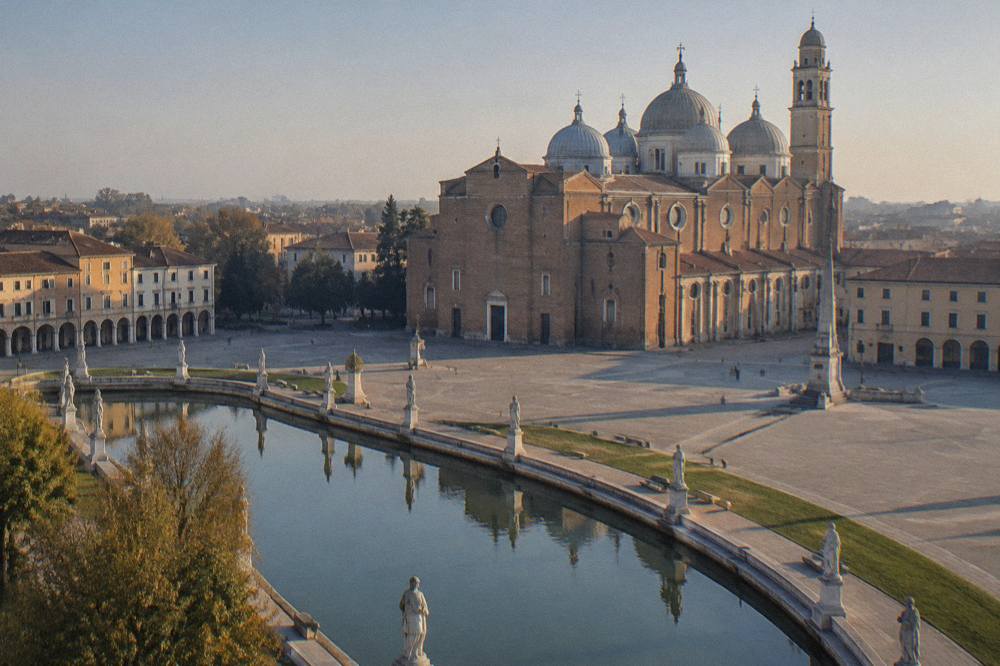
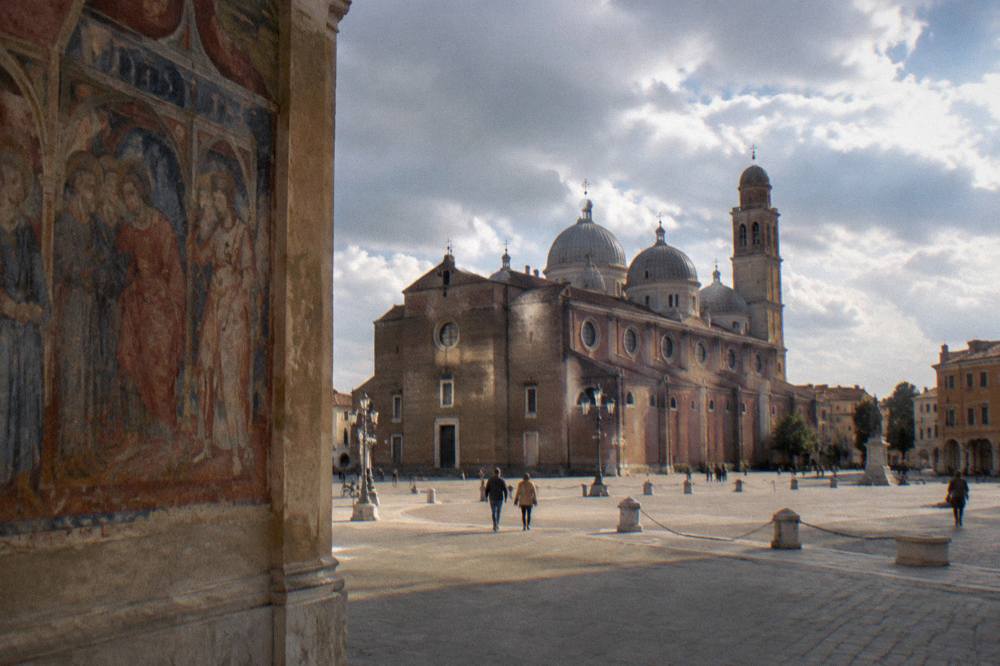
Santa Giustina is the size event of the set. The great Benedictine church closes the view down the axis from the Santo toward Prato della Valle, the square the Venetian Senate declared communal space in 1767, with its canal and double ring of numbered statues. The Saturday market spreads across the Prato from 8:00, winter until 19:00 and summer until 20:00, which pairs a church visit with the city's biggest market morning. The Santo and Prato area guide covers the whole quarter.
How Much Time Do You Need For The Churches Of Padua?
A focused churches circuit of Padua needs a full day: about 15 minutes inside the Scrovegni Chapel plus the museums on the same ticket, an unhurried hour at the Santo, and shorter stops at the Baptistery, the Eremitani and the Oratories, strung together on foot through a centre that measures roughly two kilometres end to end. With two days, the fresco circuit spreads comfortably and leaves room for Prato della Valle and Santa Giustina at leisure.
The ordering matters more than the pace. Book the Scrovegni slot first and build the day around it, because that is the one appointment. Morning light and market hours both favour starting in the north: chapel slot, Eremitani church, Musei Civici, then the walk south past the Cathedral and Baptistery to Piazza delle Erbe, whose stalls trade 7:30 to 13:30 on weekdays and to 20:00 on Saturday. The Santo, the Oratories and Santa Giustina fill the afternoon. Anyone with only a day total in the city should read the one day itinerary rather than improvising.
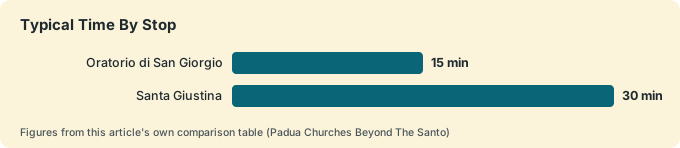
| Stop | Typical time | Entry cost | Booking |
|---|---|---|---|
| Scrovegni Chapel | About 15 min inside | EUR 15 full daytime (+ EUR 1 fee) | Timed slot, booked ahead |
| Musei Civici Eremitani | 45 to 90 min | Included in chapel daytime ticket | None |
| Palazzo Zuckermann | 30 to 45 min | Included in chapel daytime ticket | None |
| Cathedral Baptistery | 20 to 30 min | On the operator's live listing for the combined ticket | Optional |
| Basilica of Saint Anthony | 45 to 60 min | Free | None; check hours around services |
| Chiesa degli Eremitani | 15 to 20 min | Free church | None |
| Oratorio di San Giorgio | 15 min | Check the official ticket page | Check locally |
| Santa Giustina | 30 min | Check the official ticket page | None |
Season shapes the day more than the route. Under the ERA5 reanalysis, 1991-2020 normals for Padua, July and August carry a mean daily high of 28.8 C and November is the month with the highest rain total at 114 mm, so summer favors early slots and a long shaded lunch, while late autumn favors indoor time; the site's best time to visit guide has the month-by-month detail.
What Rules Apply Inside Churches In Padua?
The rules that matter in Padua's churches are a dress code suitable to a church environment at the Santo, no visiting during religious functions, the Scrovegni Chapel's timed regime of 25 people every 15 minutes with arrival five minutes before the slot, and quiet behaviour at the tomb chapels, with the emergency number 112 worth knowing anywhere in the city. None of this is unusual for Italy, but the Scrovegni regime is stricter than anything else on the route.
The dress rule is the one that turns people away. Shoulders and knees covered is the working standard at the basilica; its own regulation page asks only for clothing suitable to a church environment, and the same standard applies at the Cathedral and Santa Giustina. Function times suspend visiting at the Santo, which is a living parish for pilgrims rather than a museum, so a visit timed away from services is both politer and easier.
| Rule | Where it bites | What to do |
|---|---|---|
| Timed entry, max 25 every 15 min | Scrovegni Chapel | Book the slot ahead, arrive 5 min early |
| Late arrival means rebooking, paid | Scrovegni Chapel | Treat the slot as fixed, not approximate |
| Dress suitable to a church | Santo, Cathedral, Santa Giustina | Shoulders and knees covered |
| No visits during functions | Santo and working churches | Check service times on the basilica's own site |
| Closed 16 to 27 Nov 2026 | Scrovegni Chapel | Shift the chapel to another trip day |
| Free entry | Basilica of Saint Anthony | No ticket needed |
Photography rules vary by building and by chapel, and flash is never welcome around frescoes, so assume none where nothing is posted. The Scrovegni visit, at about 15 minutes inside, is too short to waste on settings; the museums on the same ticket are the place to linger with a camera. For transport to the walk itself, the urban 90-minute ticket at EUR 1.70 and the tram's SIR1 line cover the legs, and the getting around guide maps them.
Can You See The Churches Of Padua On A Day Trip From Venice?
Yes, and it is a natural pairing: the regional train from Venezia Santa Lucia to Padova takes about 26 to 40 minutes and costs about EUR 5, and a day is enough for the Scrovegni slot, the Santo, the Eremitani complex and one of the market squares, provided the chapel booking is made before the train ticket. Venice sits about 36 km east of Padua in a straight line, and the two cities share the same fresco-hung Veneto.
The one thing a day trip cannot absorb is the chapel's discipline. Same-day online booking does not exist, so the slot has to exist before the day does. With a morning slot secured, the day writes itself: chapel and museums before lunch, the walk south through Piazza delle Erbe to the Santo, then Santa Giustina and Prato della Valle if the legs allow. The site's Padua as a base for Venice guide and the Venice to Padua guide cover the reverse direction for anyone sleeping on the lagoon.
Two traps from 2026 are worth repeating for day-trippers. The Venice day-tripper access fee trial ended on 27 July 2026, and no 2027 decision had been announced, so nothing in this direction requires paying it. And the Scrovegni Chapel's November 2026 closure, 16 to 27, falls squarely in the low-season window when Venice trips are common, so check the date against the calendar before booking trains.
Common Questions About Padua Churches
Are the churches of Padua free to enter?
The Basilica of Saint Anthony is free, as is the Chiesa degli Eremitani as a working church. The Scrovegni Chapel costs EUR 15 full for the daytime ticket that also covers the Musei Civici Eremitani and Palazzo Zuckermann, plus a EUR 1 booking fee. For the Cathedral Baptistery, Santa Giustina and the Oratories, check the current price on the official ticket page before visiting.
Do you need to book the Scrovegni Chapel in advance?
Yes. Entry is timed, with at most 25 people every 15 minutes, and there is no same-day online booking. Slots are bookable on the chapel's own site or by phone, and unbooked visitors can only ask at the museum ticket office about availability. The chapel is closed 16 to 27 November 2026 for the annual fresco inspection.
What is the dress code for the Basilica of Saint Anthony?
The basilica's regulation asks for clothing suitable to a church environment; covered shoulders and knees is the working standard. Visiting is suspended during religious functions, and hours change around services, so check the basilica's own site for times before you go.
Which Padua churches are UNESCO listed?
Five churches or chapels belong to the Padova Urbs Picta inscription of 2021: the Scrovegni Chapel, the Chiesa degli Eremitani, the Battistero della Cattedrale, the Basilica e Convento di Sant'Antonio and the Oratorio di San Giorgio, with the Oratorio di San Michele completing the religious part of the eight-monument list.
Can you visit Padua's churches in one day?
Yes. A full day covers the Scrovegni slot and its museums, the Eremitani church, the Cathedral Baptistery, the Santo and one or two smaller stops, on foot through a compact centre. Santa Giustina and Prato della Valle fit if the day is devoted to churches alone.
Is the Scrovegni Chapel open in the evening?
Evening visits under the "Giotto sotto le stelle" programme ran 25 March to 1 November, 19:00 to 22:00 with entries every 20 minutes and last entry 21:20, on a separate ticket that covers the chapel only. Check the chapel's own site for the current season's dates.