Milan To Padua By Train
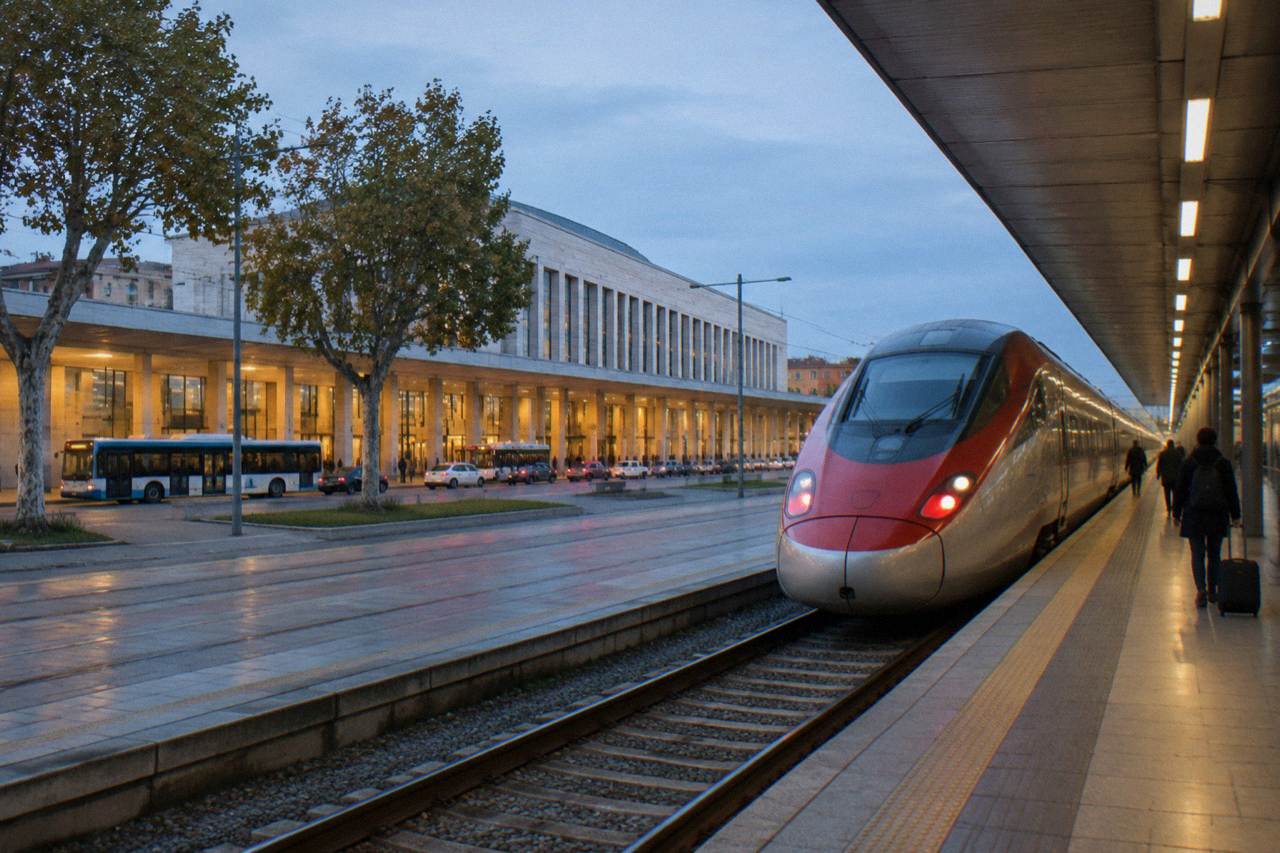
Padua sits on the Venice to Milan railway line, so the trip from Milan ends at Padova station, an inland Veneto city about 36 km in a straight line from Venice. This guide covers the arrival, the tickets that need booking ahead and what to do with the hours after you step off the train.
Short answer
Trains from Milan arrive at Padova station on the Venice-Milan line. Padua itself is compact and walkable: the Scrovegni Chapel is 15 minutes on foot from the station and needs a timed booking made in advance, the Basilica of Saint Anthony is free to enter, and a EUR 1.70 urban ticket covers 90 minutes of bus and tram once you are in the city.
Padua, the English name for the Italian city of Padova, is an inland city in the Veneto, northern Italy, about 36 km in a straight line from Venice and served by Padova station on the Venice to Milan railway line. The route from Milan ends at a station that is itself one of the handiest arrival points in the region: the historic centre, the Scrovegni Chapel and the Basilica of Saint Anthony all sit within a short walk or a single tram ride of the platforms. This Padua Travel Guide page lays out what the journey's arrival side actually involves, which tickets have to be booked ahead of time, and how Padua can carry a whole Veneto itinerary once the train pulls in. The exact running times and fares for the Milan leg itself move with the operator and the date, so check Trenitalia or Italo for the specific departure before locking a plan around it.
Is There A Direct Train From Milan To Padua?
Yes, Padua sits directly on the Venice to Milan railway line, and trains from Milan terminate or call at Padova station, the city's main station, which also handles onward regional services toward Venice, Vicenza, Verona and Treviso. The published journey time and fare for the Milan to Padua leg vary by operator, train type and booking date, so the figure to trust is the one shown for your own departure on the operator's site rather than a fixed number quoted in a guide.
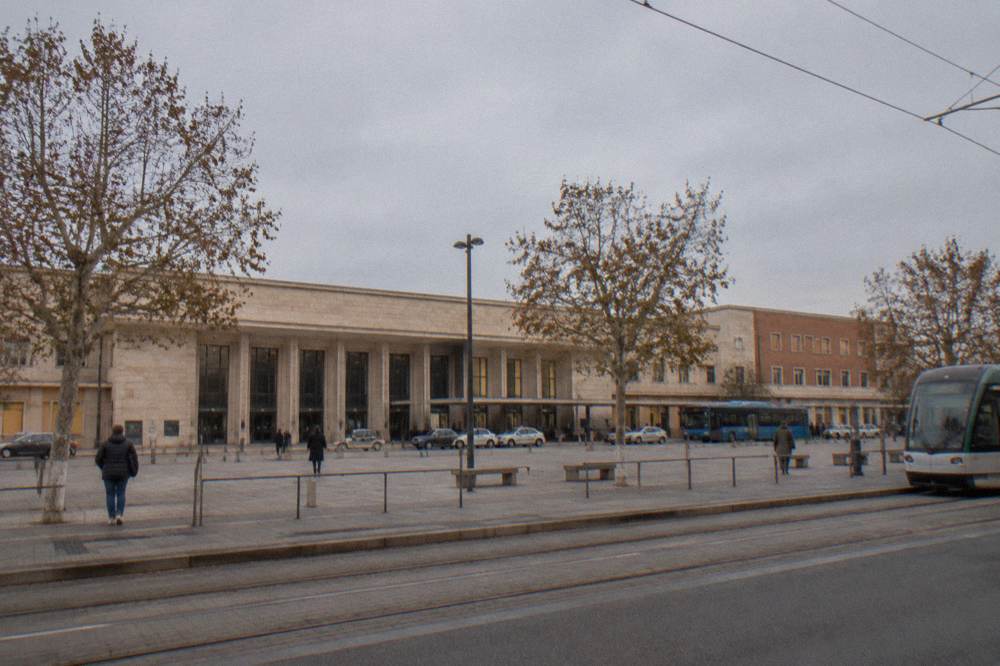
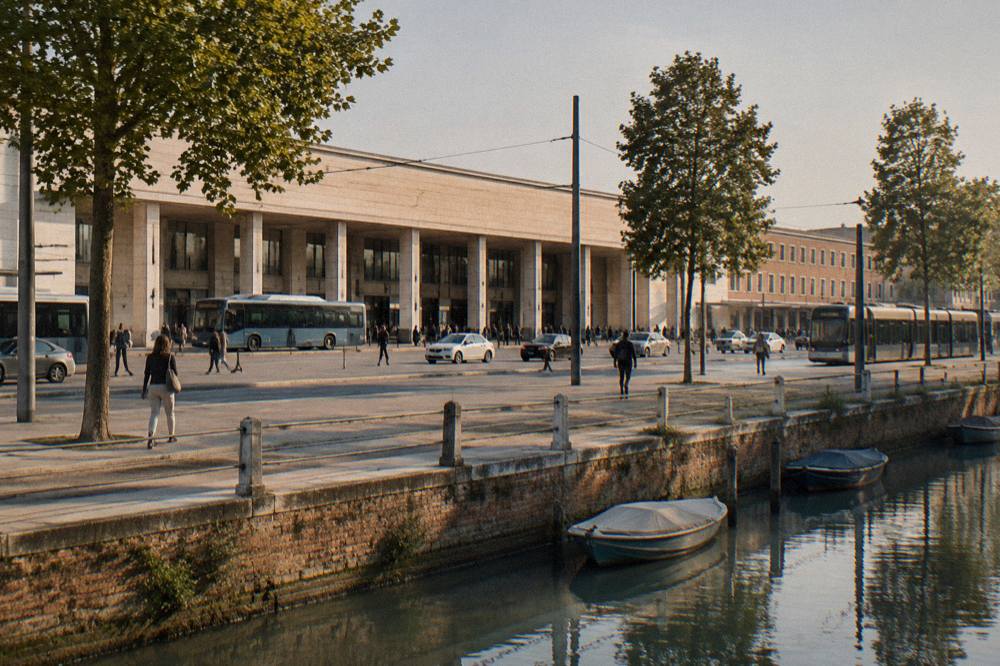
That line position is the single most useful fact about arriving from Milan. Because Padova is a through station on one of Italy's busiest corridors, a Milan departure also opens connections in every direction once you are there: Venice is about 26 to 40 minutes away by regional train, Vicenza about 16 to 25 minutes and Verona about 43 to 60 minutes, all reported by journey planners, so treat the times as approximate and check Trenitalia for the day you travel. Nothing about the arrival is complicated: the station is small by Milan Central's standards, the platforms feed into one main concourse, and the historic centre begins a few hundred metres to the south.
For anyone still weighing the route against flying or driving, the wider picture is in how to get to Padua, which covers the airports as well. Venice Marco Polo is the closest major airport, connected to Padua by a direct Busitalia airport bus for EUR 13 one way, about 45 minutes, a useful fallback if a Milan flight connects onward. Treviso airport is an alternative, though no direct official bus to Padua is confirmed, so the train from Milan remains the simplest single-seat approach.
What Does Arriving At Padova Station Actually Look Like?
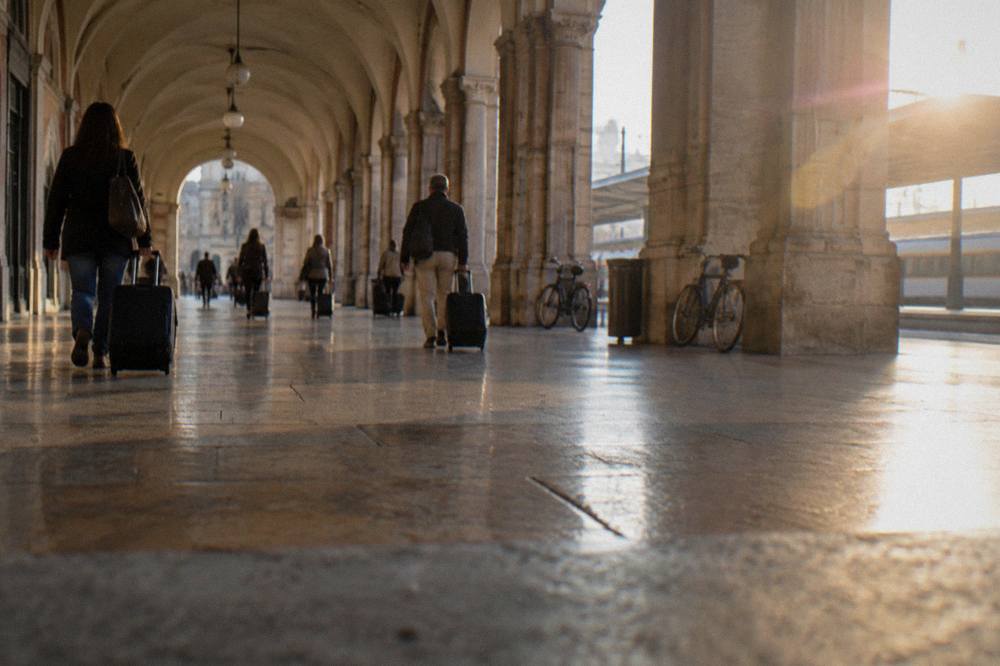
Padova station delivers you into a walkable city: the tourist office sits at the exit of platform 1 and is open Monday to Saturday from 9:00 to 19:00 and Sundays and holidays from 10:00 to 16:00, luggage storage on platform 1 runs daily from 6:00 to 20:00 at EUR 5 per 6 hours, and a EUR 1.70 urban ticket buys 90 minutes of bus and tram, with contactless card tap accepted on board.
That cluster of services makes the station a genuine first stop rather than a place to pass through. The IAT tourist office hands out maps and sells museum tickets, which matters because some Padua admissions are time-slotted and the office can talk you through availability. Left luggage costs EUR 5 per 6 hours, useful for anyone whose Milan hotel checkout precedes a late afternoon train and who wants the day in Padua unencumbered. The tram line SIR1 runs north to south through the city, roughly 10.5 km with 26 stops, though the centre is compact enough that walking covers everything between the station, the Scrovegni Chapel and the two great squares.
The transport essentials at a glance:
| Service at or from the station | Detail | Price |
|---|---|---|
| IAT tourist office | Exit of platform 1; Mon to Sat 9:00 to 19:00, Sun and holidays 10:00 to 16:00; closed 25 and 26 Dec and 1 Jan | Free |
| Luggage storage | Platform 1, daily 6:00 to 20:00 | EUR 5 per 6 hours |
| Urban ticket TU1 | 90 minutes, bus and tram, city zone | EUR 1.70 |
| Contactless on board | One tap per vehicle within the time window, TU1 only | EUR 1.70 |
| Airport bus to Venice Marco Polo | About 45 minutes, up to 54 runs a day, every 40 minutes | EUR 13 one way, EUR 6.50 child |
Getting deeper into the city after arrival is covered in getting around Padua, and the station district itself, including the Arcella side north of the tracks, has its own character worth knowing before choosing a hotel nearby. The station is also the terminus story for drivers: Padua's centre sits inside a limited traffic zone, and the rules around it are collected in the ZTL and parking guide, so anyone mixing a Milan train out with a rental car in the Veneto should read that first.
Once the bags are dropped, the question becomes how to spend the hours, and Padua answers it quickly. The walks, tastings and guided visits below are the ones that pair naturally with a same-day arrival from Milan.
How Far Is Padua From The Cities Around It?
Padua is an inland Veneto city about 36 km in a straight line from Venice, about 30 km from Vicenza, about 41 km from Treviso and about 69 km from Verona, with Bologna about 110 km away and the Euganean spa towns closer still: Abano Terme about 8 km and Montegrotto Terme about 11 km. These are straight-line distances computed from map data, not rail or road distances, and they explain why Padua works as a hub for half the region.
The pattern matters for planning. Everything on the Venice side of the list is a realistic half-day or full-day excursion by train, and the Euganean Hills towns are close enough that a morning in Padua and an afternoon among the hills is a normal shape for a day. Verona at about 69 km straight line is the outer edge of the comfortable day-trip belt, and Lake Garda beyond it stretches the day further, which is why guided tours that bundle the driving are popular for that direction.
Straight-line distances from Padua's centre:
| Place | Straight-line distance |
|---|---|
| Abano Terme | about 8 km |
| Montegrotto Terme | about 11 km |
| Vicenza | about 30 km |
| Venice | about 36 km |
| Montagnana | about 37 km |
| Chioggia | about 38 km |
| Treviso | about 41 km |
| Bassano del Grappa | about 42 km |
| Valdobbiadene | about 56 km |
| Conegliano | about 63 km |
| Ferrara | about 66 km |
| Verona | about 69 km |
| Sirmione | about 99 km |
| Bologna | about 110 km |
The Verona and Garda direction deserves one flag: the full-day guided option from Padua covers both in a single outing, and the operator's live listing carries the current price and dates. If that combination appeals, Check availability while your Milan train is still a plan rather than a ticket, because the tour runs from Padua itself and pairs neatly with an afternoon arrival the day before.
What Should You Book Before The Train Even Leaves Milan?
The one booking that can sink a Padua day is the Scrovegni Chapel: entry is timed, with at most 25 people admitted every 15 minutes and about 15 minutes inside, and there is no same-day online booking, so the slot has to be reserved in advance through the chapel's own site or its call centre, at +39 049 2010020. Slots are published as bookable until 10 February 2027, and anyone arriving without a booking should ask at the museum ticket office about availability.
The chapel is the reason many travellers break a Milan to Venice journey at Padua at all, and the logistics are stricter than at a normal museum. Visitors wait first in a climate-controlled waiting room and should be at the entrance 5 minutes before the slot printed on the ticket; latecomers are not readmitted without a new paid booking. The daytime ticket, EUR 15 full price plus a EUR 1 booking fee, also covers the Musei Civici Eremitani and Palazzo Zuckermann, and the evening ticket, the "Giotto sotto le stelle" visits from 25 March to 1 November between 19:00 and 22:00, is chapel only. Giotto painted the cycle between 1303 and 1305, and the chapel is closed 16 to 27 November 2026 for the annual fresco inspection, a date worth checking against your travel window.
Scrovegni Chapel tickets in full:
| Ticket | Price | What it covers |
|---|---|---|
| Musei + Cappella, full | EUR 15 + EUR 1 booking fee | Chapel, Musei Civici Eremitani, Palazzo Zuckermann |
| Musei + Cappella, reduced | EUR 11 + EUR 1 booking fee | Same three sites, eligible visitors |
| Residents of Padua | EUR 5 | Same three sites |
| Musei only | EUR 11 full, EUR 9 reduced | Musei Civici Eremitani and Palazzo Zuckermann |
| Evening visit, chapel only | Separate ticket | 25 March to 1 November, 19:00 to 22:00, every 20 minutes |
| Family card | EUR 30 + EUR 1 per person | Up to two adults and two under-18s |
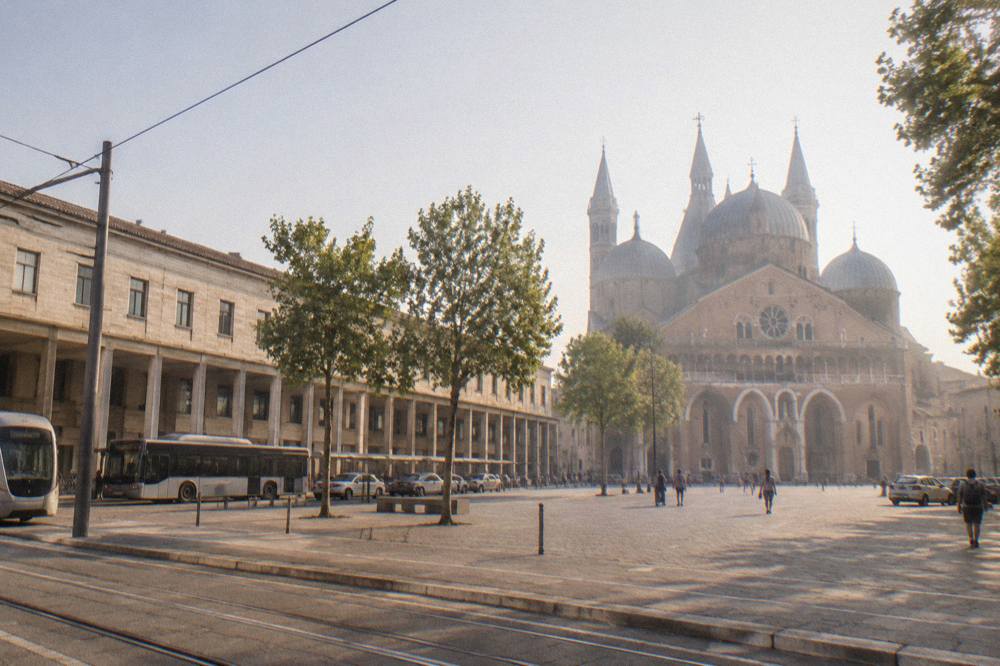
The rest of the core sights need no booking at all. The Basilica of Saint Anthony, begun in 1232 a year after the Saint's death on 13 June 1231, is free to enter and holds the tomb and the Chapel of the Relics, with a dress code suitable for a church. Prato della Valle, the vast oval square ringed by a canal and a double row of numbered statues, declared communal space by the Venetian Senate in 1767, is open ground you simply walk onto. Further ticketing detail, including what the various museum passes do and do not settle, is laid out in Scrovegni Chapel tickets and the Padova Urbs Picta card pages, and the chapel's own booking site is the place to confirm conditions before paying.
A guided visit is one way around the booking anxiety, since some tours bundle the timed admission with a walk of the centre. The options below include exactly that.
What Can You Fill A First Afternoon In Padua With?
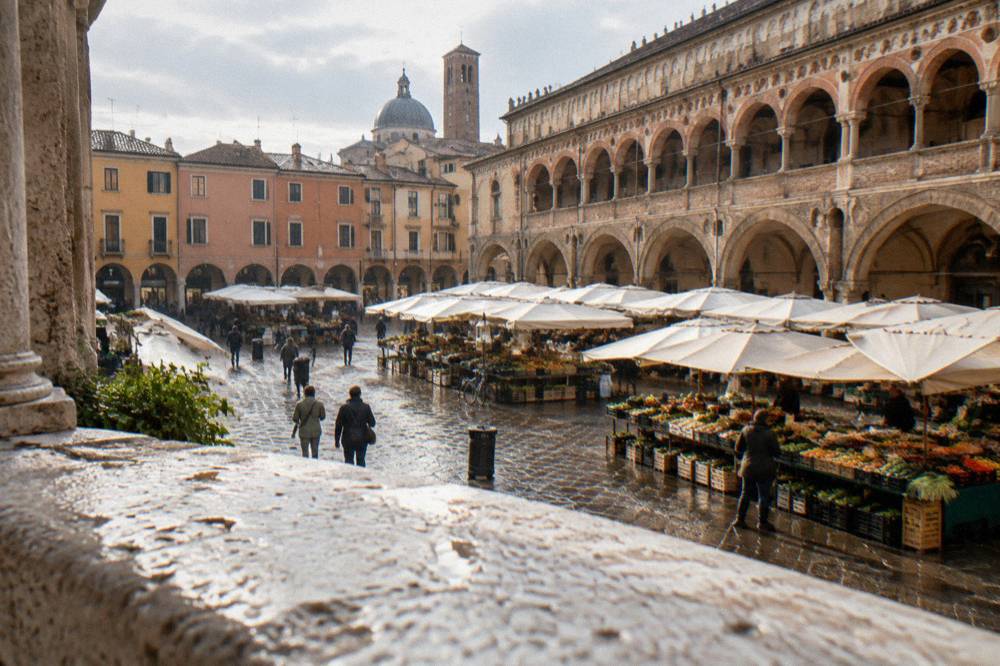
A first afternoon from the station can string together the Scrovegni Chapel and its museums, Piazza delle Erbe and the food stalls under Palazzo della Ragione, Caffe Pedrocchi, opened in 1831, and Prato della Valle, all on foot, with the Basilica of Saint Anthony a short tram or bus ride south using the EUR 1.70 urban ticket, and the whole circuit sits on flat ground that makes Padua one of the easier Italian cities to arrive into tired.
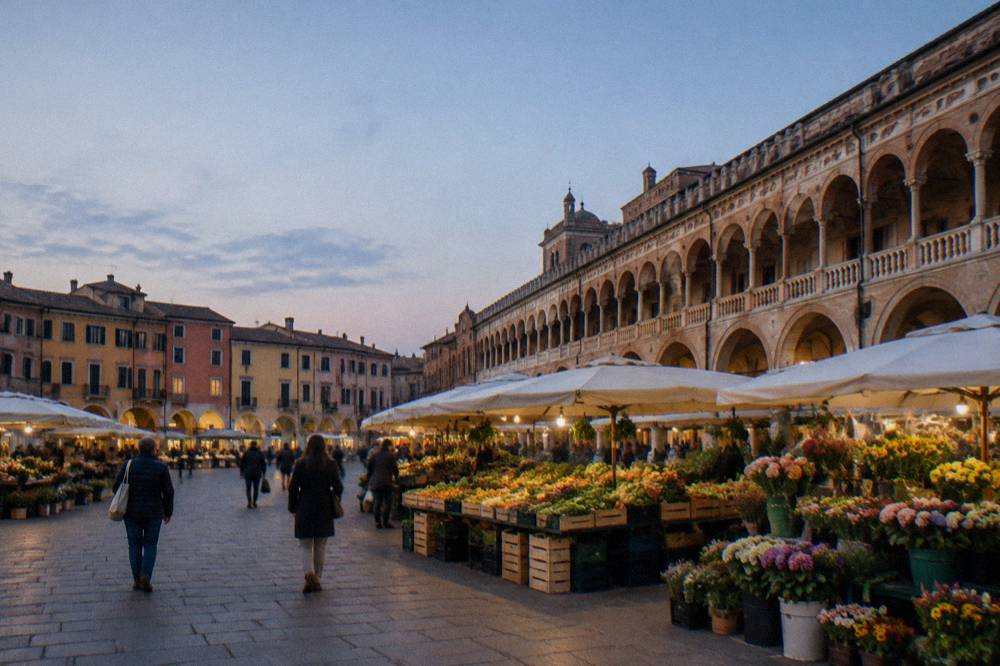
The order matters less than the pacing. The Scrovegni Chapel is five minutes north of the station, so a late-morning arrival from Milan can put bags in left luggage, take a chapel slot at midday and still reach the squares for lunch. Piazza delle Erbe's market runs Monday to Friday from 7:30 to 13:30 and Saturday from 7:30 to 20:00, mostly fruit, vegetables and flowers across 52 stalls, with Piazza dei Frutti alongside it. Under Palazzo della Ragione sits Sotto il Salone, the permanent covered food market the tourism board describes as trading under the building for eight centuries. Caffe Pedrocchi, the neoclassical coffee house that opened in 1831, sits between the squares and the university quarter.
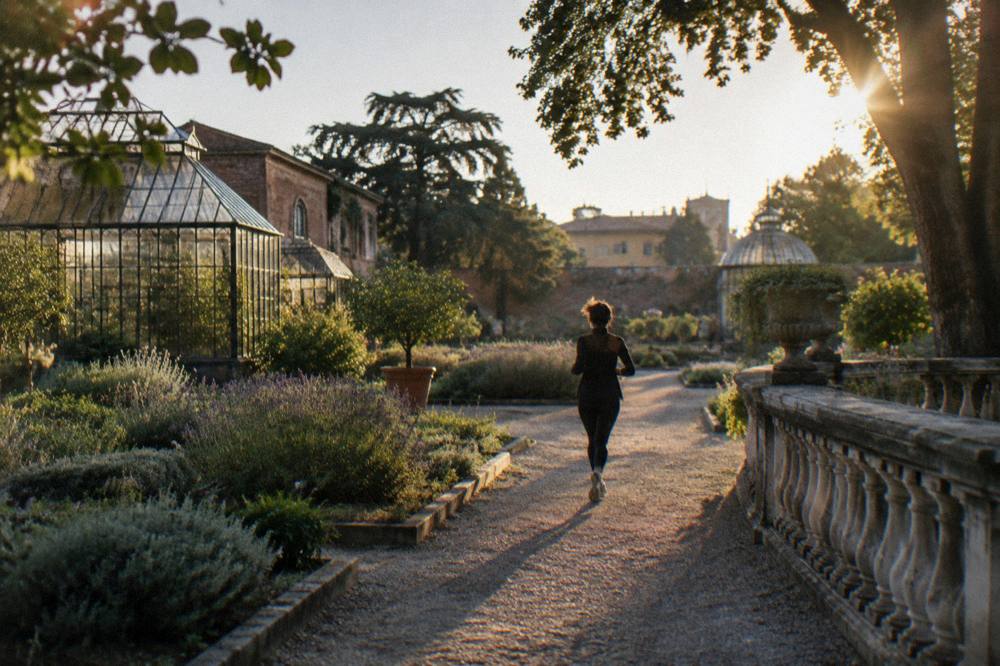
The university quarter adds the Palazzo del Bo, whose guided "Giro storico" costs EUR 10 full price and passes the anatomical theatre of 1594, Galileo's chair in the Sala dei Quaranta and the statue of Elena Cornaro, who graduated in philosophy on 25 June 1678 as the first woman university graduate in recorded history. Galileo held the chair of mathematics here from 1592 to 1610, years he himself described as the best eighteen of his life. Tours alternate Italian and English slots, and the booking centre is 049 827 3939. The story of the institution, founded in 1222 and among the oldest universities in Italy, fills the University of Padua page, and the two UNESCO listings, the Orto Botanico of 1545 inscribed in 1997 and the fourteenth-century fresco cycles inscribed in 2021, are unpacked in Padova Urbs Picta.
Admission prices at the other main civic sites:
| Site | Full price | Notes |
|---|---|---|
| Orto Botanico | EUR 15 (from 1 September 2026); EUR 12 in winter, November to February | Reduced EUR 10; closed non-holiday Mondays; audioguide included |
| Palazzo della Ragione | EUR 8, concessions EUR 6 | Tue to Sun 9:00 to 19:00, per padovamusei.it |
| Palazzo del Bo guided tour | EUR 10, reduced EUR 8, special reduced EUR 6 | About 45 minutes, alternating language slots |
| Museo del Risorgimento at Stabilimento Pedrocchi | EUR 5 | Tue to Sun, split morning and afternoon hours, per padovamusei.it |
| Loggia and Odeo Cornaro | EUR 5 | Seasonal hours, groups of max 25 every 30 minutes, per padovamusei.it |
| Basilica of Saint Anthony | Free | Tomb and Chapel of the Relics accessible |
If the afternoon runs long, the eating side of the city answers it: the dishes the tourism board itself patents, risotto ricco alla Padovana and torta pazientina among them, plus bigoli, baccala and gallina padovana on menus across the centre, all covered with specifics in what to eat in Padua. Aperol, for the record, was created and presented in Padua in 1919 by the Barbieri brothers, so the spritz culture on Piazza delle Erbe and Piazza dei Signori has a local anchor. For a first visit that stays broad rather than deep, things to do in Padua collects the full checklist.
When Is The Best Time Of Year To Make The Trip?
The ERA5 reanalysis for Padua, 1991 to 2020, puts the January mean daily high at 7.3 C and the July and August mean daily high at 28.8 C, with November carrying the heaviest rain total at about 114 mm and January the lightest at about 54 mm, so the shoulder months combine mild daytime highs with rain totals well under the autumn peak, and the choice between them comes down to heat tolerance rather than crowds.
The climate table is the honest way to pick a month, because it shows the trade directly: spring and early summer climb steadily from a 13.7 C March high to a 26.2 C June high, while September and October fall back from 23.6 C to 18.4 C as rain builds toward the November peak. Winter is cold rather than severe, with January lows around freezing on average and about 4.4 snowy days per year in recent decades per long climate series, seasons with no snow at all not uncommon. Whatever the month, one fixed date matters more than the weather: the Scrovegni Chapel's annual closure for fresco inspection, 16 to 27 November in 2026.
| Month | Mean daily high | Mean daily low | Rain |
|---|---|---|---|
| Jan | 7.3 C | -0.2 C | 53.6 mm |
| Feb | 9.4 C | 0.6 C | 57.9 mm |
| Mar | 13.7 C | 3.9 C | 67.2 mm |
| Apr | 17.6 C | 7.8 C | 84.4 mm |
| May | 22.1 C | 12.4 C | 99.7 mm |
| Jun | 26.2 C | 16.6 C | 81.0 mm |
| Jul | 28.8 C | 18.9 C | 62.1 mm |
| Aug | 28.8 C | 19.2 C | 78.7 mm |
| Sep | 23.6 C | 14.9 C | 105.5 mm |
| Oct | 18.4 C | 10.6 C | 105.4 mm |
| Nov | 12.6 C | 5.5 C | 114.0 mm |
| Dec | 7.8 C | 0.7 C | 69.9 mm |
Month-by-month reasoning, including how the city handles rain, is in the Padua weather guide and the seasonal breakdown in the best time to visit Padua. Events can tilt the choice too: the Tredicina, the thirteen days of devotion before the Feast of Saint Anthony on 13 June, ran from 31 May to 12 June in 2026, and the Sherwood Festival ran 10 June to 12 July in 2026 at Park Nord Stadio Euganeo. Both are annual fixtures whose dates shift, so check the current year's calendar before booking around them.
Should Padua Be Your Base Instead Of Milan?
Yes, if the point of the trip is the Veneto: Padua's station puts Venice about 26 to 40 minutes away by regional train for about EUR 5, Vicenza about 16 to 25 minutes for about EUR 6, Verona about 43 to 60 minutes and Treviso about 28 to 60 minutes, all reported by journey planners, and the city's own sights, two UNESCO listings among them, fill the days in between, while accommodation collects a tourist tax per person per night capped at five consecutive nights.
The base argument is arithmetic. A Milan hotel means a long run east for every Veneto day; a Padua hotel means each excursion starts from inside the region. Venice alone justifies it, and the Padua as a base for Venice page works through the pairing, including one point worth knowing: the Venice day-tripper access fee trial ended on 27 July 2026, so the fee does not currently apply, and no 2027 decision had been announced when the operator's notice went up. One practical caution for anyone staying overnight in Venice itself instead: the Scrovegni Chapel booking is still needed however you arrange the beds, and the same-day rule leaves no rescue except the ticket office's leftover availability.
Reported train times and fares from Padova station:
| Destination | Reported journey time | Reported regional fare |
|---|---|---|
| Venezia Santa Lucia | about 26 to 40 minutes | about EUR 5 |
| Vicenza | about 16 to 25 minutes | about EUR 6 |
| Verona | about 43 to 60 minutes | check Trenitalia |
| Treviso | about 28 to 60 minutes, sometimes with a change | check Trenitalia |
Neighbourhood choice is the other half of the base question, and where to stay in Padua walks through the centre, the station district and the areas around Prato della Valle. The train-specific arrival logistics, platform by platform, live in the Padua train station guide. And for travellers who reverse the logic entirely, arriving in Padua first and finishing in Milan, the same facts hold: book the chapel slot for the Padua end, and leave the Milan leg's timing to the operator's own timetable.
The guided options that suit a Padua-based stay, from a Verona and Garda day to an evening in the city's wine bars:
Common Questions About Traveling From Milan To Padua
How do I get from Milan to Padua?
Trains from Milan arrive at Padova station on the Venice to Milan line. Journey time and fare depend on the operator and date, so check Trenitalia or Italo for your specific departure rather than a quoted average.
Is there a train from Verona to Padua?
Yes. Reported journey times run about 43 to 60 minutes, with frequent departures; the full detail is in the site's answer page on the Verona to Padua train.
How far is Padua from Venice?
Padua lies about 36 km in a straight line from Venice, and the regional train between Padova and Venezia Santa Lucia takes a reported 26 to 40 minutes for about EUR 5.
Do I need to book the Scrovegni Chapel in advance?
Yes. Entry is timed, at most 25 people every 15 minutes with about 15 minutes inside, and there is no same-day online booking. Reserve through the chapel's own site or call +39 049 2010020, and arrive 5 minutes before your slot.
Can I leave luggage at Padua station?
Yes. The left-luggage office on platform 1 is open daily from 6:00 to 20:00 and charges EUR 5 per 6 hours.
Does the Venice day-tripper access fee apply to a day trip from Padua?
No. The 2026 trial ended on 27 July 2026 and the fee does not currently apply, and no 2027 decision had been announced, so check the official Venice access-fee page before a trip in a later year.
