Best Restaurants In Padua By Neighbourhood
A practical eating map of Padua: which neighbourhood serves what, which dishes the city's own tourism board names, and how to plan around market days, Sunday closures and the evening aperitivo in the squares.
Short answer
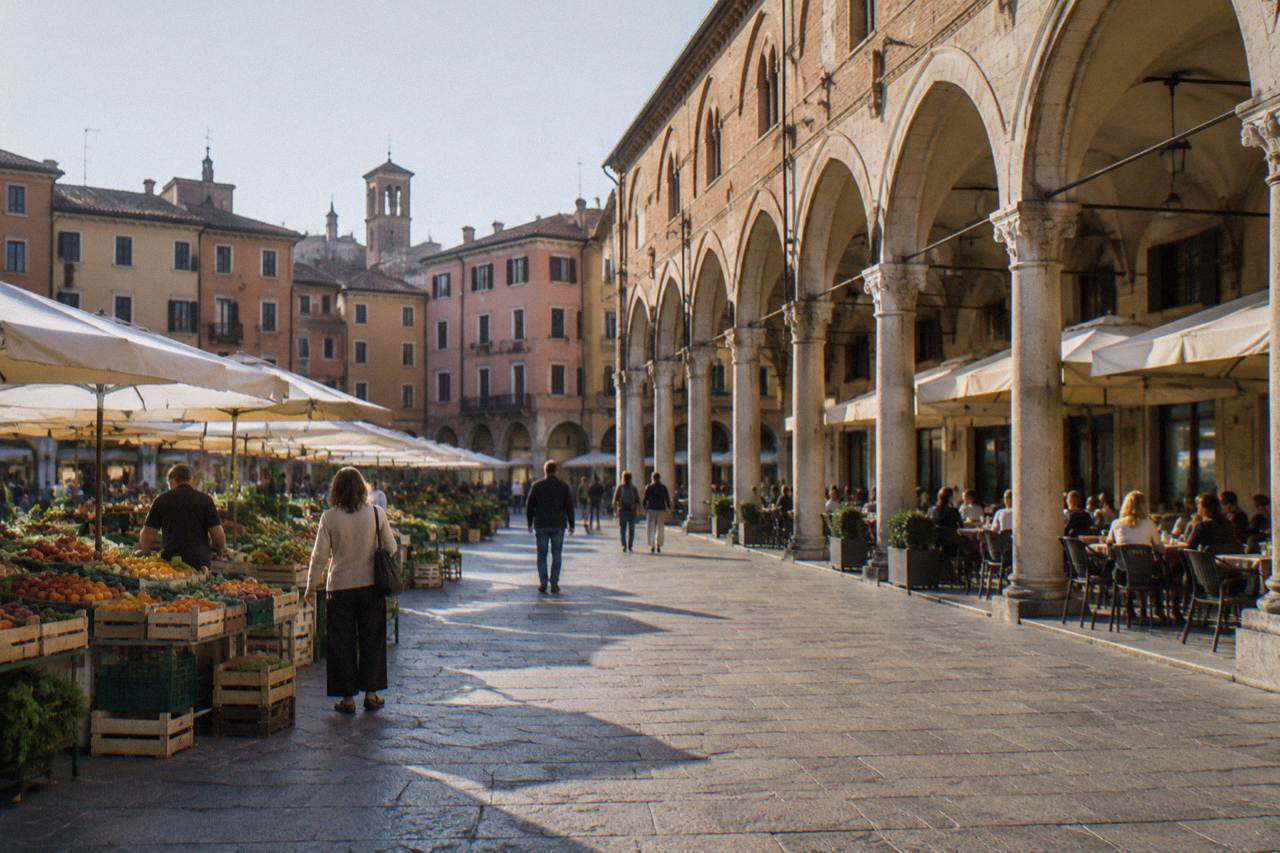
Padua eats by neighbourhood: the market squares around Piazza delle Erbe and Piazza della Frutta carry the historic food market and the evening aperitivo scene, the Santo and Prato della Valle quarter sits between the Basilica and the Saturday market, the old Jewish Ghetto and the arcaded centre hold small trattorias and osterias, and the station side feeds the student population.
Padua (Padova), in the Veneto in northern Italy, is an inland university city about 36 km in a straight line from Venice, and its restaurant map is inseparable from that student population and from the market squares that have fed the city for centuries. A restaurant guide to Padua works differently from a guide to a resort town: there is no waterfront strip and no tourist-only dining belt, there is a compact arcaded centre where the food shops, osterias and cafes cluster around the markets, and there is a strong local eating culture that the city's own tourism board documents by name. This page maps the city neighbourhood by neighbourhood, names the dishes the official sources actually name, and skips the invented rankings. What to order is covered dish by dish in what to eat in Padua; this page is about where, when and how.
What Food Is Padua Known For?
Padua's own tourism board names three patented local recipes, risotto ricco alla padovana, capon alla canevera made with the gallina padovana breed of hen, and the torta pazientina, alongside the standard local staples of bigoli pasta and baccala, and the city claims Aperol, created in Padua in 1919 by the Barbieri brothers, as its own contribution to the aperitivo. Any menu in the historic centre that deserves the word "padovana" on its letterhead will carry at least some of these, and knowing the list is the fastest way to tell a kitchen cooking for the city from one cooking for a passing crowd.
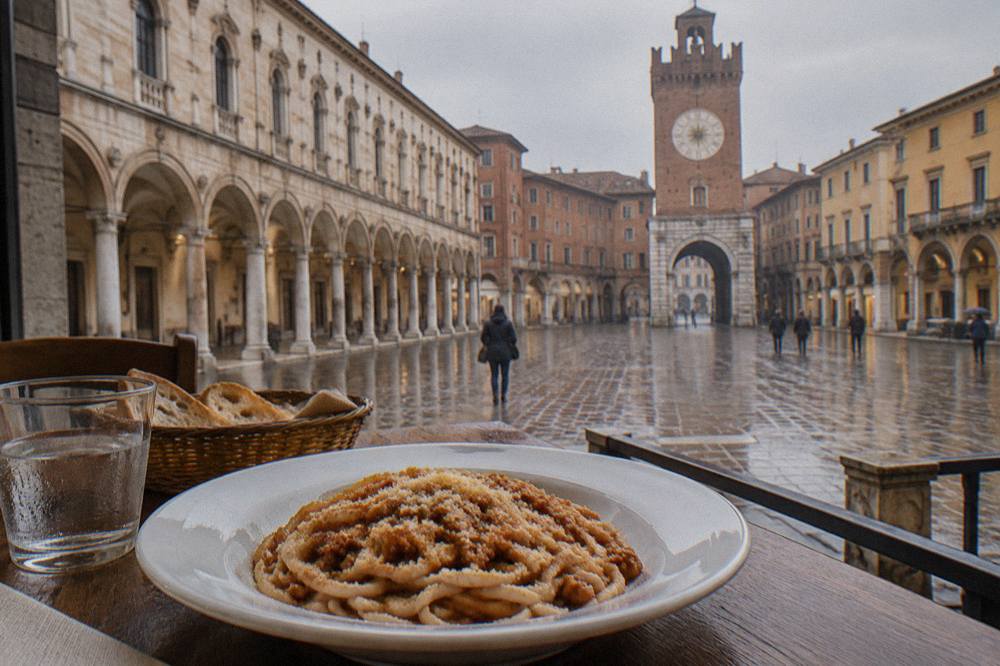
The three patented recipes come from the tourism board itself, which is the strongest signal a visitor can get: these are the dishes the city has chosen to be represented by. The risotto ricco alla padovana is the rich local risotto; the capon alla canevera is a hen dish built on the gallina padovana, a local breed; the torta pazientina is the dessert of the list. Bigoli, the thick strand pasta of the Veneto, and baccala, salt cod, round out the standard plate. Caffe Pedrocchi adds one more item with a source behind it: the caffe Pedrocchi with mint, the signature drink of a cafe that opened in 1831 and was long known as the cafe without doors.
| Dish or drink | What it is | Status on the page |
|---|---|---|
| Risotto ricco alla padovana | Rich local risotto | Named by the Padua tourism board |
| Capon alla canevera | Hen dish made with the gallina padovana breed | Named by the Padua tourism board |
| Torta pazientina | Local dessert | Named by the Padua tourism board |
| Bigoli | Thick Venetian strand pasta | Standard local mention |
| Baccala | Salt cod | Standard local mention |
| Caffe Pedrocchi with mint | Mint-laced coffee, the house drink | Caffe Pedrocchi's own signature |
| Aperol spritz | Aperol created in Padua in 1919 by the Barbieri brothers | Press and encyclopaedia sources |
For the practical side of eating well on a short visit, the honest answer is that no restaurant name on this page carries a recommendation, because this site prints only what its sources support, and its sources name dishes, squares and markets, not venues. What the sources do support is a method: eat where the market feeds the neighbourhood, order from the short list above, and let the squares, not a star rating, pick the address.
Which Padua Neighbourhood Should You Eat In?
Padua's eating map splits into five practical areas: the Centro Storico around the market squares of Piazza delle Erbe and Piazza della Frutta, the old Jewish Ghetto on its narrow grid, the Portello side by the city walls, the Santo and Prato della Valle quarter around the Basilica of Saint Anthony, and the station and Arcella side, and each area feeds a different rhythm of the day. The centre carries the markets and the aperitivo squares, the Santo quarter carries the pilgrimage and Saturday market traffic, and the station side carries the student economy of a university with about 76,000 students.
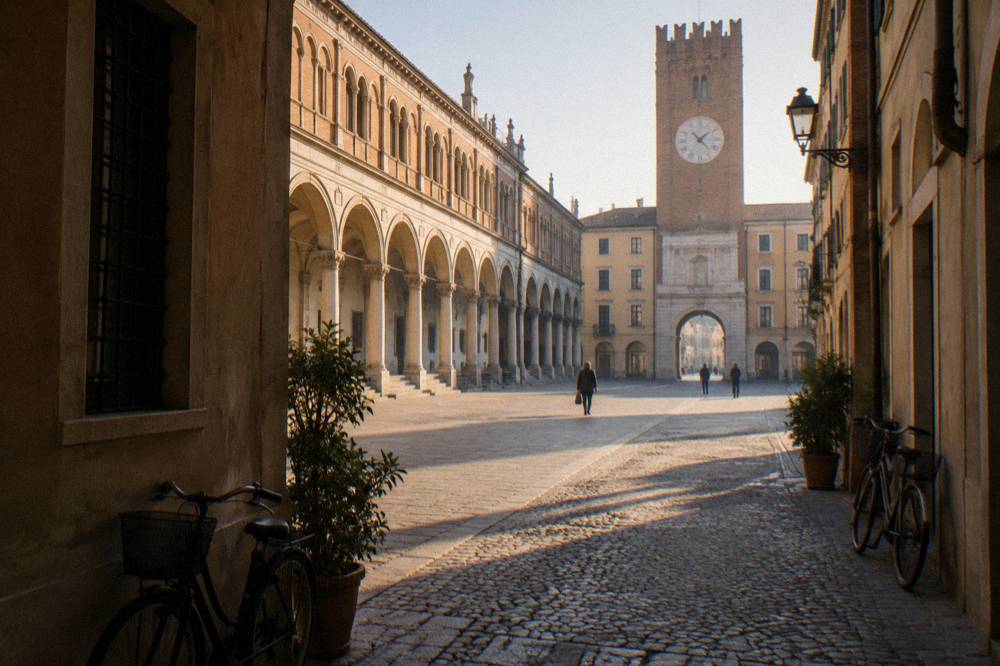
The city areas are defined by the site's own map of Padua, and no neighbourhood has a sourced character beyond its position and its walking relation to the squares, so this guide describes geography, not reputation. The Centro Storico is the arcaded heart where food shops, osterias and cafes sit under the porticoes within a few minutes of each other. The ghetto is a compact grid of lanes in the centre. Portello takes its name from the gate on the walled side of town. The Santo and Prato della Valle quarter stretches from the Basilica to the vast canal-ringed square, and the station and Arcella side sits north of the tracks.
| Neighbourhood | Anchor points | What it is for |
|---|---|---|
| Centro Storico | Piazza delle Erbe, Piazza della Frutta, Piazza dei Signori | Daily markets, osterias, evening aperitivo |
| Jewish Ghetto | Narrow lanes of the old centre | Small venues on a compact grid |
| Portello | The gate and the city walls | A quieter side of the walled town |
| Santo and Prato della Valle | Basilica of Saint Anthony, Prato della Valle | Saturday market, eating between the sights |
| Station and Arcella | Padova station, platform 1 side | Student eating, arrivals and departures |
Readers planning the whole stay around the food map will find the accommodation logic, which areas put you walking distance from the squares, in where to stay in Padua, and the full sightseeing frame in things to do in Padua.
Why Do The Market Squares Anchor Eating In Padua?
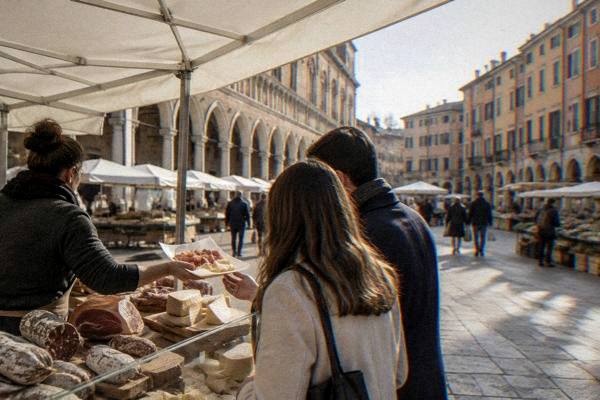
Piazza delle Erbe hosts the daily fruit, vegetable and flower market, running 7:30 to 13:30 Monday to Friday and 7:30 to 20:00 on Saturday across 52 stalls, while Piazza della Frutta runs its food stalls 8:00 to 14:00 Monday to Wednesday and 8:00 to 19:00 Thursday to Saturday, and underneath Palazzo della Ragione sits Sotto il Salone, the permanent covered market the city describes as a historic food market of local specialities. These hours come from the Comune di Padova's own market page, and they are the closest thing Padua has to a printed timetable for its food life.
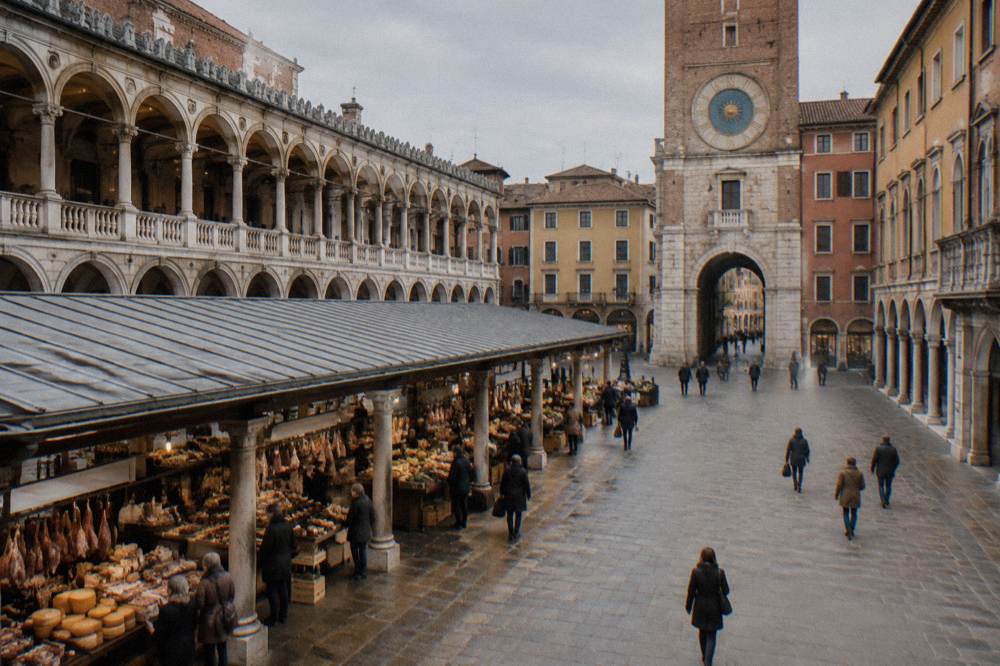
The tourism board describes Sotto il Salone as a permanent market of local products under Palazzo della Ragione, a food institution that has served the city for centuries and now also anchors an annual autumn food event, the Salone dei Sapori, which ran 11 to 18 October in 2026. The market squares themselves are the reason the centre eats so well: the produce arrives at the stalls in the morning, the shops under the porticoes sell the cured meats and cheeses of the Veneto all day, and the evening aperitivo crowd takes the same squares over from the late afternoon.
Saturday changes the map again. The Prato della Valle Saturday market runs 8:00 to 19:00 in winter and 8:00 to 20:00 in summer with plants, flowers and food, per the Comune's market page, and every third Sunday of the month the antiques market fills Prato della Valle and via Umberto I from 8:00 to 20:00. A visitor eating their way through a weekend can treat Saturday as the day the food life spreads from the centre to the big square.
| Market | Where | Days and hours (Comune di Padova) |
|---|---|---|
| Piazza delle Erbe | Centro Storico | Mon-Fri 7:30-13:30, Sat 7:30-20:00 |
| Piazza della Frutta (food) | Centro Storico | Mon-Wed 8:00-14:00, Thu-Sat 8:00-19:00 |
| Prato della Valle Saturday market | Santo quarter | Winter 8:00-19:00, summer 8:00-20:00 |
| Antiques market | Prato della Valle and via Umberto I | Third Sunday monthly, 8:00-20:00 |
| Sotto il Salone | Under Palazzo della Ragione | Permanent covered food market |
The square-by-square detail, including the sights that share the piazzas, is covered in the piazza food and aperitivo guide and in the fuller neighbourhood write-ups elsewhere on this site.
Where Does The Aperitivo Happen In Padua?
The evening aperitivo scene in Padua centres on Piazza delle Erbe and Piazza dei Signori, two adjoining squares in the historic centre where the porticoes fill with drinks and the tourism board itself points visitors to the spritz and aperitivo culture of the botteghe, and the drink with the strongest Padua claim is Aperol, created in Padua in 1919 by the Barbieri brothers and first presented at the city's fair. That creation line is the one origin story the sources support, and the tourism board's enogastronomia pages name the two squares, not venues, as the place the evening happens.
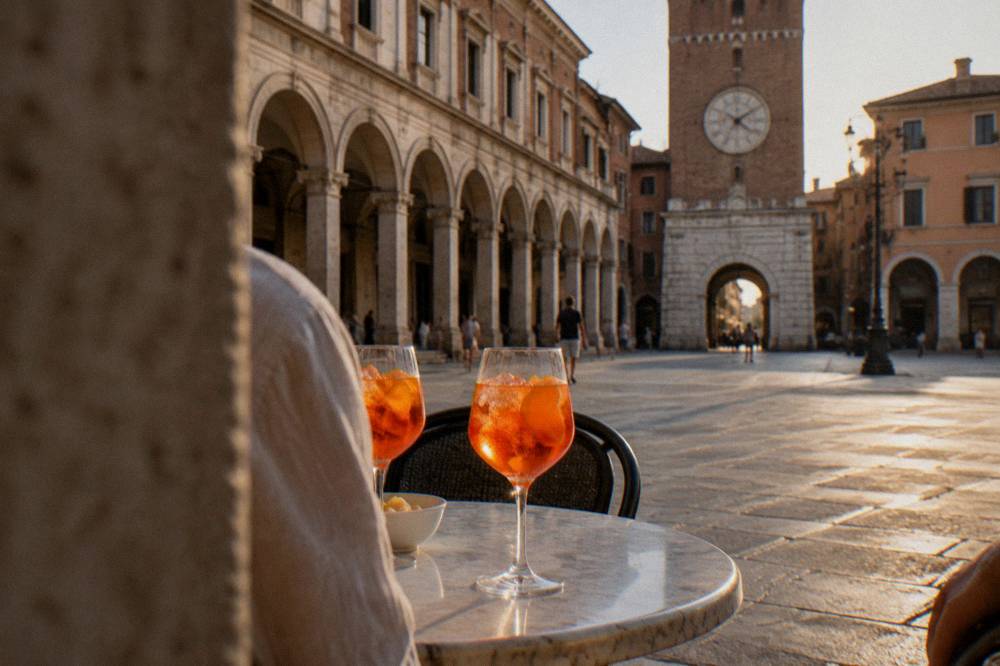
The practical shape of the evening is simple: the same squares that host the morning markets become the drinking heart of the city from the early evening, and the tourism board's own pages point to the piazzas of Erbe and Signori with their spritz and aperitivo culture. This site prints no venue names, no aperitivo hours and no drink prices, so the advice is positional: stand in one of the two squares in the early evening and the scene surrounds you.
For visitors who want the evening explained rather than just found, a guided spritz walk turns the squares into a story, and the related tour on this page does exactly that, five drinks with a local guide through the aperitivo squares. You can Check availability on the operator's live listing.
How Does Caffe Pedrocchi Fit Into A Food Day?
Caffe Pedrocchi, opened in 1831 in a neoclassical building by Giuseppe Jappelli, was long known as the cafe without doors and still serves its signature drink, the caffe Pedrocchi with mint, making it the one named venue in Padua this page can mention with a full source behind it, since the tourism board documents its history and its house drink directly. Every other cafe, bar and restaurant name in the city fails that test on this site, and is deliberately left out.
The cafe sits at the edge of the historic centre within walking distance of the market squares, and the building also houses the Museo del Risorgimento, which the civic museums list at EUR 5 full price, Tuesday to Sunday, 9:30 to 12:30 and 15:30 to 18:00. That pairing makes the cafe a natural mid-morning stop on a museum day: the Bo and the Risorgimento museum in the morning, coffee under the 1831 neoclassical interior, and the market squares for lunch. The museum and cafe detail is documented on the civic museums' own pages. More of these guides are collected on Padua Travel Guide.
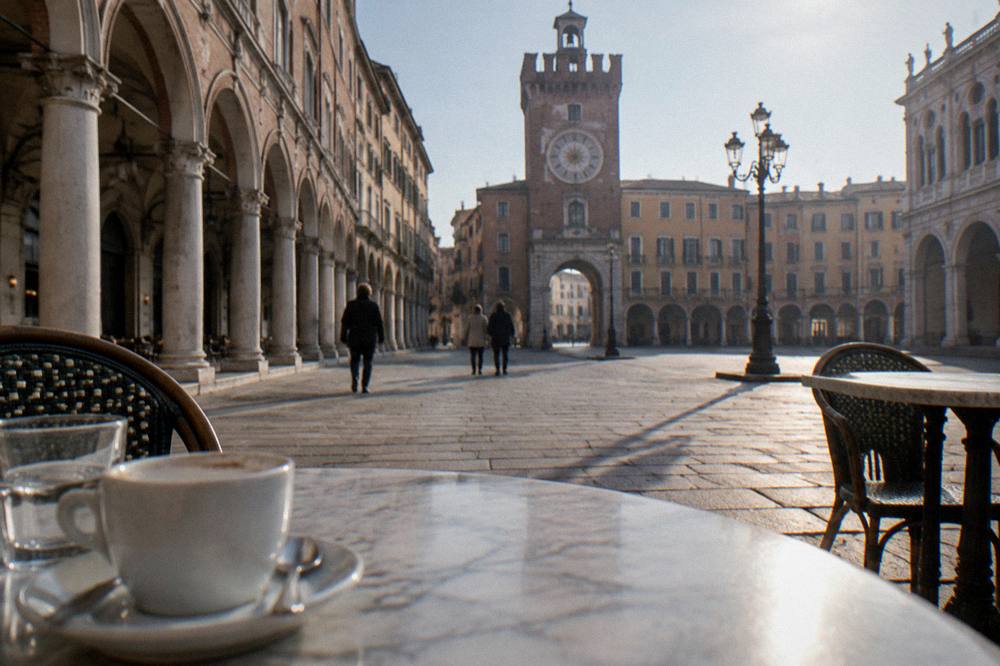
The mint coffee is the item to order, because it is the one drink in Padua that carries both a name and a documented history. The story of the cafe without doors, a nickname from the era when it kept no closing time, belongs to the tourism board's own write-up of the venue.
How Do You Eat In Padua On A Student Budget?
Padua feeds about 76,000 university students, per the university's own current figures, and that population shapes the cheap eating of the city: small osterias, panini counters and market-fuelled lunches cluster in the arcaded centre and near the university buildings around Palazzo del Bo, where the eating is built for volume and for the academic calendar rather than for visitors. No price for any meal is printed on this page, but the structure of cheap eating in Padua is geographic and well documented.
The method that costs least: build lunch from the markets. The morning stalls of Piazza delle Erbe and Piazza della Frutta, and the permanent Sotto il Salone under Palazzo della Ragione, sell the bread, cheese, cured meat and fruit of the Veneto at market prices rather than restaurant prices, and a picnic under the porticoes or on the edge of Prato della Valle costs a fraction of a seated lunch. The budget logic, including the free sights that pair with it, is laid out in Padua on a budget and free things to do in Padua.
| Budget move | Where it happens | What it saves |
|---|---|---|
| Market picnic lunch | Piazza delle Erbe, Piazza della Frutta, Sotto il Salone | Restaurant markup on the same produce |
| Fixed-price student eating | Around the university and Palazzo del Bo | Menu prices aimed at residents |
| Aperitivo as early dinner | Piazza delle Erbe and Piazza dei Signori | One drink in the squares instead of a full course |
| Water from public fountains | Piazzas and parks, where marked potable | Never buying bottled water |
Two practical notes from the pack: tap water in Padua is safe citywide per the municipal supply, and public fountains in the squares are drinkable where labelled, so water is the one line item a visitor can cut to zero.
Which Food Tours And Cooking Experiences Cover Eating In Padua?
The food experiences on this site that connect directly to restaurant culture are a spritz walk through the aperitivo squares, a home cooking demonstration with lunch or dinner at a local's table, and a cooking class built around a market tour, and each one replaces a meal you would otherwise buy blind with one that comes with a local explaining it. These experiences are bookable, and they solve the exact problem a restaurant guide without restaurant names creates: someone local picks the table for you.
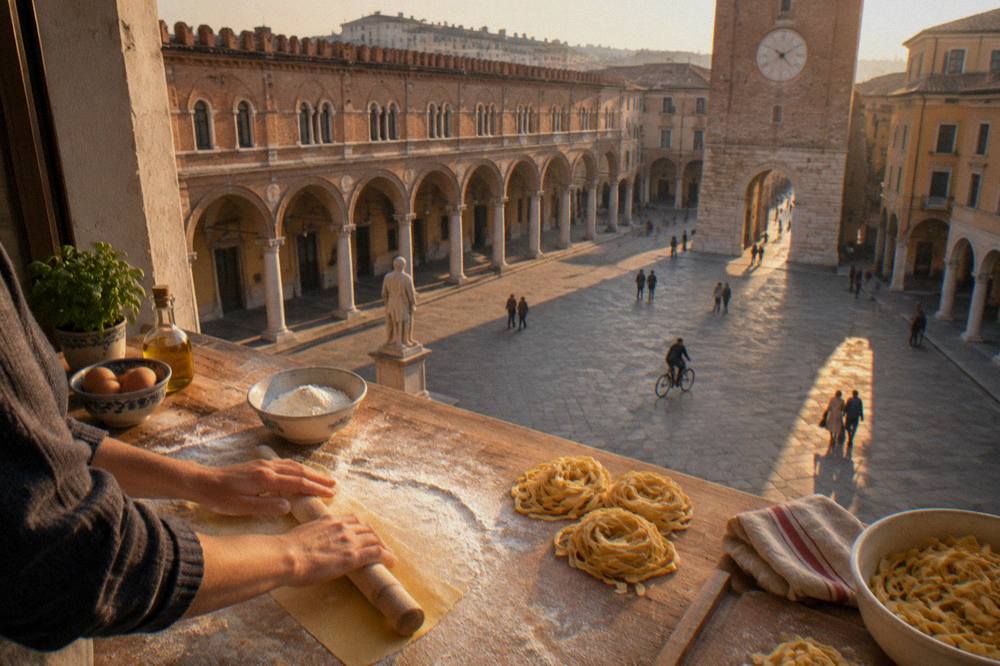
The home cooking demonstration is the deepest cut: a meal cooked and eaten in a Padua home, which reaches the gallina padovana and the risotto ricco alla padovana tradition more directly than any restaurant search could. The market-to-osteria food walk with a local guide covers the same ground outside the home, moving from the market stalls of the centre to an osteria with tastings along the way.
For visitors who want the eating and the sightseeing in one movement, the private city walking tour with the Scrovegni Chapel visit books the timed chapel entry alongside the city walk, and the chapel's own rules matter here: entry is timed, at most 25 people every 15 minutes, and the chapel closes 16 to 27 November 2026 for the annual fresco inspection, so the food day has to bend around the booking. The ticket logic is laid out in Scrovegni Chapel tickets.
What Practical Rules Govern Restaurant Days In Padua?
Eating in Padua runs on Italian city rhythms: shops and smaller venues close for a mid-afternoon break, Sundays thin out the retail and market side of the city while the visitor sights keep their own hours, the tourist tax is collected by your accommodation for up to five consecutive nights, and the station left-luggage office on platform 1, daily 6:00 to 20:00 at EUR 5 per 6 hours, holds bags on a food-market morning. Each of those figures comes from official pages, and each changes a food day if ignored.
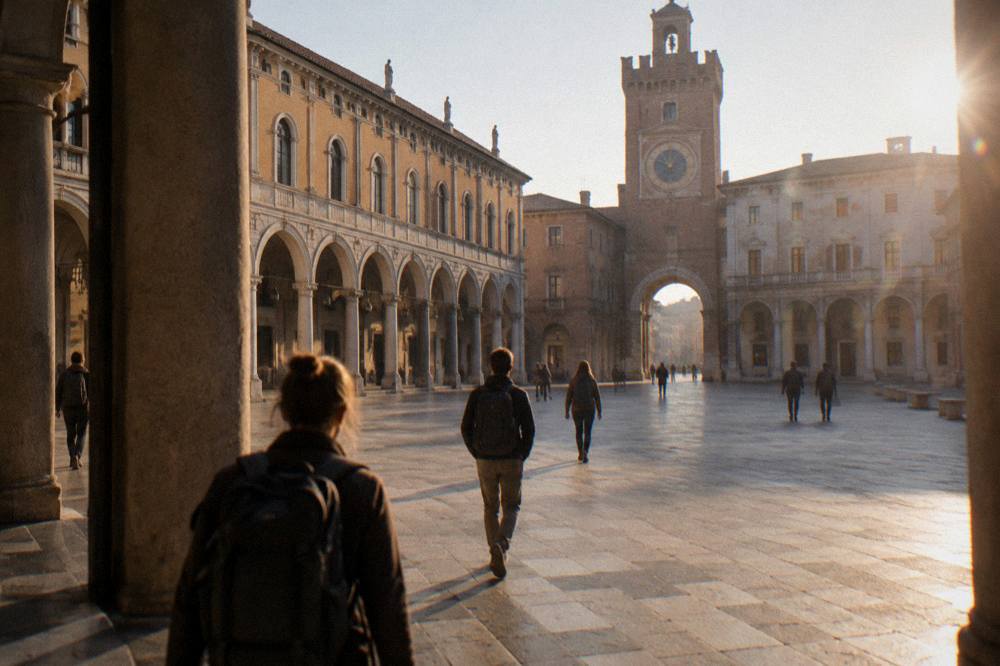
The station and its services are covered in the station guide, and arriving visitors coming from Venice or the airports will find the connections in Venice to Padua and getting to Padua. If Padua is your base and Venice is the day trip, the planning logic, including the fact that the Venice day-tripper access fee trial ended on 27 July 2026, is in Padua as a base for Venice.
| Practical item | The rule | Where it is documented |
|---|---|---|
| Tourist tax | Collected by the accommodation, capped at five consecutive nights | Comune di Padova tax page |
| Left luggage | Station platform 1, daily 6:00-20:00, EUR 5 per 6 hours | Turismo Padova (confirm current terms) |
| Market mornings | Erbe and Frutta from 7:30 or 8:00 | Comune di Padova market page |
| Sunday | Markets and shops reduce; sights keep their own hours | Plan sightseeing, not shopping |
Weather belongs in the plan too: the ERA5 reanalysis, 1991-2020, gives Padua a July and August mean daily high of 28.8 C and a November rain total of 114.0 mm, the highest month of the year, so a November food weekend leans on the covered Sotto il Salone and the porticoes while a summer one leans on the evening squares. The month-by-month numbers are in Padua weather and the timing conclusions in the best time to visit Padua.
Common Questions About Restaurants In Padua
What food is Padua known for?
The Padua tourism board names risotto ricco alla padovana, capon alla canevera made with the gallina padovana, and the torta pazientina, with bigoli and baccala as standard local staples, and Aperol was created in Padua in 1919.
Which neighbourhood is best for eating in Padua?
The Centro Storico around Piazza delle Erbe and Piazza della Frutta carries the daily markets, the covered Sotto il Salone and the evening aperitivo scene in Piazza delle Erbe and Piazza dei Signori, with the Santo and Prato della Valle quarter adding the Saturday market.
Does this page recommend specific restaurants?
No. This site prints only what its sources support, and its sources name dishes, markets and squares, not venues.
When do the Padua food markets run?
Piazza delle Erbe runs 7:30 to 13:30 Monday to Friday and 7:30 to 20:00 Saturday; Piazza della Frutta food stalls run 8:00 to 14:00 Monday to Wednesday and 8:00 to 19:00 Thursday to Saturday; Prato della Valle hosts its Saturday market 8:00 to 19:00 in winter and 8:00 to 20:00 in summer, all per the Comune di Padova.
What should you drink in Padua?
The spritz is the drink of the squares, and Aperol, its famous bitter, was created in Padua in 1919 by the Barbieri brothers. At Caffe Pedrocchi, the house drink since its 1831 opening has been the caffe Pedrocchi with mint.
Do you need to book restaurants in Padua in advance?
What does need advance booking is the Scrovegni Chapel, timed entry at most 25 people every 15 minutes, closed 16 to 27 November 2026 for the annual fresco inspection, so reserve that first and build the food day around it.