Padua And Shakespeare: The Taming Of The Shrew City
Shakespeare set The Taming of the Shrew in Padua, a city he is not recorded as ever visiting, and the Padua of the play is above all a university town. This guide separates what the sources support from what they do not, and shows how to see the real city the play borrows its name from.
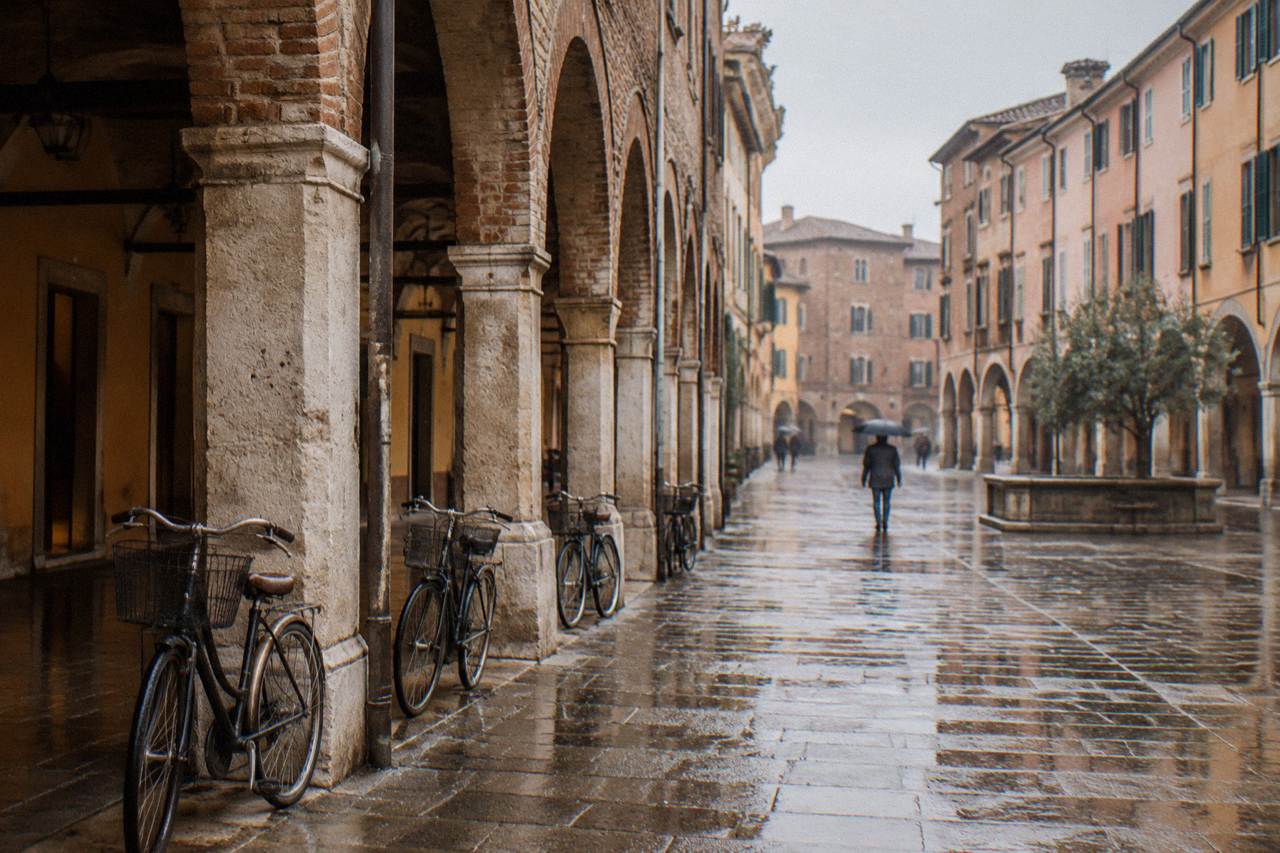
Short answer
The Taming of the Shrew is the Shakespeare play set in Padua. The city Shakespeare borrowed was a famous university town, home to Galileo's chair and the anatomical theatre, and today its Scrovegni Chapel, Basilica of Saint Anthony and Orto Botanico make it a destination in its own right about 36 km from Venice.
Shakespeare set one of his best known comedies, The Taming of the Shrew, in Padua, a city in the Veneto in northern Italy that sits inland on the Bacchiglione, about 36 km in a straight line from Venice. The connection between the English playwright and this arcaded university city is thin in documentary terms and rich in everything else: the play borrowed Padua's reputation as a place of learning, and the city that a visitor walks today still wears that reputation in stone, fresco and garden. This page, from the Padua Travel Guide editorial desk, reports what the sources actually say about the link, and then does what a guide should do: show you the real Padua behind it, from the Scrovegni Chapel to the anatomical theatre, with the current prices and hours attached. No claim here about Shakespeare's own life goes beyond the record, because the record is short: there is no evidence he ever left England, let alone reached the Veneto.
Which Shakespeare Play Is Set In Padua?
The Taming of the Shrew is the Shakespeare play set in Padua, and it is the only one: the comedy's action begins when a young scholar arrives in the city to study at its university, which was already one of the most famous in Europe when the play was written while Galileo was teaching there. The play treats Padua as a byword for learning, and that reputation was real: the Studium Patavinum was founded in 1222 and remains active today as the University of Padua.
That is the honest core of "Padua in Shakespeare", and it is worth being precise about it, because the internet is full of invented Shakespeare locations in this city. The general reference is simple: The Taming of the Shrew is set in Padua, and its plot opens on a student's arrival to study there. Anything more granular, a specific scene location, a quote tied to a specific piazza, a "Shakespeare walking route" of sites associated with the play, has no basis in the sources and you will not find it here. Nobody has ever identified a building in Padua that the play names, because the play does not name one.
What the play does trade on is Padua's fame as a university city, and that fame is documented beyond dispute. The University of Padua was founded in 1222, making it among the oldest in the world in the university's own wording, and by Shakespeare's lifetime it had already hosted Galileo Galilei, who held the chair of mathematics from 1592 to 1610 and later called those years the best eighteen years of his life. A playwright writing for a London audience of that era could pick no Italian city with a stronger student reputation, and the choice of Padua would have carried a clear signal to anyone who knew anything of continental learning.
The dates line up almost eerily. Shakespeare's play belongs to the same years in which Galileo was lecturing in Padua, and 1610, the year Galileo left, is the year he published the Sidereus Nuncius, the starry messenger, drawing on observations made with a telescope he had built and used from the Veneto. A visitor standing in the Sala dei Quaranta in Palazzo del Bo today is looking at the room tradition associates with Galileo's chair, part of a university story that was unfolding in real time while the play was on the London stage.
Did Shakespeare Ever Visit Padua?
No, and no source says he did: there is no evidence that Shakespeare ever travelled to Italy at all, and the settings of his Italian plays are understood as the work of a reader, not a traveller, drawing on translations, travel books and the Italy of the English imagination. Padua in The Taming of the Shrew is a literary setting, not a travel memory, and nothing in the play demonstrates personal knowledge of the city's streets.
This matters for how you read the connection, and it also protects you from a whole category of touristic claim. Italy gave Shakespeare more settings than any other foreign country, Padua among them, and the standard scholarly position is that he never went there. The city he wrote was assembled from books and hearsay: a place of universities, dowries and sharp-tongued merchants, which was a fair caricature of what English readers believed about the Veneto.
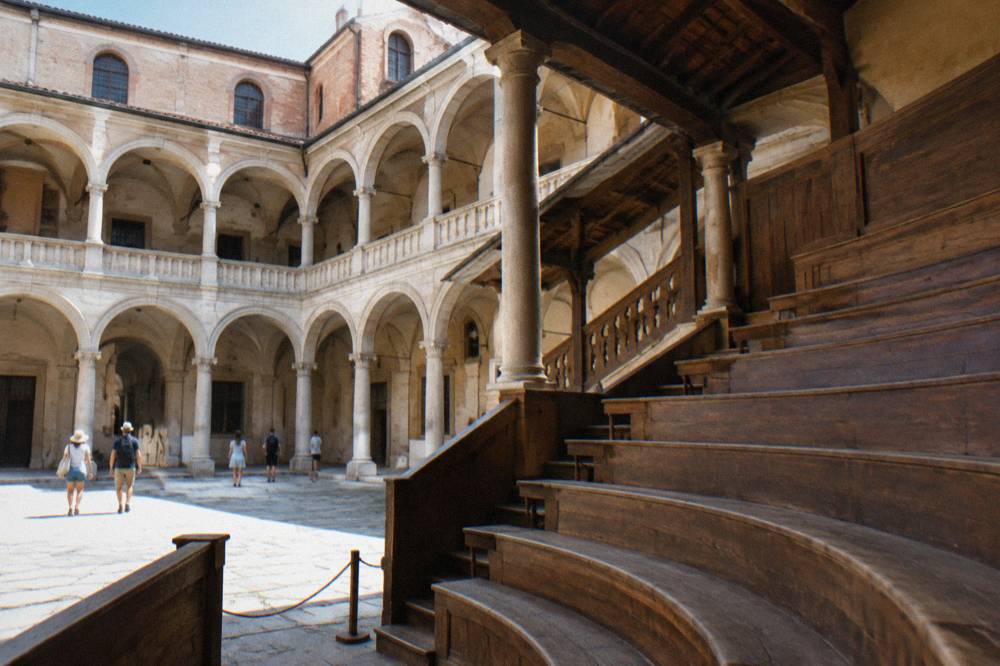
The irony is that the real Padua of the play's day was, if anything, more interesting than the stage version. In the very years the play was performed, the university was running the anatomical theatre inaugurated in 1594, the first permanent anatomical theatre, a tiered wooden funnel in Palazzo del Bo built for public dissections and medical teaching. Elena Lucrezia Cornaro Piscopia had already taken her doctorate in philosophy there on 25 June 1678? No: that came later, in 1678, when she became the first woman graduate of a university in recorded history. Both dates belong to the same institution, and both show a city where learning was public spectacle, which is exactly the flavour the play reaches for.
So the fair framing is this: Shakespeare borrowed a brand. Padua meant scholarship to an educated European, the way Oxford or Heidelberg did, and the playwright used that meaning without needing a single accurate street name. The visitor who comes here looking for the play will not find it, and the visitor who comes looking for the city the play's reputation was built on will find more than they expected: two UNESCO World Heritage listings, the Orto Botanico inscribed in 1997 and the fourteenth-century fresco cycles of Padova Urbs Picta inscribed in 2021, in a compact walkable centre about 36 km from Venice.
If you want the city's story told on the ground rather than assembled from books, the Private Padua Top City Sights Guided Tour covers the principal monuments with a licensed guide; Check availability on the operator's live listing.
What Was Padua Like When The Play Was Written?
The Padua of the play's setting was a city of the Republic of Venice, ruled from St Mark's since 1405, with a student population drawn from across Europe, a famous medical school and a skyline still shaped by the Basilica of Saint Anthony, begun in 1232, and Giotto's Scrovegni Chapel, painted between 1303 and 1305: a working Renaissance city, wealthy, learned and firmly inland, about 36 km from the lagoon.
The political frame is worth a sentence: Venice annexed Padua in 1405 and held it until 1797, so the city Shakespeare set his play in was Venetian territory in every practical sense, its markets, its laws and its university answering to the Republic. An English playwright choosing Padua was, in effect, choosing Venice's university suburb, and the two cities have traded on that relationship ever since. Today the relationship still shapes travel: the regional train covers the roughly 36 km between Padova station and Venezia Santa Lucia in about 26 to 40 minutes, with a regional fare of about EUR 5, which is why the route between them is one of the busiest short hops in northern Italy.
The university made the city cosmopolitan. Students came from across the continent to study law and medicine, and the institutions they used survive: Palazzo del Bo with its anatomical theatre of 1594, and the Orto Botanico, founded in 1545 and described by the university as the world's first university botanical garden, inscribed by UNESCO in 1997. Galileo arrived in 1592 and taught until 1610, overlapping almost exactly with the play's London run. A short table puts the city's Shakespeare-era credentials in order.
| Date | Event | Source note |
|---|---|---|
| 1222 | Studium Patavinum, the University of Padua, founded | University's own history pages |
| 1303-1305 | Giotto paints the Scrovegni Chapel cycle | Chapel's own site, "in just two years" |
| 1232 | Construction of the Basilica of Saint Anthony begins | Reported, a year after the Saint's death in 1231 |
| 1405 | Venice annexes Padua, ruling until 1797 | Standard histories |
| 1545 | Orto Botanico founded, the first university botanical garden | University's own wording |
| 1592-1610 | Galileo holds the chair of mathematics | University's own history pages |
| 1594 | First permanent anatomical theatre inaugurated | University's own wording |
| 1678 | Elena Cornaro Piscopia becomes the first woman graduate | University records, 25 June 1678 |
None of this appears in the play by name. But it is the background noise of Padua's reputation, the reason the city was a shorthand for scholarship, and it is all still visitable in a walkable core bounded by the remains of the city walls.
How Do You See The Padua Of Learning Today?
Start with the university quarter around Palazzo del Bo, where guided visits of about 45 minutes cost EUR 10 full price and include the anatomical theatre and Galileo's chair, then walk to the Scrovegni Chapel and the Eremitani complex, and finish in the historic market squares, Piazza delle Erbe and Piazza dei Frutti, whose stalls the Comune di Padova lists as running Monday to Friday from 7:30 and on Saturday into the evening.
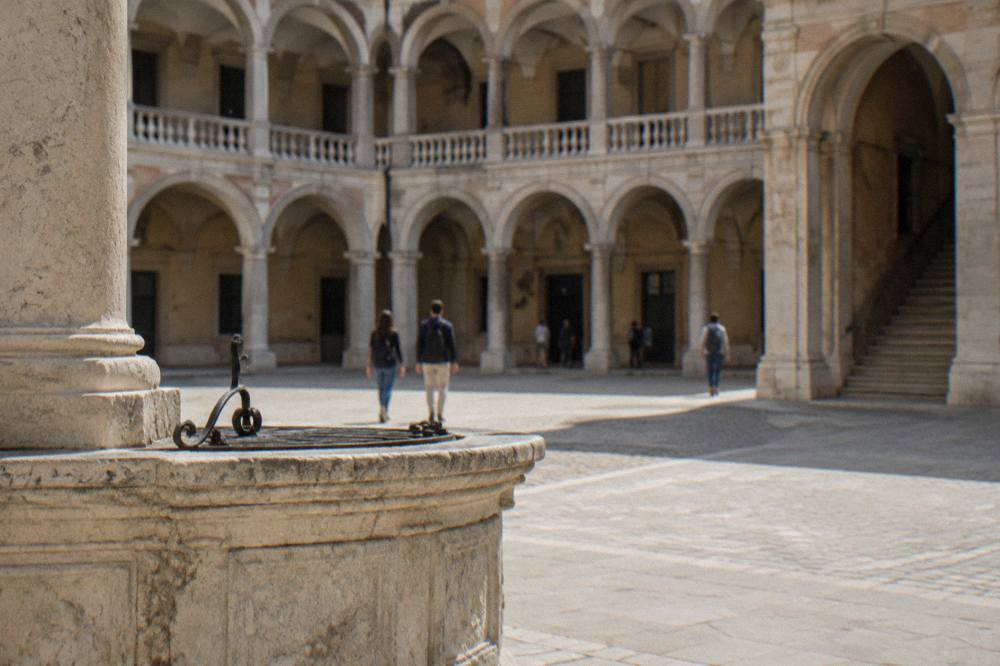
The university part is the section of a Shakespeare-themed visit that has real substance, because the institution the play gestures at is still here. The historic building, Palazzo del Bo, offers a guided "Giro storico": full price EUR 10, reduced EUR 8, special reduced EUR 6, about 45 minutes, with alternating Italian and English slots through the day and booking through the university's centre at 049 827 3939. The route covers the Aula Magna, the Sala dei Quaranta with Galileo's chair, the anatomical theatre of 1594, and the statue of Elena Cornaro, though the university notes not every room is guaranteed every day.
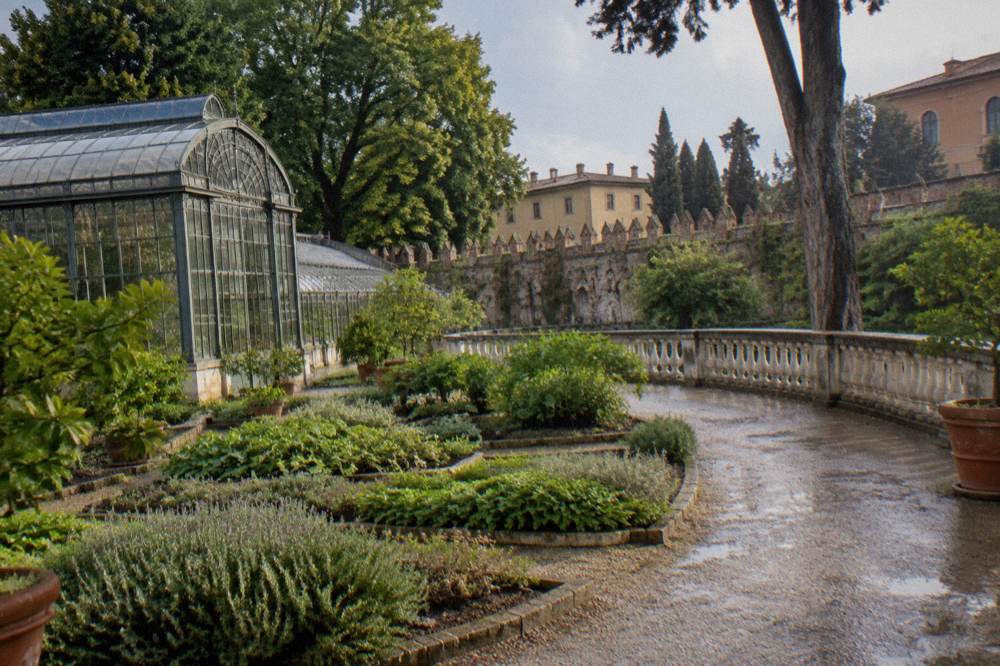
From there the literary visitor drifts naturally into the city's other great claim, painting, because Padua holds not one but two UNESCO inscriptions. The Scrovegni Chapel holds Giotto's fresco cycle, painted between 1303 and 1305 for Enrico degli Scrovegni, and it is the single most demand-driven ticket in the city. The rules are strict and worth knowing cold: entry is timed, in groups of at most 25 people every 15 minutes, with about 15 minutes inside the chapel itself, and you must be at the entrance 5 minutes before your slot; latecomers are not admitted and must book and pay again. There is no same-day online booking. The daytime ticket, EUR 15 full and EUR 11 reduced plus a EUR 1 booking fee, also covers the Musei Civici Eremitani and Palazzo Zuckermann. The chapel is closed 16 to 27 November 2026 for the annual fresco inspection. Our Scrovegni Chapel tickets guide walks through the whole booking process.
| Scrovegni Chapel visit | Detail |
|---|---|
| Daytime ticket | EUR 15 full, EUR 11 reduced, EUR 5 residents, plus EUR 1 booking fee |
| Ticket includes | Musei Civici Eremitani and Palazzo Zuckermann |
| Evening ticket | Chapel only, 25 March to 1 November, 19:00 to 22:00, every 20 minutes |
| Entry system | Max 25 people every 15 minutes, about 15 minutes inside, arrive 5 minutes early |
| Closures | 16 to 27 November 2026, plus 1 May, 25 and 26 December, 1 January |
The evening visit deserves a special mention for a literature-themed trip: "Giotto sotto le stelle", Giotto under the stars, runs from 25 March to 1 November with entries every 20 minutes from 19:00, chapel only. Watching a fresco cycle painted between 1303 and 1305 by electric light, in the city Shakespeare never saw, is as close as a modern visitor gets to the kind of encounter the play imagines for its student arrival: Padua as a place where the past is the main event.
What Else Belongs On A Padua And Shakespeare Itinerary?
The honest itinerary keeps the play as a frame and the city as the content: the Basilica of Saint Anthony, free to enter, with the Saint's tomb; the Orto Botanico, EUR 15 full since 1 September 2026; Palazzo della Ragione with the Sotto il Salone market beneath it; and Prato della Valle with its canal and double ring of statues, all within a walkable centre served by a EUR 1.70 ninety-minute urban ticket.
None of these is a Shakespeare site, and this page will not pretend otherwise. But every one of them belonged to the Padua whose reputation the play borrowed, and several predate the play by centuries. The Basilica of Saint Anthony, begun in 1232, a year after the Saint's death on 13 June 1231, is free to enter and holds the tomb and the Chapel of the Relics; entry is free though hours should be confirmed on the basilica's own site before you go, and dress suitable for a church. Our Basilica of Saint Anthony guide covers it in full.
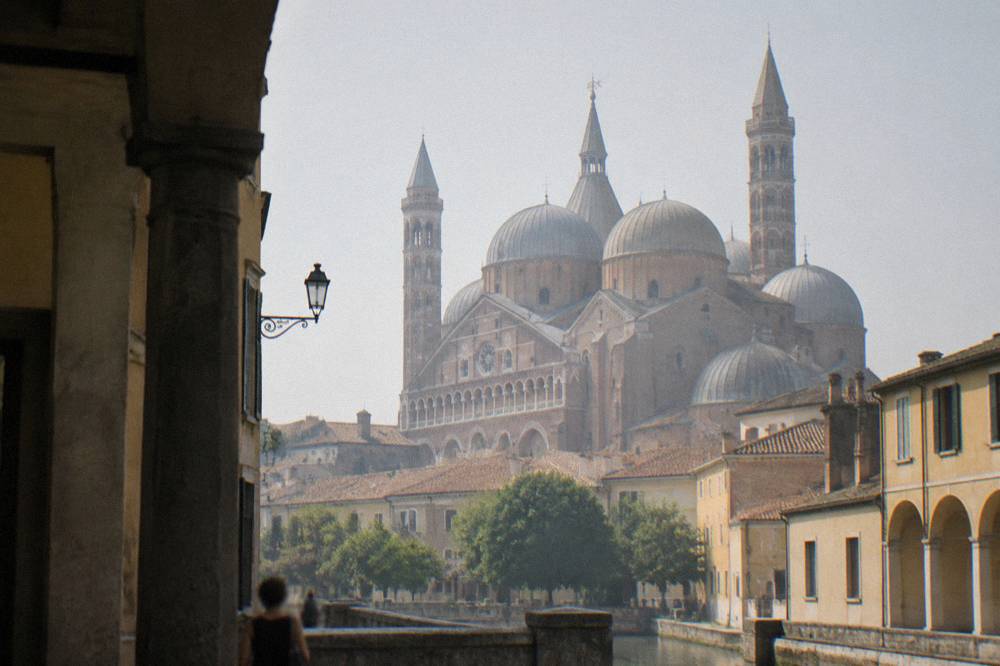
The Orto Botanico is the other university institution with world standing: founded in 1545, inscribed by UNESCO in 1997, and carrying new tariffs since 1 September 2026 of EUR 15 full price (visitors aged 26 to 64), EUR 12 full in winter from November to February, and reduced rates for visitors 65 and over. The garden is closed on non-holiday Mondays and audioguides are included in the ticket. It is a living piece of the university's research tradition, the kind of institution that made Padua's name what it was when an English playwright picked the city out of a map of reputations. The full index of guides sits on Padua Travel Guide.
Palazzo della Ragione anchors the market quarter: the Comune di Padova lists the Piazza delle Erbe market, about 52 stalls of fruit, vegetables and flowers, running Monday to Friday 7:30 to 13:30 and Saturday 7:30 to 20:00, with the Piazza dei Frutti market alongside it and a Saturday market at Prato della Valle. Under the palace itself sits Sotto il Salone, the permanent covered food market the tourism board describes as centuries old. This is the commercial Padua the play's merchant world sketched in caricature, still functioning six days a week.
| Stop | What it is | Entry |
|---|---|---|
| Palazzo del Bo | Historic university, anatomical theatre, Galileo's chair | Guided visit EUR 10 full, about 45 minutes |
| Scrovegni Chapel | Giotto cycle, 1303-1305, timed entry | EUR 15 full plus EUR 1 booking fee |
| Orto Botanico | University botanical garden, founded 1545, UNESCO 1997 | EUR 15 full since 1 September 2026, EUR 12 winter |
| Basilica of Saint Anthony | Tomb of the Saint, begun 1232 | Free entry |
| Palazzo della Ragione | Great hall over the covered market | EUR 8 full, EUR 6 reduced, per the museums' price list |
| Prato della Valle | Canal with double ring of statues, Saturday market | Open space |
Is The University Of Padua Worth Visiting For Itself?
Yes: the University of Padua is not a footnote to a play but one of Europe's historic institutions, founded in 1222, described by the university itself with the wording "among the oldest" in the world, with about 76,000 students reported for the 2026/27 academic year, Galileo's eighteen years in the chair of mathematics, the first permanent anatomical theatre of 1594, and the first woman graduate in recorded history in 1678.
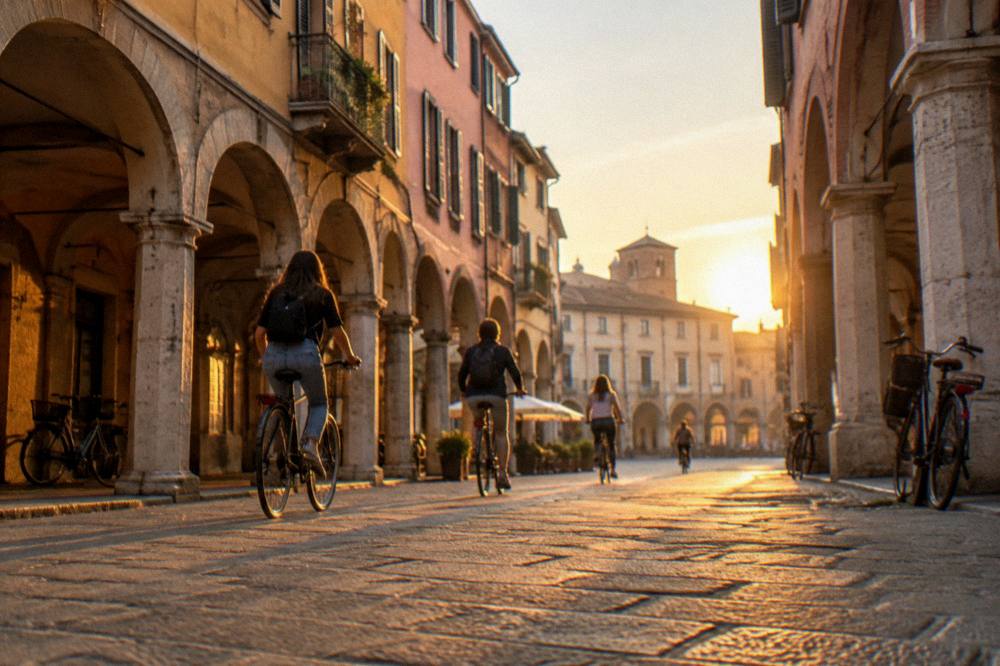
The student presence is the city's texture, and it is the direct descendant of the reputation the play leaned on. With roughly 76,000 students reported against a resident population of about 208,000, the university is not an ornament of Padua; it is a large share of the city's daily life, from the market queues to the bicycles locked outside lecture halls. A traveller who arrives by train and walks from the station through the historic centre passes through that population continuously, and it is the closest modern equivalent to the world the play's opening conjures: a city organized around study.
The university's own history pages supply the dated spine: founded 1222 by students and teachers who arrived from Bologna; the botanical garden in 1545; the anatomical theatre in 1594; Galileo from 1592 to 1610, years he himself called the best eighteen of his life; Elena Cornaro Piscopia's philosophy doctorate on 25 June 1678. Every one of those facts is printed by the institution about itself, which is the standard this site holds for a claim about a named person. Our University of Padua guide goes deeper, and Galileo's Padua years get their own treatment in the linked guide to his time here.
For planning purposes, the Palazzo del Bo visit slots easily into a single day alongside the Scrovegni Chapel and the market squares, because everything sits inside the old walled centre. Getting around needs no car: the urban TU1 ticket is EUR 1.70 for 90 minutes, and the SIR1 tram runs north to south through the city. A new tram line, SIR3, is in testing, with service targeted around the end of 2026, but no opening date should be counted on until the operator announces it.
Can You Day Trip From Padua To Other Shakespeare Cities?
Yes, and Verona is the obvious one: Romeo and Juliet is set there, and Verona is about 69 km from Padua in a straight line with direct trains taking about 43 to 60 minutes; Venice, about 36 km away and about 26 to 40 minutes by regional train for about EUR 5, is the other, remembered for The Merchant of Venice and Othello, and both sit inside a single day's reach of Padua.
This is where a Shakespeare-themed trip to the Veneto becomes genuinely practical, and where Padua earns its keep as a base. The distances and times, printed above, come from the computed straight-line figures and the reported train times, and they add up to a simple fact: Padua is one of the best-connected small cities in northern Italy for a playwright's grand tour. Verona carries the most famous literary association of the region, Venice the most famous of all, and Padua sits between them with cheaper, calmer accommodation than either, a point our Padua as a base for Venice guide develops.
One Venice practicality deserves a plain correction, because outdated advice circulates widely: the Venice day-tripper access fee trial ended on 27 July 2026, and since that date the fee does not apply. No decision for 2027 had been announced. A day-tripper from Padua should not be told to budget for it, and should simply check the official Venice access-fee page close to travel in case anything changes.
| Day trip from Padua | Straight-line distance | Train time (about) | Literary association |
|---|---|---|---|
| Venice | 36 km | 26 to 40 minutes | The Merchant of Venice, Othello |
| Verona | 69 km | 43 to 60 minutes | Romeo and Juliet, The Two Gentlemen of Verona |
| Vicenza | 30 km | 16 to 25 minutes | Palladio's city, no Shakespeare play |
Vicenza belongs in the table for scale rather than for Shakespeare, and its Teatro Olimpico, EUR 12 full price per the theatre's own site, rewards the short hop. But the honest ranking for a literary itinerary is Venice first, Verona second, and Padua itself, quietly, third: the city with the least famous play and the strongest claim on the real history of learning that all the plays gesture at.
When Should You Visit Padua For A Literature Trip?
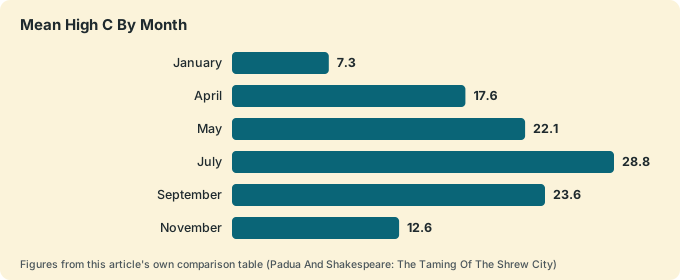
The ERA5 reanalysis for Padua, 1991 to 2020, shows July and August with a mean daily high of 28.8 C and a mean low of 18.9 and 19.2 C respectively, January with a high of 7.3 C and a low of -0.2 C, and November carrying the highest monthly rainfall at 114.0 mm, so spring and early summer fit an itinerary built around walking, a chapel with timed entry and a garden.
Weather is a planning input here more than in a beach destination, because a Padua built around frescoes, arcades and gardens is walked, not driven. The months either side of summer give the comfortable middle of the table below: April at a 17.6 C mean high and 84.4 mm of rain, May at 22.1 C and 99.7 mm, September at 23.6 C and 105.5 mm. The figures are modelled reanalysis values, not a weather-station record, and they describe the climate, not any particular week.
| Month | Mean high C | Mean low C | Rain mm |
|---|---|---|---|
| January | 7.3 | -0.2 | 53.6 |
| April | 17.6 | 7.8 | 84.4 |
| May | 22.1 | 12.4 | 99.7 |
| July | 28.8 | 18.9 | 62.1 |
| September | 23.6 | 14.9 | 105.5 |
| November | 12.6 | 5.5 | 114.0 |
Two fixed calendar facts matter more than climate for this particular page. First, the Scrovegni Chapel closes entirely from 16 to 27 November 2026 for its annual fresco inspection, so a literature trip in the second half of November loses its centrepiece. Second, the Orto Botanico runs winter hours and winter pricing from November, EUR 12 full, and closes on non-holiday Mondays through the cold months. Beyond those, the city's calendar belongs to its own traditions rather than to anything Shakespearean: the feast of Saint Anthony on 13 June, with the Tredicina running 31 May to 12 June in 2026, is the city's own annual celebration. Our best time to visit Padua and Padua weather pages carry the full breakdown.
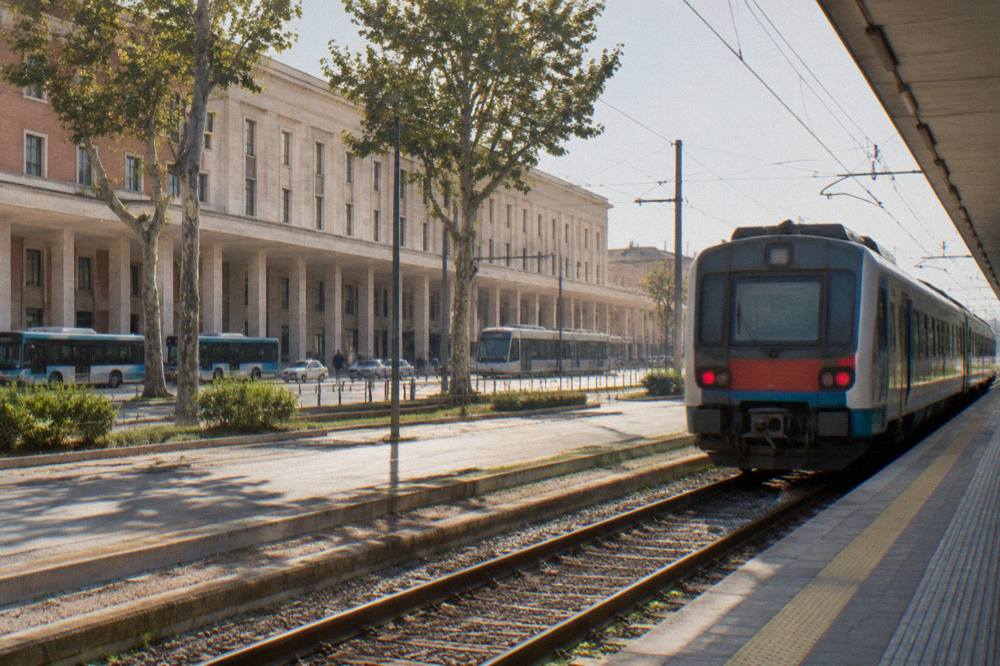
Practicalities for the trip itself: the airport bus from Venice Marco Polo to Padua costs EUR 13 one way and takes about 45 minutes; the station left-luggage office at platform 1 is open daily 6:00 to 20:00 at EUR 5 per 6 hours; the tourist tax exists, is collected by your accommodation and is capped at five consecutive nights. All of it is laid out in our how to get to Padua and getting around Padua guides.
Common Questions About Padua And Shakespeare
Which Shakespeare play is set in Padua?
The Taming of the Shrew is the Shakespeare play set in Padua, and its story opens with a scholar's arrival to study at the city's university, founded in 1222. It is the only Shakespeare play set in the city.
Did Shakespeare ever visit Padua?
There is no evidence that Shakespeare visited Padua, or Italy at all. The play's Italian settings are understood as the work of a reader drawing on translations and travel writing, not a traveller's memory of the city.
Are there Shakespeare sites to visit in Padua?
No building in Padua is identified in the play by name, and no site in the city has a documented link to it. What a visitor can see is the real city behind the reputation: the University of Padua, Palazzo del Bo with its 1594 anatomical theatre, the Scrovegni Chapel and the Orto Botanico.
How long does it take to visit the Scrovegni Chapel?
About 15 minutes inside the chapel, in timed groups of at most 25 people every 15 minutes, after a wait in the climate-controlled waiting room. Arrive 5 minutes before your slot; latecomers are not admitted and must book and pay again. The daytime ticket also covers the Musei Civici Eremitani and Palazzo Zuckermann.
How far is Padua from Venice and Verona?
Padua lies about 36 km in a straight line from Venice, with regional trains taking about 26 to 40 minutes and a regional fare of about EUR 5. Verona is about 69 km in a straight line, with direct trains taking about 43 to 60 minutes. Both work as day trips.
Is Padua worth visiting if you are not interested in Shakespeare?
Yes. Padua holds two UNESCO World Heritage listings, the Orto Botanico from 1997 and the fourteenth-century fresco cycles of Padova Urbs Picta from 2021, plus Giotto's Scrovegni Chapel, the Basilica of Saint Anthony and one of Europe's historic universities. The play is a frame, not the reason to come.
