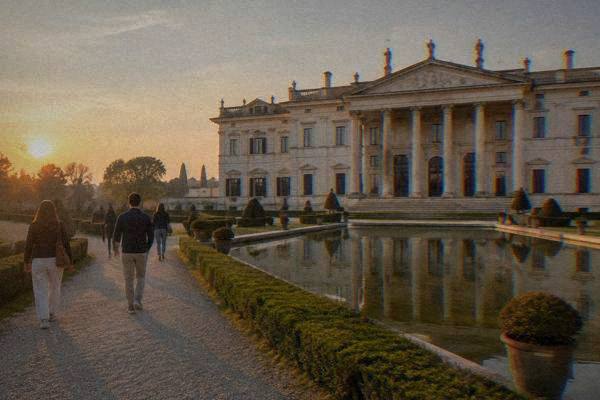
Ferrara Day Trip From Padua: The Este Castle And The Walls
Ferrara sits about 66 km from Padua in a straight line, a walled Emilia-Romagna city that pairs a moated castle with a circuit of ramparts you can walk. Here is how the day trip works from Padua.
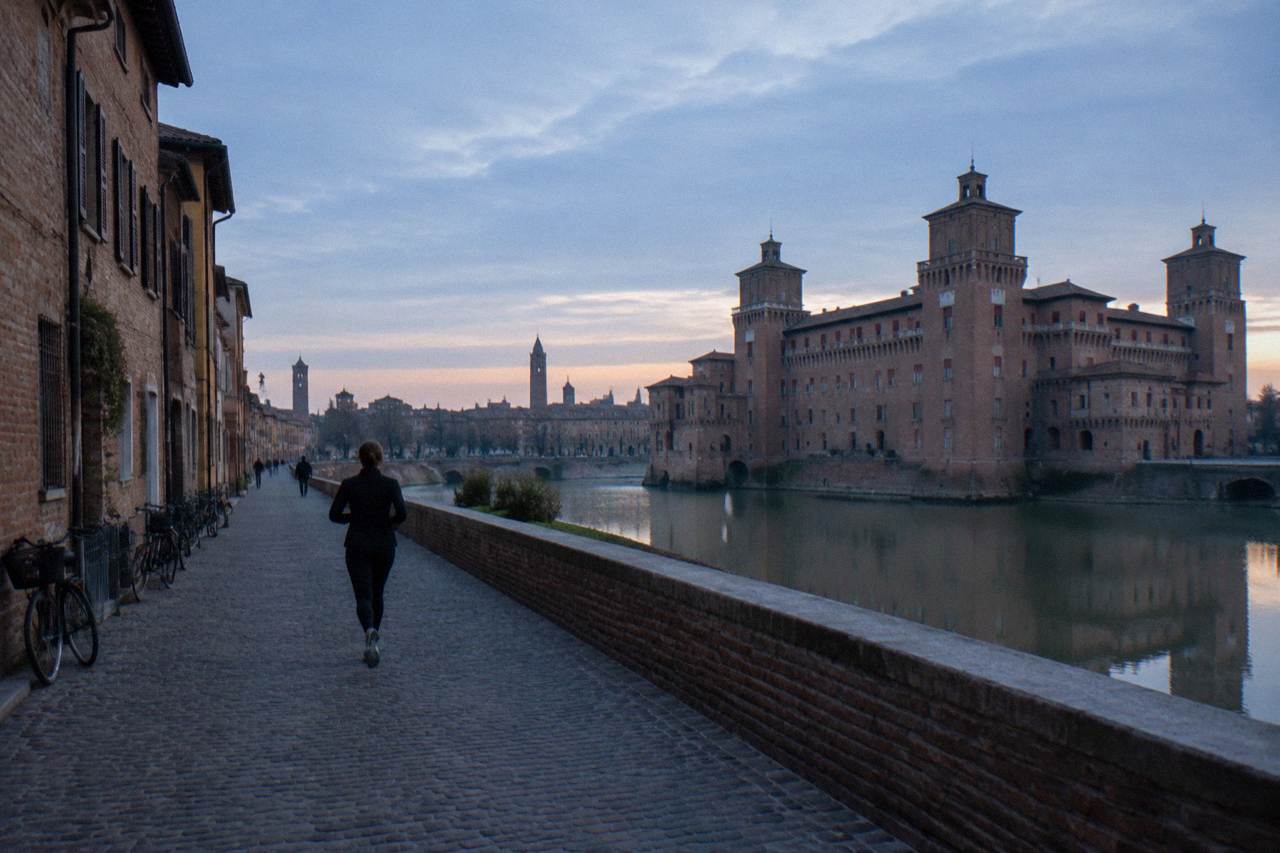
Short answer
Ferrara lies about 66 km from Padua in a straight line, and a day trip covers the castle, the cathedral square and a stretch of the walls on foot or by bike. Buy train tickets through the operator's app or website, and check the castle's ticket page for prices and opening times before you set out.
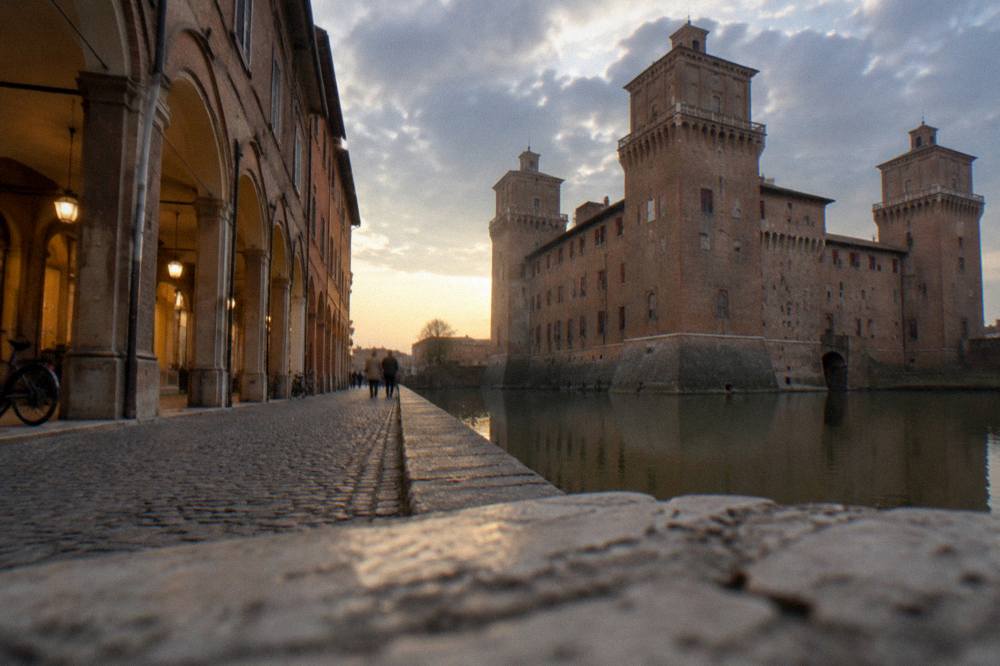
Ferrara stands about 66 km from Padua in a straight line, east across the Veneto border into Emilia-Romagna, and it makes one of the bigger day trips you can build from a Padua base. The city is known for its moated Este Castle at the centre and for the long circuit of defensive earth walls that rings the whole town, which sets it apart from the arcaded squares and fourteenth-century fresco cycles that Padua itself is famous for. This page sets out what the trip involves: the distance and the transport options, what one day on the ground can realistically hold, and how Ferrara compares with the nearer day trips around Padua such as Vicenza at about 30 km or Venice at about 36 km. Where a price, a timetable or an opening time is not given here, check the operator's or venue's own page before you travel, because the details change.
Why Does Ferrara Work As A Day Trip From Padua?
Ferrara works as a full-day trip from Padua because the entire visit happens on foot inside the wall circuit: the castle, the cathedral and the main streets sit close together, so one day is enough to see the core and walk part of the ramparts, and the city is compact enough that no local transport is needed once you arrive. The distance is about 66 km in a straight line from the centre of Padua, which makes it farther than Venice, Vicenza or the Euganean Hills but still an easy round trip for a full day. The trade-off is simple. Nearer destinations such as Abano Terme at about 8 km or Monselice at about 21 km can fill half a day; Ferrara rewards giving it the whole one.
The character of the place is different from Padua's. Padua is a university city, founded around a studium established in 1222, with two UNESCO listings of its own: the Orto Botanico from 1997 and the fourteenth-century fresco cycles, Padova Urbs Picta, inscribed in 2021. Ferrara's identity is ducal rather than academic: a castle with a moat, a cathedral, and walls that have survived as a green belt of paths and trees around the town. If your Padua stay already covers Giotto's Scrovegni Chapel, the Basilica of Saint Anthony and the Prato della Valle square, Ferrara is the logical next ring out.
A note on pacing. The walls are the part people underestimate, because they are not a monument you look at but a walk you take, and the loop around them takes a real slice of the day. Plan the castle first, the cathedral and the centre second, and leave the wall walk for the afternoon, when the itinerary can stretch or shrink to fit the time left before your return train.
How Do You Get From Padua To Ferrara?
Trains run from Padova station toward Ferrara on the regional network, and the journey is the practical way to do the trip; buy tickets in advance through the train operator's own app or website, where the current fare and timetable for your exact date appear before you pay. The straight-line distance is about 66 km, and Padova station sits on the main Venice to Milan line with the IAT tourist office at the platform 1 exit open Monday to Saturday 9:00 to 19:00 and Sundays 10:00 to 16:00, so you can ask there too. This site's sources give no Ferrara fare or journey time, so check the operator's site rather than any number quoted elsewhere.
A few logistics that are anchored in Padua itself:
| Item | Detail |
|---|---|
| Padova station left luggage | Platform 1, daily 6:00 to 20:00, EUR 5 per 6 hours |
| Urban ticket in Padua (TU1) | EUR 1.70, valid 90 minutes |
| Urban daily ticket (TU1) | EUR 4.70 |
| Contactless payment on Padua buses and trams | Tap a contactless card on board, EUR 1.70 |
| IAT tourist office, station | Mon to Sat 9:00 to 19:00, Sun 10:00 to 16:00 |
Book the return leg when you book the outward one, or at least decide it before you leave the station in Ferrara, so the end of the day is not spent hunting for a connection. There is no same-day panic involved on this route the way there is with the Scrovegni Chapel in Padua, which is timed entry only, with at most 25 people admitted every 15 minutes and no same-day online booking; but the same rule of thumb holds everywhere in this region: the booked seat beats the hopeful one.
What Does One Day In Ferrara Cover?
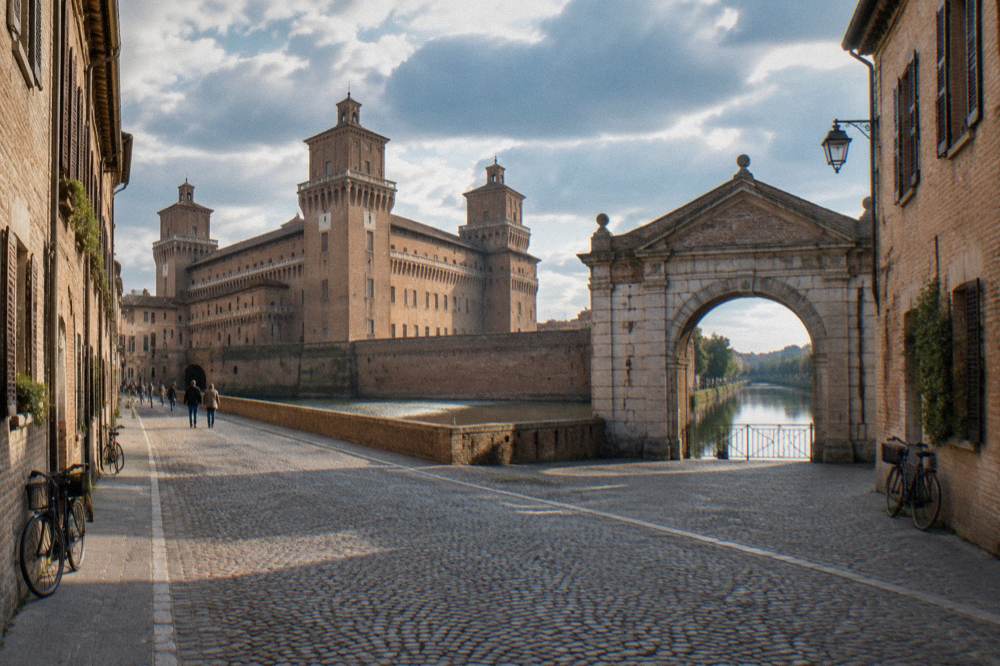
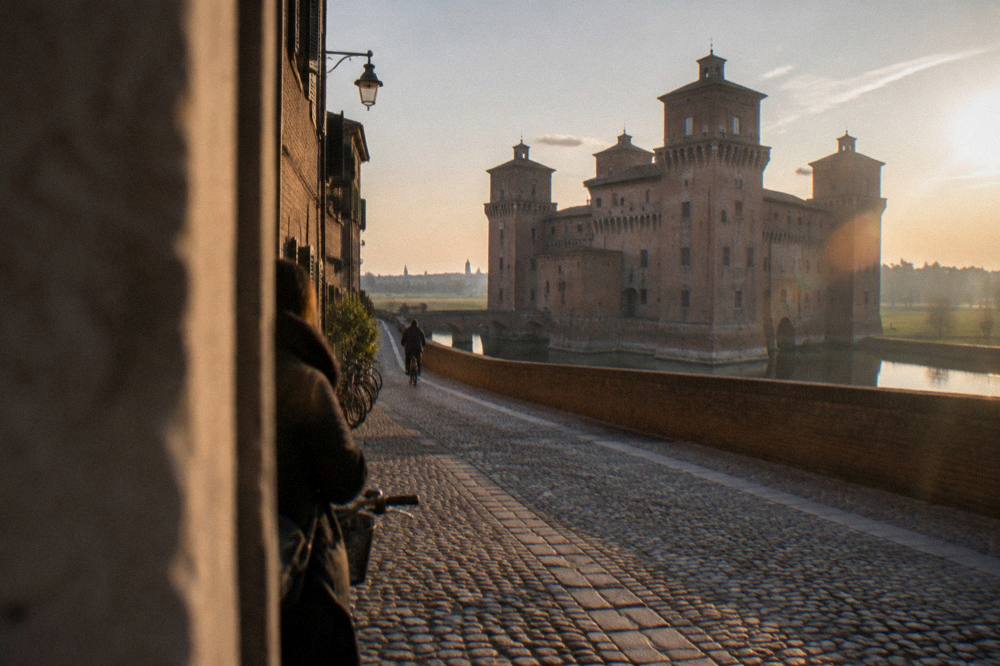
One day in Ferrara covers the Este Castle, the cathedral and its square, the main shopping street that links them, and a stretch of the walls on foot or by bike, which is the shape of the visit the city lends itself to: a dense centre first, then the green rampart loop in the afternoon. The castle is the anchor. It stands with its moat right in the middle of town, and its ticketed interior covers the ducal apartments and the towers; the venue's own ticket page carries the current prices, hours and any timed-entry rules, and those details belong to the day you travel, so check them there rather than relying on secondhand figures.
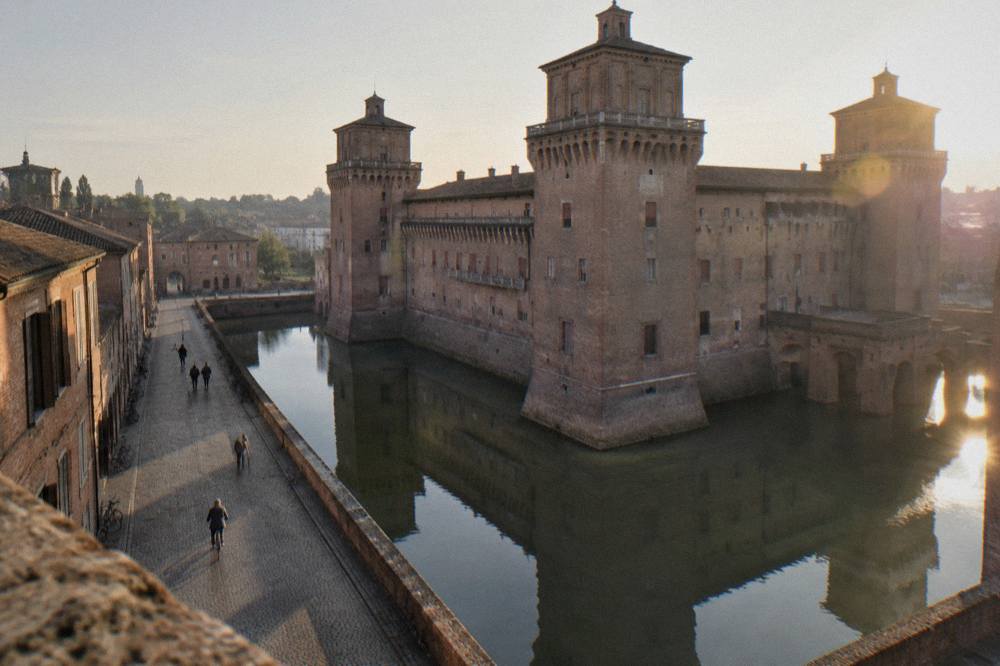
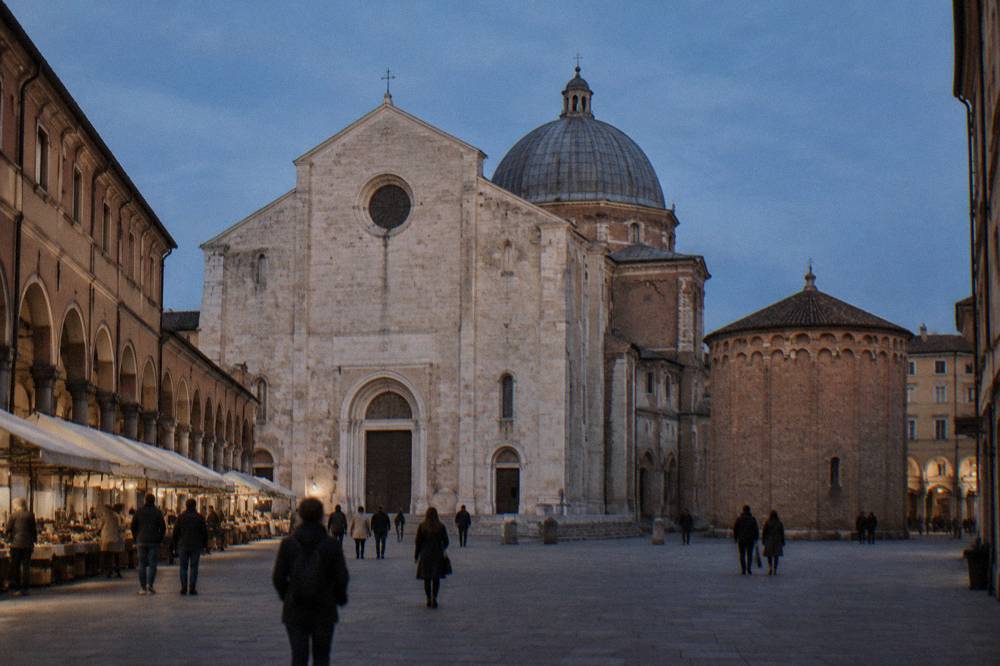
The cathedral sits a short walk away, its marble front facing the square, and the streets between castle and cathedral hold the bulk of the old centre. This is where the morning disappears, pleasantly. Ferrara's centre is flat, like Padua's, and it is closed-in and shaded, which matters in summer: the ERA5 reanalysis for the region, 1991-2020, puts July and August mean daily highs around 28.8 C in the Padua grid cell, and Ferrara's summer climate runs comparable, so the middle of the day belongs to interiors and shade, with the walls saved for later. More of these guides are collected on Padua Travel Guide.
A workable shape for the day:
| Time | Block | Notes |
|---|---|---|
| Morning | Este Castle interior | Book the first available slot; check the venue's ticket page for times |
| Late morning | Cathedral square and the centre | Flat, compact, all on foot |
| Lunch | Around the main street | Menus lean to Emilia-Romagna cooking rather than Veneto |
| Afternoon | Wall circuit walk or bike loop | The green belt around the whole town |
| Late afternoon | Return to the station | Decide the return leg at booking, not on the day |
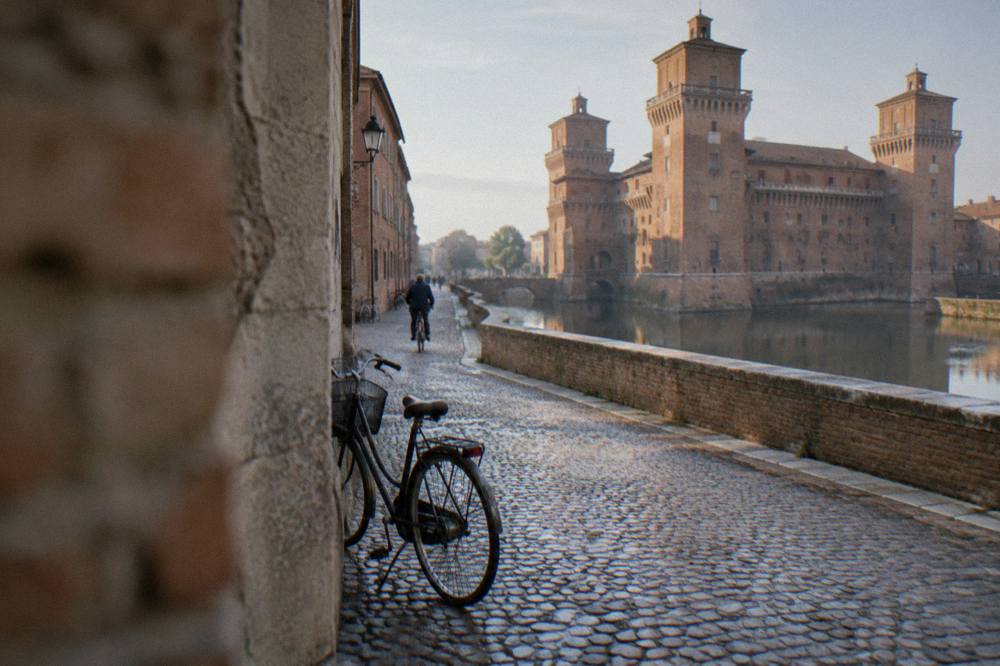
Bikes are part of the culture of the place in the way they are in Padua, and renting one for the wall loop is the efficient choice if you want the full circuit rather than a section. Check rental prices on arrival, since this site carries no figure for them. Padua itself is a strong cycling base too, with tram line SIR1 running north to south through the city on about 10.5 km of track, if you want to compare the two cities' street life when you get back.
How Do The Ferrara Walls Compare With Padua's Walls?
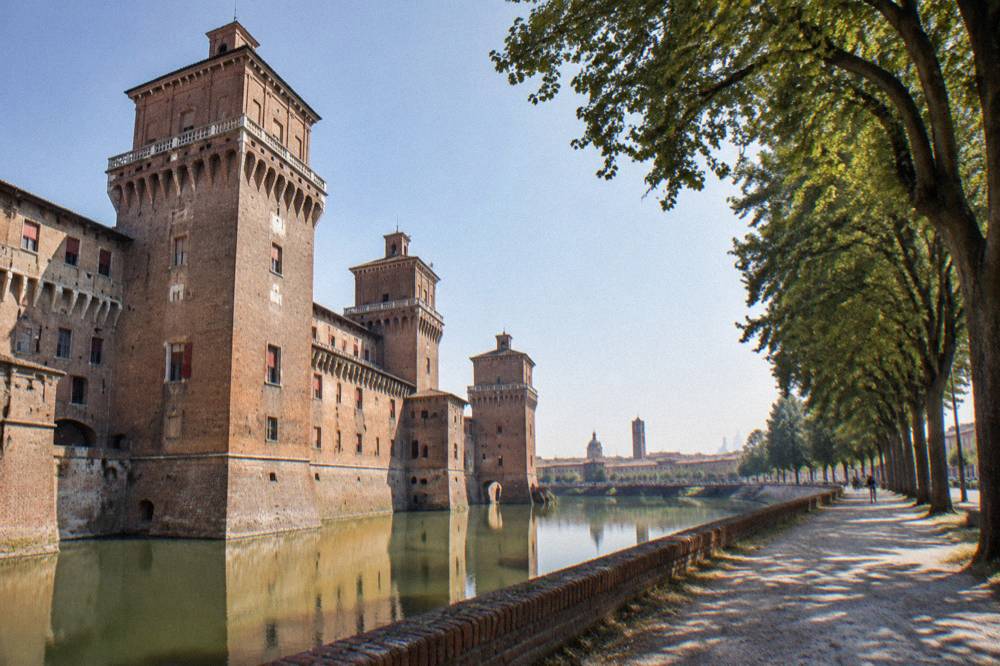
Ferrara's walls are a continuous walking and cycling circuit of earth ramparts with trees around the whole city, while Padua's walls are fragments: the Mura di Padova survive as sections and gates, including Porta Portello, also named Porta Ognissanti, on the northern side, and they are read as archaeology rather than walked as a loop. That difference is the honest reason to make the trip. A visitor based in Padua who wants the full rampart experience, the kind where the wall itself is the itinerary, finds it in Ferrara rather than at home.
This site's sources give no date or length for Padua's wall circuit, and none for Ferrara's either, so treat both as monuments to look up on their own pages rather than to date here. What the comparison does support is the pairing: a Padua itinerary that walks the surviving gates and reads the Venetian-era city, followed by a Ferrara day that spends three hours actually on top of the ramparts, gives you both halves of the story of walled cities in this part of northern Italy. For the Padua half, see Padua's surviving city walls.
What Should You Book Ahead For A Ferrara Day Trip?
Book the train tickets, the castle entry and, if you want a guide, a walking product, before the day itself, because the castle runs timed entry and the trains are cheapest and most legible when bought through the operator's own app or site; everything else in Ferrara, the walls, the streets and the squares, needs no booking at all. The castle's ticket page lists the current prices, the concession rules and any closure dates, and those change often enough that a guidebook figure or a blog number should not be trusted over the venue's own list. The same discipline applies to any exhibition inside the civic museums, which rotate.
For contrast, this is the point where a guided product earns its fee. A booked day trip handles the transport and the timing, and Padua has a roster of guided options for travellers who prefer that structure. The site's featured pick for this page is the Vescovi and Valsanzibio trip, a guided day out toward the Euganean Hills, which suits a different day of your stay from the Ferrara run: Check availability. Ferrara itself is best done independently on this site's evidence, since the trip is one train and one compact centre.
How Does Ferrara Compare With The Other Day Trips From Padua?
Ferrara is among the farthest of the classic Padua day trips at about 66 km in a straight line, farther than Venice at about 36 km, Vicenza at about 30 km and the whole Euganean Hills cluster, and only Bologna at about 110 km lies clearly beyond it, so Ferrara suits a second or third day of exploring rather than a first. Distance is not the only metric, but it is the one this site's sources can state with precision, and it is the honest first filter for choosing between destinations when your Padua stay is short.
| Day trip from Padua | Straight-line distance | Sourced detail in this site's pack |
|---|---|---|
| Abano Terme | about 8 km | Thermal town in the Euganean basin |
| Montegrotto Terme | about 11 km | Thermal town, spa details not sourced |
| Villa dei Vescovi | about 15 km | Adults EUR 11, ages 6 to 18 EUR 6, under 6 free, family EUR 28 |
| Vicenza | about 30 km | Teatro Olimpico EUR 12 full, EUR 9 reduced |
| Venice | about 36 km | Train about 26 to 40 minutes, regional about EUR 5 |
| Monselice | about 21 km | Hill town; castle details not sourced |
| Este | about 26 km | The Este family's name is tied to Ferrara's dynasty |
| Ferrara | about 66 km | Walls and Este Castle; tickets on the venue's page |
| Bologna | about 110 km | The farthest classic trip on this list |
The pattern in that table is worth reading twice. The Euganean Hills destinations cluster inside about 26 km, the regional cities sit between 30 and 41 km, and Ferrara and Bologna form the outer ring. If you are planning a week in Padua, a natural rhythm is the city itself first, following an itinerary like one day in Padua, then the near hills, then the regional cities, and Ferrara once the near options are used.
For the hills days, the sibling pages on this site cover Este, Monselice and the Euganean Hills as a whole. For the city days, see Vicenza, Verona, Treviso and Venice, and for the big sister to Ferrara, Bologna. Each of those pages carries only the figures this site's research supports, which keeps them honest in the same way this one is.
What Does A Ferrara Trip Cost Beyond The Train?
The costs you can state before leaving Padua are few: the EUR 1.70 urban ticket or EUR 4.70 day ticket if you need to cross Padua to the station, the EUR 5 per 6 hours left-luggage fee at platform 1 if you are checking out of your hotel that day, and the tourist tax, which your accommodation collects and which is capped at five consecutive nights; the castle ticket and any bike rental are priced on the day at the venue. That is the full list of figures this site can stand behind for this itinerary.
Everything else on the day is spending you control: lunch, coffee, and whatever the shops along the main street sell. A reasonable frame is to fix the two or three anchor costs, the train, the castle and one meal, and let the rest float. For a wider discussion of doing Padua and its region cheaply, see Padua on a budget, which applies the same sourcing rules.
| Cost item | Figure | Source |
|---|---|---|
| Padua urban ticket (TU1, 90 minutes) | EUR 1.70 | Stated on the operator's fare page |
| Padua urban day ticket (TU1) | EUR 4.70 | Stated on the operator's fare page |
| Station left luggage | EUR 5 per 6 hours | Platform 1, daily 6:00 to 20:00 |
| Padua tourist tax | Collected by the accommodation | Capped at five consecutive nights |
| Ferrara castle ticket | On the venue's ticket page | Check before travel |
| Bike rental in Ferrara | On the operator's page | Check on arrival |
One caution that travels with you from Padua: pickpocketing at stations and crowded squares is the main practical risk flagged for the region, and a day tripper carries everything in one bag. Keep the day kit light, and leave anything you do not need at the hotel or in the station's left-luggage office.
When Is The Best Time Of Year For A Ferrara Day Trip From Padua?
The climate data for the Padua grid cell, ERA5 reanalysis 1991-2020, shows mean daily highs of 28.8 C in July and August against 7.3 C in January, with November carrying the highest monthly rainfall at about 114 mm, so the wall walk is a spring and autumn activity on those numbers, and summer days should put the castle interior in the middle hours and the ramparts early or late. The climate table behind those figures is modelled reanalysis, not a weather station record, and it describes the region rather than Ferrara's own microclimate, but the continental pattern, cold damp winters and hot summers, holds across the plain.
The monthly picture from the same table:
| Month | Mean high C | Mean low C | Rain mm |
|---|---|---|---|
| Jan | 7.3 | -0.2 | 53.6 |
| Apr | 17.6 | 7.8 | 84.4 |
| Jul | 28.8 | 18.9 | 62.1 |
| Sep | 23.6 | 14.9 | 105.5 |
| Nov | 12.6 | 5.5 | 114.0 |
September and October rain totals of about 105 mm in each month mean the wall path, which is earth and grass, can be soft after rain, so pack accordingly if your trip falls then. Winter visits trade the green ramparts for low light and thin crowds, and the castle interior holds up in any weather. Whatever the season, check the castle's page for closure days before committing the train fare.
Common Questions About Ferrara From Padua
How far is Ferrara from Padua?
Ferrara lies about 66 km from the centre of Padua in a straight line, which makes it one of the farther classic day trips from the city, beyond Venice at about 36 km and Vicenza at about 30 km, and short only of Bologna at about 110 km.
Can you do Ferrara as a day trip from Padua?
Yes. The centre is compact and flat, the castle, cathedral and main street sit close together, and the wall circuit fills an afternoon on foot or by bike, so one full day covers the core of the city without local transport.
How do you get from Padua to Ferrara?
Take a train from Padova station toward Ferrara and buy tickets through the train operator's app or website, where the fare and timetable for your exact date appear before you pay. This site's sources carry no Ferrara fare or journey time, so rely on the operator's own pages.
Do you need to book the Este Castle in advance?
The castle runs timed entry, and its own ticket page lists the current prices, hours and closure dates. Booking ahead fixes your slot and lets you plan the rest of the day, including the wall walk, around it.
Is Ferrara worth it compared with the nearer day trips?
It depends on the shape of your stay. If your Padua itinerary already covers the near hills, such as Este and Monselice, and the regional cities, Ferrara's walls and castle add a ducal city of a kind the Veneto day trips do not offer.
Where do you leave luggage on a Ferrara day trip?
Padova station has a left-luggage office at platform 1, open daily 6:00 to 20:00 at EUR 5 per 6 hours, which suits a checkout day. Check the Ferrara end separately, since this site carries no figure for storage there.
Ferrara rounds out a Padua stay with the one thing the Veneto leg of the trip cannot supply: a full, walkable wall circuit around a ducal city, anchored by a moated castle in the middle of town. Book the train, book the castle slot, keep the day light, and the ramparts do the rest.