Bologna Day Trip From Padua
Bologna sits about 110 km from Padua in a straight line, and the city of porticoes, tortellini and Europe's dense historic core makes a full but rewarding day trip from Padua's station.
Short answer
Bologna is about 110 km south-east of Padua in a straight line. Fast trains connect Padova and Bologna Centrale, with times and fares on Trenitalia; the trip is a step up in distance from Vicenza or Venice but still a practical single-day outing.
Bologna is the big-city counterweight to Padua's arcaded lanes: about 110 km away in a straight line, on the Emilia side of the border, with fast trains linking the two stations several times a day. Padua (Padova), in the Veneto, is an inland city about 36 km from Venice, and Bologna is one of the furthest day trips on its list, further than Vicenza, Verona or Ferrara, but it is also the one that swaps Veneto frescoes for Emilian food, brick towers and a university city at even bigger scale. This page covers the distance, the train question, what a day there can hold, what it costs, and how it sits against Padua's closer options.
How Far Is Bologna From Padua?
Bologna lies about 110 km from the centre of Padua in a straight line, south-west across the regional border into Emilia-Romagna, which makes it the longest-distance day trip in Padua's practical range and roughly three times the straight-line gap to Venice (about 36 km) or Vicenza (about 30 km). The figure is a straight-line distance, not a road or rail measurement, so the actual track distance between Padova and Bologna Centrale is longer, and no drive time or road distance appears anywhere on this page.
The scale matters when you are sorting day trips. Venice, Vicenza and Treviso sit inside a 41 km radius of Padua; Verona is about 69 km, Ferrara about 66 km, and Bologna about 110 km. On the map it is the far end of the list, but the rail geography of northern Italy works in Bologna's favour: Padova is on the Milan to Venice main line, and Bologna is the hub where lines from Venice, Milan, Florence and Rome converge, so the corridor between the two is one of the busiest in the country.
For contrast, here is how the straight-line distances stack up from Padua's centre. Every figure is computed from map coordinates, not a road route:
| Destination | Straight-line distance from Padua |
|---|---|
| Vicenza | about 30 km |
| Venice | about 36 km |
| Montagnana | about 37 km |
| Chioggia | about 38 km |
| Treviso | about 41 km |
| Bassano del Grappa | about 42 km |
| Ferrara | about 66 km |
| Verona | about 69 km |
| Bologna | about 110 km |
The distance question in full, including how it interacts with train planning, is covered in the site's dedicated answer page: How Far Is Bologna From Padua.
Is A Bologna Day Trip From Padua Practical By Train?
Yes, in the sense that Padova and Bologna Centrale are directly linked by high-speed and regional services on one of Italy's main corridors, and day trippers run the trip on the scheduled trains; check Trenitalia or the operator's own planner for the timetable that matches your date, because high-speed fares move with demand and booking class.
What this page can state with attribution is the corridor itself. Padova station is on the Venice to Milan line, and the reported journey times from Padova that carry sources here are the shorter hops: about 26 to 40 minutes to Venezia Santa Lucia on a regional train (regional fare about EUR 5), about 16 to 25 minutes to Vicenza (about EUR 6), about 43 to 60 minutes to Verona and about 28 to 60 minutes to Treviso, sometimes with a change, per the timetable aggregators that track these routes, not an official source, so treat every figure as approximate and confirm on Trenitalia. For Bologna, the site prints no duration and no fare: the trains exist, they are frequent, and the price depends on train type and how early you book.
The practical advice follows from the distance. A Bologna day from Padua eats more of the day in transit than Vicenza or Venice, so the shape of the trip changes: one full block of time in the city rather than a morning here and an afternoon elsewhere. Leave from Padova station, which has a staffed tourist office (IAT) at the exit of platform 1, open Monday to Saturday 9:00 to 19:00 and Sunday and holidays 10:00 to 16:00, closed 25 and 26 December and 1 January, if you want maps or help before you go.
What Can Fill A Day In Bologna From Padua?
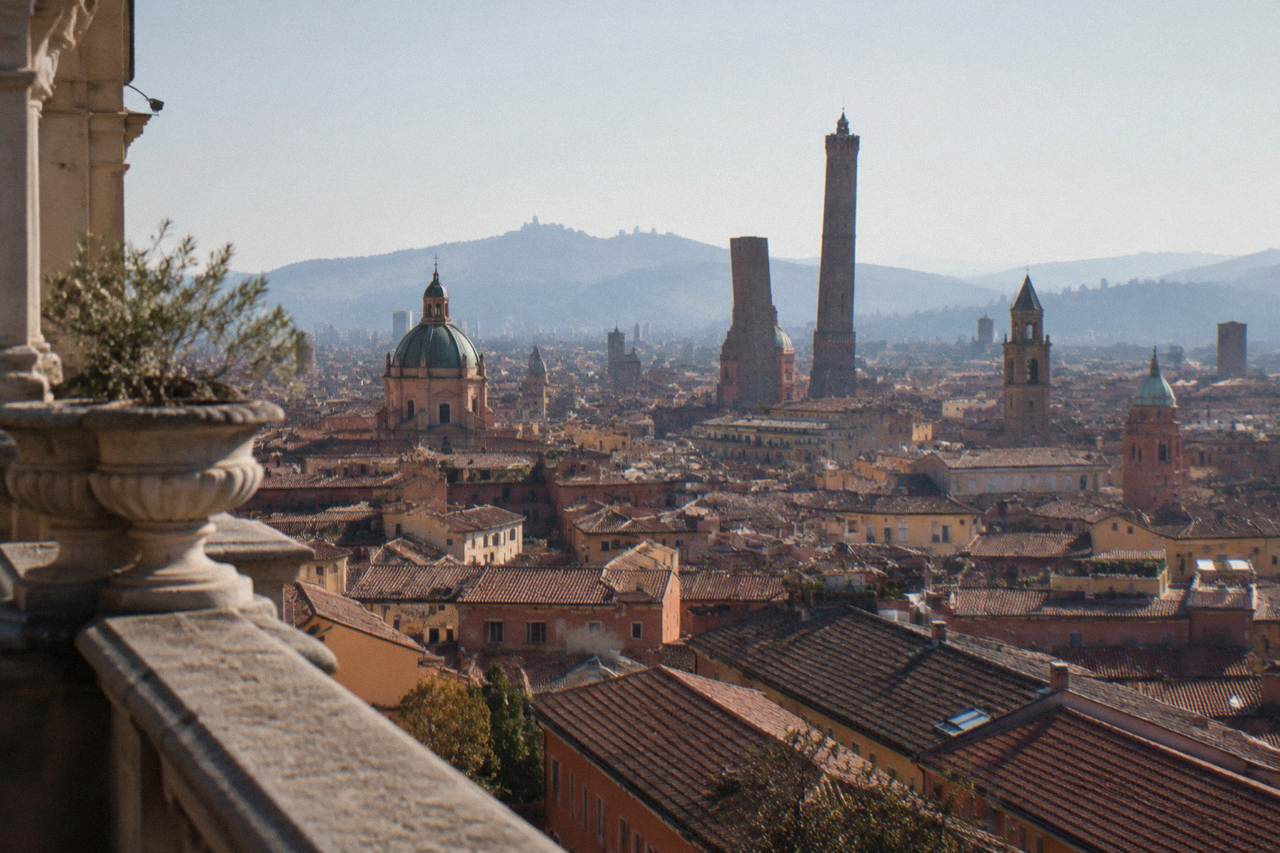
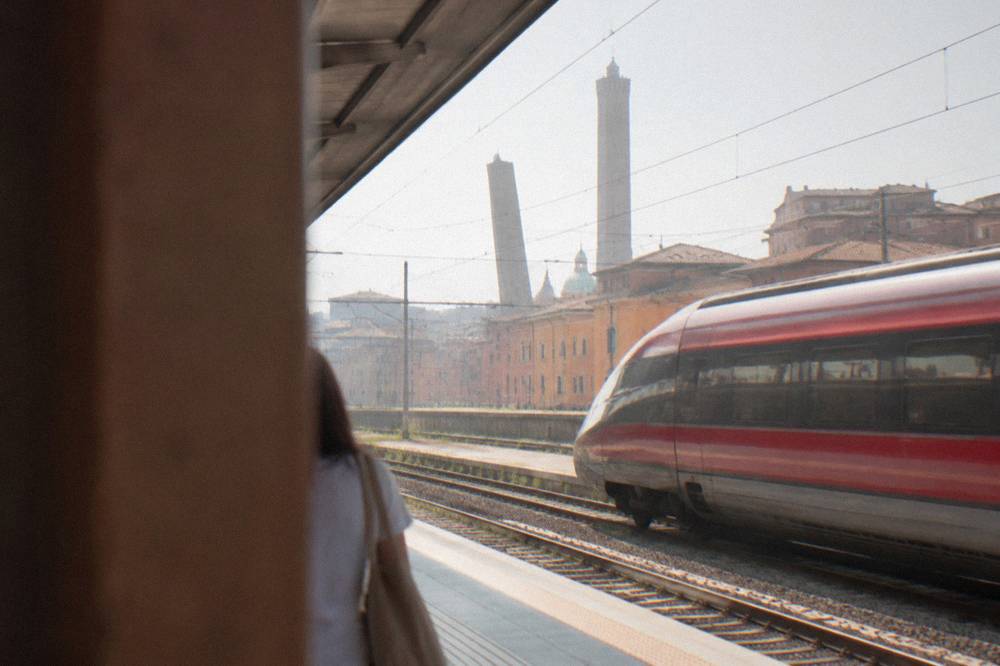
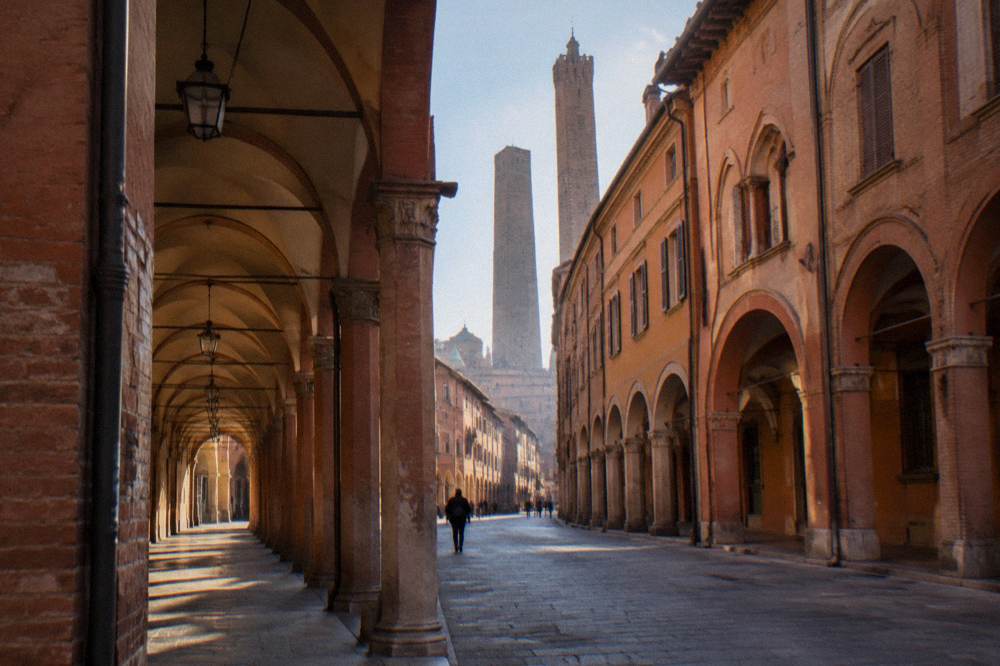
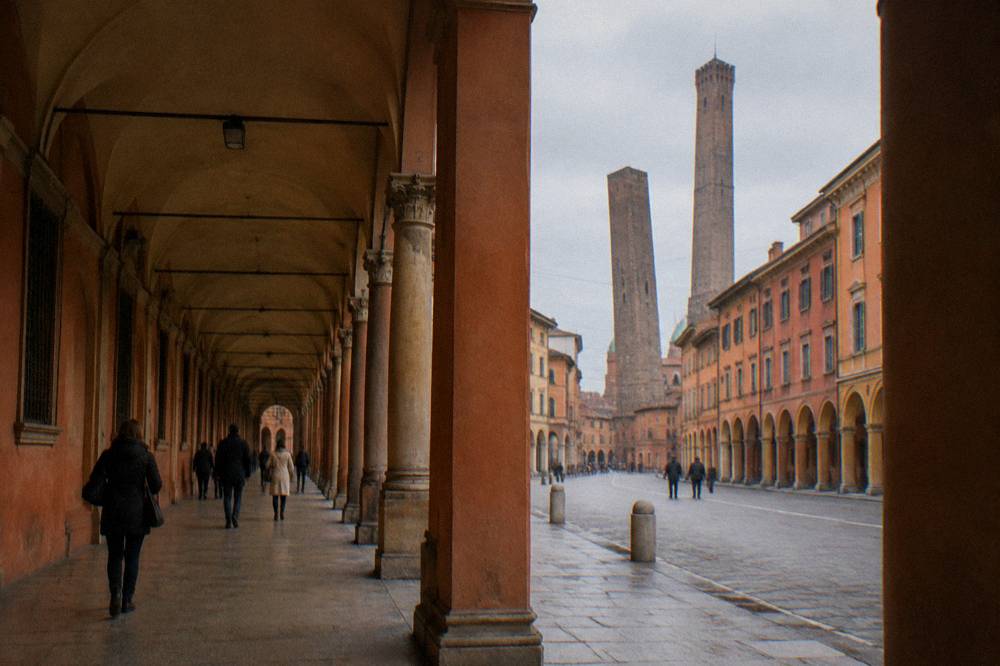
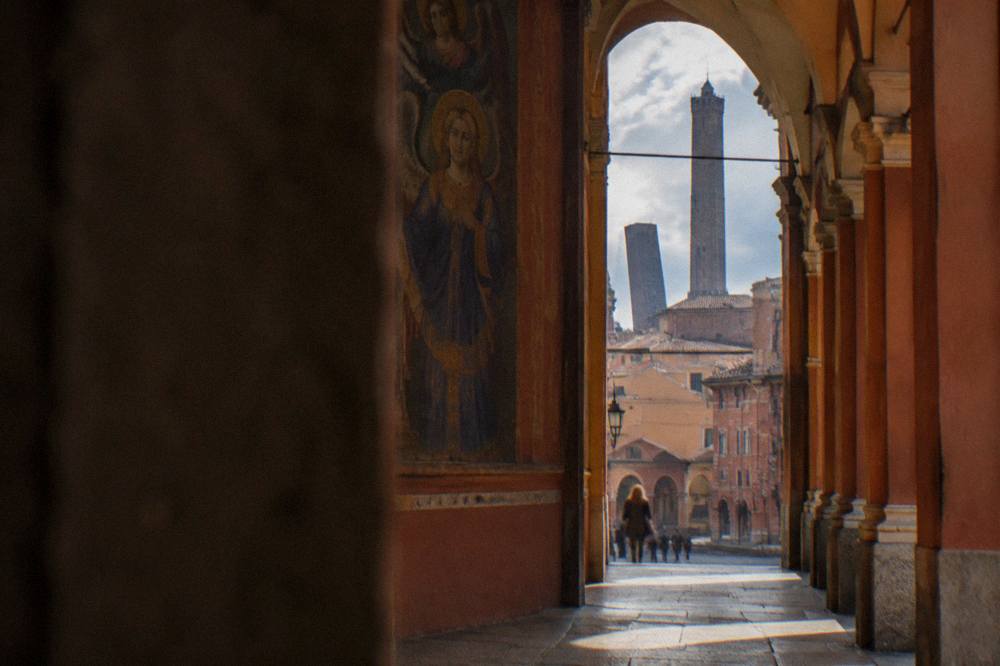
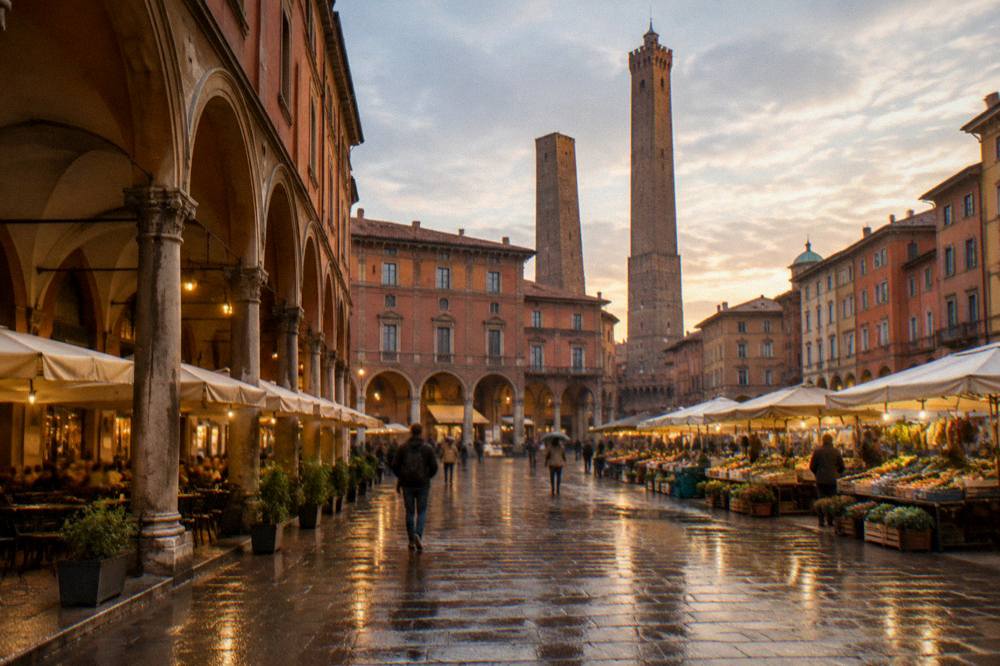
A day in Bologna walks comfortably around one compact historic core: Piazza Maggiore and the Basilica di San Petronio, the Two Towers landmark in the middle of the old streets, the long porticoed walk to the hilltop San Luca sanctuary, the market quarter around the Quadrilatero, and the university district with Europe's oldest continuous institution of higher learning among its claims, a set of sights close enough together that the day is spent on foot between them rather than on transport.
The honest framing first: this page's fact pack covers Padua and its region in depth, and it does not carry opening hours, ticket prices or dates for Bologna's individual sights. What follows is the geography of the visit, which is stable and well documented: Bologna's centre is a dense medieval grid wrapped in porticoes, the covered sidewalks that line the streets for kilometres, and the two leaning towers that give the city its skyline. The Basilica di San Petronio fronts Piazza Maggiore, the main square; the Archiginnasio and the university area sit a few blocks north-east; the food shops of the Quadrilatero run between the square and the Two Towers; and the portico that climbs to San Luca, nearly four kilometres of covered walkway, starts at the edge of the centre.
If you would rather have a guided structure closer to home before committing a full day to Emilia, Padua's own guided options are listed below, including a villa-and-garden trip into the Euganean Hills that makes a half-day contrast to a Bologna outing.
A sample skeleton for the day, keeping every Bologna-specific time generic because nothing else is sourced:
| Part of the day | Where | Notes |
|---|---|---|
| Early | Padova station | Buy urban or long-distance tickets in the app or at the machine; the IAT office is at platform 1 |
| Morning | Piazza Maggiore and San Petronio | Main square, civic buildings, basilica facade |
| Midday | Quadrilatero and lunch | The market lanes between the square and the towers |
| Afternoon | University district and Archiginnasio | Porticoed streets, historic college buildings |
| Late afternoon | Two Towers viewpoint street | The landmark pair at the heart of the old grid |
| Evening | Train back to Padua | Check the last direct services on Trenitalia for your date |
One structural note for the return: Padua's evening anchor, if you are back in time, is the Scrovegni Chapel's "Giotto sotto le stelle" opening, which runs 25 March to 1 November from 19:00 to 22:00, entries every 20 minutes for a maximum of 25 people, chapel only and on a separate ticket. The daytime ticket (EUR 15 full, EUR 11 reduced, plus a EUR 1 booking fee) also covers the Musei Civici Eremitani and Palazzo Zuckermann, per the civic museums' own price list.
How Does Bologna Compare With Padua's Other Day Trips?
Bologna is the distance outlier at about 110 km, against about 36 km to Venice, about 30 km to Vicenza and about 66 km to Ferrara, and its character differs too: it is a large food-and-university city rather than a frescoed town or a lagoon, so the choice is less about which is better and more about whether your Padua trip wants Emilian scale, Venetian water or Palladian architecture, and the table below sets out what each option offers with the sourced distances and train times.
Here is the comparison this site's facts support. Train times are reported figures, not official ones, and only where a source exists:
| Day trip | Straight-line distance | Reported train time from Padova | Character |
|---|---|---|---|
| Venice | about 36 km | about 26 to 40 minutes, regional | Lagoon city, canals, San Marco |
| Vicenza | about 30 km | about 16 to 25 minutes | Palladio's city, Teatro Olimpico EUR 12 full |
| Verona | about 69 km | about 43 to 60 minutes | Roman arena, Shakespeare's setting |
| Treviso | about 41 km | about 28 to 60 minutes, sometimes a change | Walled town, canals, quiet lanes |
| Ferrara | about 66 km | not printed here | Este city, Renaissance walls |
| Bologna | about 110 km | not printed here | Food capital, porticoes, big-city scale |
Each of these has its own page on the site: see the Venice day trip guide, the Vicenza guide, the Verona guide and the Treviso guide, plus Ferrara for the closer Emilian option. If the deciding factor is transport simplicity, Vicenza and Venice win on the reported times; if it is a food-focused day at urban scale, Bologna is the one trip on the list that delivers it.
What Does A Bologna Day Trip From Padua Cost?
The costs you can pin down before you travel are the Padua-side ones: a 90-minute urban ticket in Padua costs EUR 1.70 and a daily ticket EUR 4.70 per Busitalia's published fares, the station left-luggage office at platform 1 charges EUR 5 per 6 hours if you store bags, and the Padua to Bologna rail fare varies by train type and booking time, so budget from the operator's own fare finder rather than any fixed figure.
Bologna's own sight prices are outside this site's pack, so the honest budget line is: rail fare on Trenitalia, food at Emilian prices, and entry fees checked sight by sight on official pages before you go. For orientation, here is what the Padua-side costs look like, all from the pack:
| Item | Cost | Notes |
|---|---|---|
| Padua urban ticket, 90 minutes | EUR 1.70 | TU1 Orange Zone, also contactless tap on board |
| Padua daily ticket | EUR 4.70 | Same zone |
| Station luggage storage | EUR 5 per 6 hours | Platform 1, daily 6:00 to 20:00 |
| Padova to Bologna train | check Trenitalia | High-speed and regional options, fares vary |
While you are budgeting, note the two Padua entries that rose recently and are worth knowing even on a Bologna-focused day: the Orto Botanico's ticket went to EUR 15 full from 1 September 2026 (EUR 12 in winter, November to February, with reductions to EUR 10 and EUR 8), per the garden's own ticket page, and the Scrovegni Chapel remains EUR 15 full with a EUR 1 booking fee and timed entry only, with no same-day online booking. The chapel also closes 16 to 27 November 2026 for its annual fresco inspection, which matters if your Bologna day is part of a longer Padua stay that includes Giotto. The rest of the planning pages sit on Padua Travel Guide.
When Is The Best Time Of Year For A Bologna Day Trip From Padua?
The weather logic follows the Po Valley climate both cities share: the ERA5 reanalysis for Padua, 1991-2020, shows a July and August mean daily high of 28.8 C, a January high of 7.3 C with a mean low of minus 0.2 C, and November as the month with the highest rain total at 114.0 mm, so shoulder months pair milder temperatures with lower rainfall than late autumn, and Bologna's porticoes give the day a covered spine that softens both rain and sun.
Bologna's arcades are the quiet advantage here: a large share of the walking day can happen under cover, which the shorter Padua day trips cannot offer to the same degree. The numbers for planning, from the same ERA5 reanalysis grid:
| Month | Mean daily high | Mean daily low | Rain |
|---|---|---|---|
| January | 7.3 C | -0.2 C | 53.6 mm |
| April | 17.6 C | 7.8 C | 84.4 mm |
| July | 28.8 C | 18.9 C | 62.1 mm |
| September | 23.6 C | 14.9 C | 105.5 mm |
| November | 12.6 C | 5.5 C | 114.0 mm |
September and October carry the year's highest rainfall after November, so a porticoed city is a rational call in those months. If winter takes you to Padua instead, the site's Padua in winter and rainy day pages cover the closer indoor options, and snow itself is rare in this stretch of the Po Valley: the long instrumental record for Padua shows recent decades averaging about 4.4 snowy days per year, with seasons entirely without snow not uncommon, per the published climate series.
Should You Stay In Padua And Day-Trip To Bologna, Or Reverse It?
Staying in Padua and day-tripping to Bologna works because Padua is a smaller, cheaper-feeling base with two UNESCO listings of its own, the Orto Botanico (inscribed 1997, founded 1545) and the fourteenth-century fresco cycles of Padova Urbs Picta (2021, eight complexes), while Bologna rewards a longer, unhurried visit than a single day allows, so the split is: base in Padua for the frescoes, the Basilica of Saint Anthony and the Euganean Hills, and give Bologna the one big day, or two, when your interests point there.
The base-city case is set out in detail on the site's is Padua worth staying in discussion and in the itinerary pages for one day in Padua and Padua from Venice in a day. Padua's compactness is the structural argument: the Scrovegni Chapel, the Basilica of Saint Anthony, Prato della Valle with its canal and double ring of numbered statues, and Palazzo della Ragione sit within a walkable historic centre, and the university, founded in 1222 and described by its own heritage pages in terms of its early date among Italian universities, adds the anatomical theatre of 1594 and Galileo's years there from 1592 to 1610.
Bologna as a base is a different proposition, and the site does not rank the two cities: both are inland northern Italian university cities with porticoes and covered markets, and the difference that matters for planning is scale and distance from the other stops on a Veneto itinerary. If your trip is anchored on Venice, the Euganean Hills, Vicenza or Verona, Padua is the nearer hub; if it is anchored on Florence, Ravenna or the food cities of Emilia, Bologna is.
What About Food: Is Bologna The Eating Day Trip From Padua?
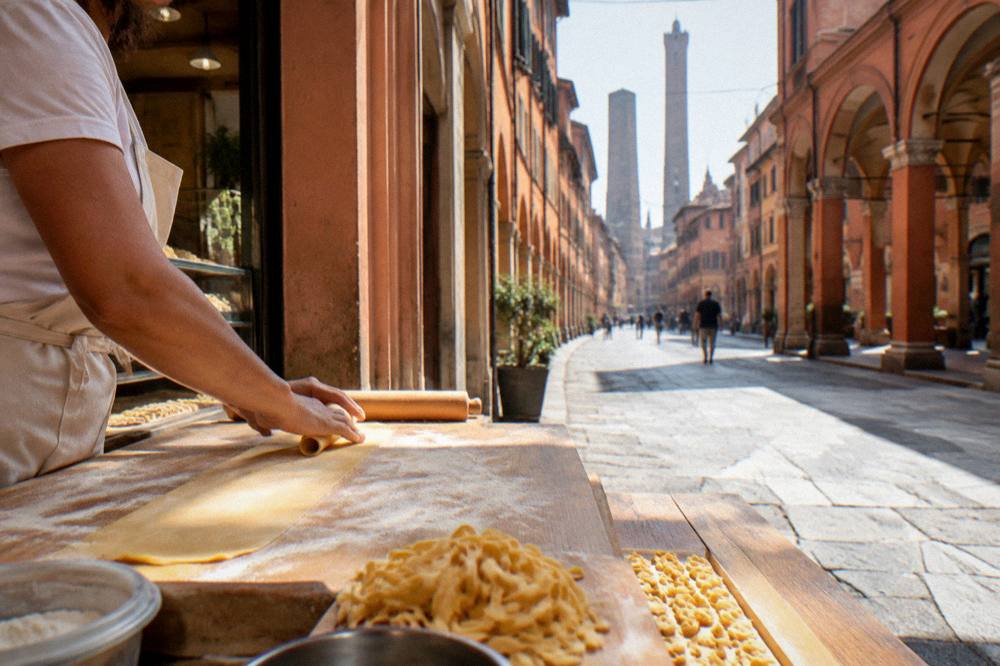
Bologna is the food-capital day trip on Padua's list, the city whose name attaches to the meat sauce the world calls Bolognese and whose home version is tagliatelle al ragù, and a day there is built around pasta, cured meats and market lanes rather than around a single monument, though this site prints no restaurant names, no dish prices and no opening hours, because its coverage centers on Padua rather than Bologna's dining scene.
What the pack does support is the Paduan side of the food ledger, and it is a stronger ledger than the city's modest fame suggests: the tourism board's own pages name risotto ricco alla Padovana, cappone alla canevera and torta pazientina as the city's three patented recipes, the Sotto il Salone market under Palazzo della Ragione is described by the tourism board as a historic covered food market of some eight centuries, and Aperol was created in Padua in 1919 by the Barbieri brothers, presented at the city fair. The spritz culture around Piazza delle Erbe and Piazza dei Signori is the evening half of that story, covered on the site's Padua food tour guide and spritz in Padua pages.
A day trip that starts with pasta in Bologna and ends with a spritz under Padua's arcades is, in transport terms, exactly what the rail corridor allows, subject to the timetable you confirm on Trenitalia. For the eating side of Padua itself, the site's what to eat in Padua page carries the detail.
For a half-day Euganean alternative with a booked, guided structure, the Villa dei Vescovi and Valsanzibio Garden trip runs from Padua into the hills, and Check availability on the operator's live listing for dates and the current from-price.
How Do You Plan The Perfect Bologna Day Around Padua's Booked Sights?
The one hard constraint is that Padua's timed-entry sights, above all the Scrovegni Chapel, need their own dated booking and cannot be squeezed in around a Bologna day on arrival, so the workable pattern is to book the chapel, the Palazzo del Bo tour or the Orto Botanico for a different day, leave early for Bologna with a confirmed return train, and treat the Bologna day as a single uninterrupted block.
The booking mechanics, all from the operators' own pages: the Scrovegni Chapel admits at most 25 people every 15 minutes, with about 15 minutes inside, and asks visitors to be at the entrance five minutes before their slot; late arrivals must rebook and pay again. Advance slots run to 10 February 2027 via the chapel's own booking site or the call centre at +39 049 2010020, with no same-day online booking. The Palazzo del Bo historic tour costs EUR 10 full with alternating Italian and English slots, about 45 minutes, booked through the university's centre at 049 827 3939. The Orto Botanico is EUR 15 full, closed non-holiday Mondays, with fixed-time guided tours on weekends and holidays.
A worked week that puts Bologna in context:
| Day | Plan | Booking needed |
|---|---|---|
| Day 1 | Padua: Scrovegni Chapel, Eremitani museums, Piazza delle Erbe | Chapel timed slot, in advance |
| Day 2 | Bologna day trip by train | Train tickets on Trenitalia |
| Day 3 | Padua: Basilica of Saint Anthony, Prato della Valle | None for the Basilica, entry is free |
| Day 4 | Euganean Hills or Brenta Riviera | Optional guided trip |
| Day 5 | Venice, about 36 km away | Train, about 26 to 40 minutes regional |
The Venice row carries one flag for 2026: the day-tripper access fee trial ended on 27 July 2026 and the fee does not currently apply, per Venezia Unica, with no 2027 decision published, so check the Venice city site for any later scheme rather than assuming a charge.
Common Questions About A Bologna Day Trip From Padua
How far is Bologna from Padua?
Bologna is about 110 km from the centre of Padua in a straight line, the furthest of the city's practical day trips, compared with about 36 km to Venice and about 30 km to Vicenza. It is a straight-line distance; no road distance or drive time is given.
Is there a direct train from Padua to Bologna?
Yes, Padova and Bologna Centrale are linked on one of Italy's main rail corridors with high-speed and regional services. This page prints no journey time or fare for the route: check Trenitalia for the timetable and price on your travel date.
Is Bologna too far for a day trip from Padua?
It is the longest-distance day trip on Padua's list at about 110 km in a straight line, but it remains a single-day outing on the scheduled trains. The trade-off is transit time: closer options such as Vicenza (about 16 to 25 minutes by train, reported) and Venice (about 26 to 40 minutes, regional about EUR 5) leave more of the day on the ground.
Is Bologna or Venice the better day trip from Padua?
This site does not rank cities. Venice is closer at about 36 km with reported train times of 26 to 40 minutes and a lagoon landscape; Bologna is about 110 km away and offers a food-and-university city under kilometres of porticoes. Choose by interest and by how much of the day you are willing to spend on a train.
What should you not miss in Bologna on a short visit?
The compact core: Piazza Maggiore with the Basilica di San Petronio, the Two Towers, the Quadrilatero market lanes and the university district, with the porticoed walk toward San Luca if time allows. Check opening hours and entry rules for each sight on official pages before you go, as this page prints none for Bologna.
Do you need to book anything in advance for a Bologna day trip?
For Bologna itself, book the train, and check whether any sight you want requires a timed entry on its official page. For the Padua side of your stay, the Scrovegni Chapel requires an advance timed booking with no same-day online sales, and the Palazzo del Bo tour books through the university's centre.
The full set of Padua's day-trip options, from the Euganean Hills to Arquà Petrarca, Abano Terme and the Brenta Riviera, sits alongside the money-page roundup of things to do in Padua, which anchors the wider trip this Bologna day fits into.