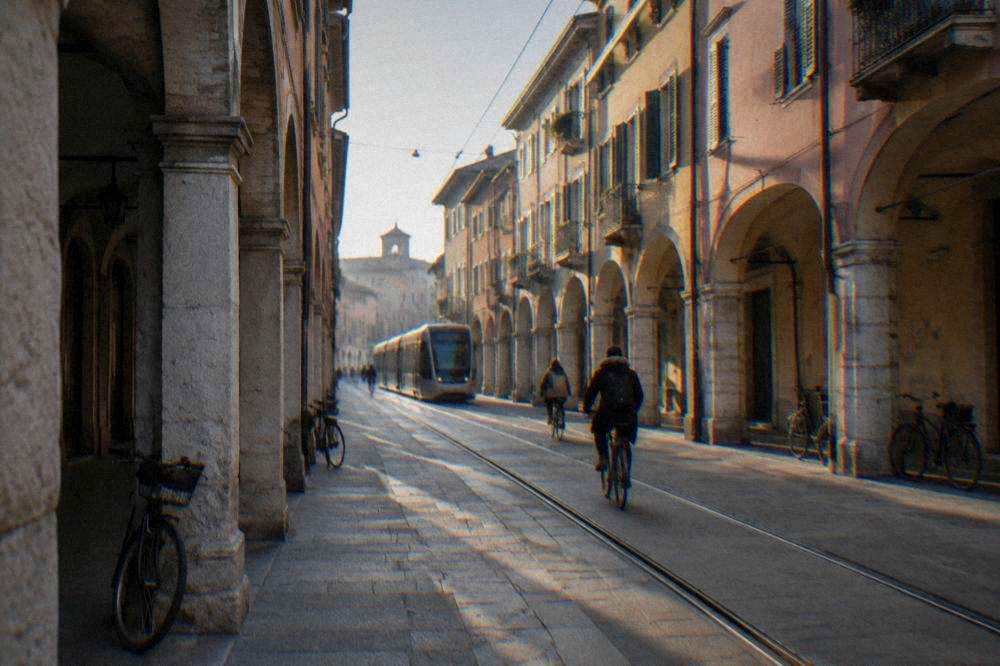
Padua By Bike: Rentals, Sharing And Routes
Padua, in the Veneto in northern Italy, is a compact inland city of arcaded streets, market squares and canals, and a bicycle is one of the fastest ways to move between the Scrovegni Chapel, Prato della Valle and the river. This guide sets out what is actually published about bike sharing tariffs in the city, which routes connect the main sights, and which day trips sit within pedal or train range.
Short answer
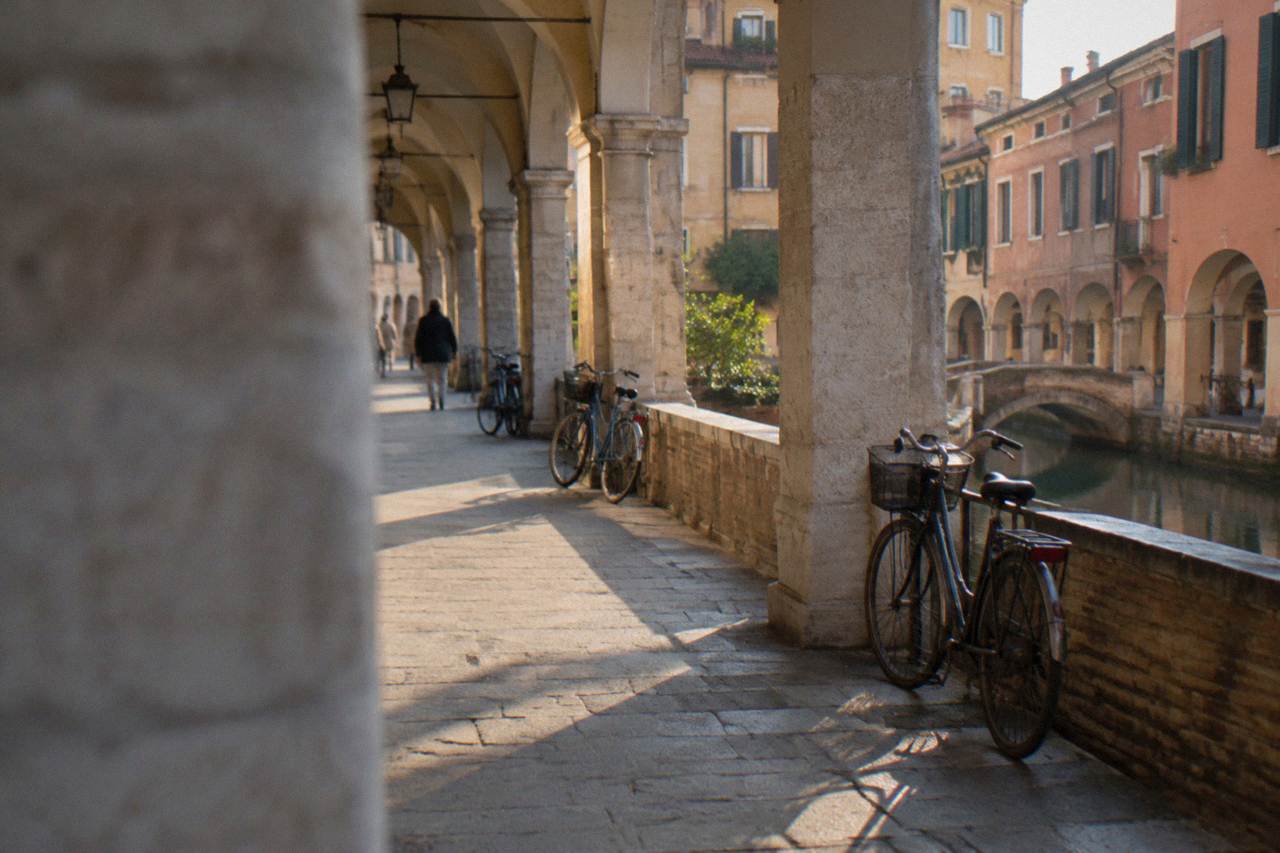
Padua's GoodBike sharing scheme reported weekly passes at EUR 5 with the first 30 minutes of each ride free, and the RideMovi app service at about EUR 1 per 20 minutes. The city centre, the walls and Prato della Valle link into short rides, and Abano Terme sits about 8 km away in a straight line.
Padua (Italian: Padova) is an inland city in the Veneto, northern Italy, about 36 km in a straight line from Venice, built on the Bacchiglione and its canals, and it moves at the pace of a student town: the University of Padua, founded in 1222, counted about 76,000 students for the 2026/27 academic year per the university's own figures. A bicycle fits that rhythm. The historic centre is compact enough that the distances between the Scrovegni Chapel, Piazza delle Erbe, the Basilica of Saint Anthony and Prato della Valle are measured in minutes of pedalling rather than kilometres of driving, and the tram line SIR1 that runs north to south through the city carries bikes into the bargain. This page reports what the published sources say about Padua Travel Guide coverage of cycling in the city: sharing tariffs, the routes that string the sights together, and the day trips that open up once you have two wheels or a rail ticket.
Is Padua A Good City To Explore By Bike?
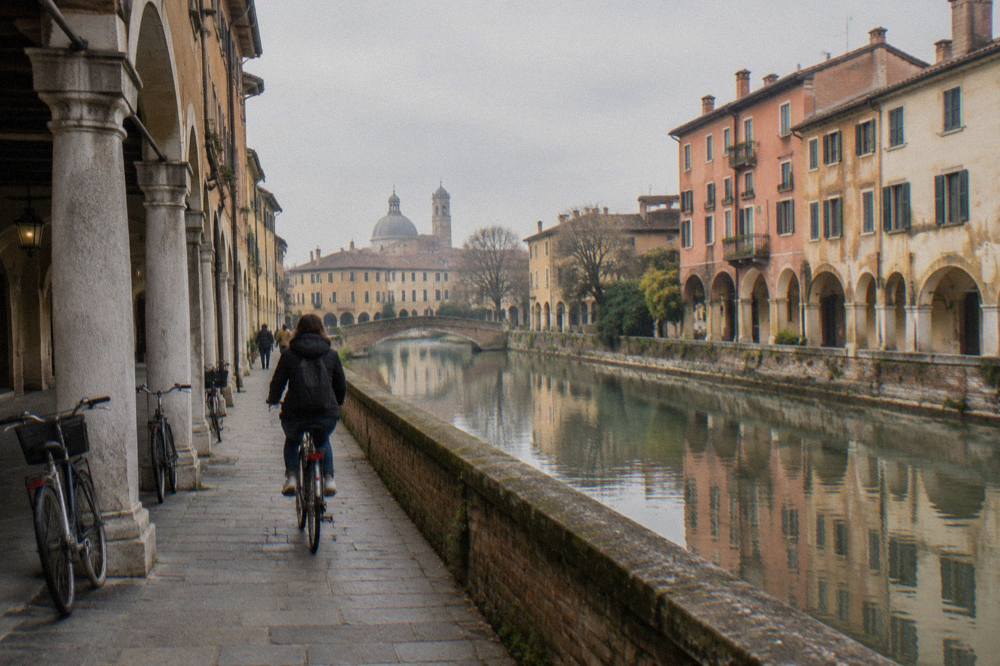
Padua rewards a bicycle because its core sights sit close together inside a ring of old walls, the city's own bike-sharing schemes have published tariffs measured in a few euros, and the university population of about 76,000 students per the university's own pages keeps the street network built around two wheels and trams rather than cars. The railway station, the Scrovegni Chapel and Prato della Valle all fall inside one continuous ride.
The argument for cycling here is structural rather than scenic. Padua's centre is a dense grid of arcaded streets around Piazza delle Erbe and Piazza della Frutta, where the market stalls run Monday to Friday from 7:30 to 13:30 and Saturdays from 7:30 to 20:00 per the Comune di Padova's market page, and a bike lets you hop between squares, the river and the university quarter without hunting for parking. The tram line SIR1 has run since 2007 on a north-south axis of about 10.5 km with 26 stops, reported by the city's own project documents, which means the spine of the city is already a public-transport corridor a cyclist can parallel or join.
There is a practical warning worth taking seriously. The safety summaries for Padua describe bike theft as common, in a city whose station, crowded piazzas and buses are flagged for petty theft rather than violent crime. Lock the frame, not just a wheel, and prefer the station's left-luggage office at platform 1, open daily 6:00 to 20:00 at EUR 5 per 6 hours, for bags you do not want to carry on the handlebars.
How Does Padua Bike Rental And Bike Sharing Work?
Padua's published bike-sharing offer has two reported strands: the GoodBike Padova scheme, with a weekly pass at EUR 5, a monthly pass at EUR 10 and an annual pass at EUR 30, the first 30 minutes of each ride free and then EUR 0.50 per further 30 minutes, and the RideMovi app service at about EUR 1 per 20 minutes with a 30-day pass reported at about EUR 9.90. Operator details have shifted in recent years, so confirm the current app before relying on either.
Those tariffs come from coverage of the two services rather than from a single live operator page, which is why each figure carries the word "reported". The pattern matters more than the decimals: Padua's sharing systems price short hops at pocket change and longer holds at single-digit euros per week, which suits a visitor riding between sights rather than commuting. The city's contactless tap-and-ride system on buses and trams, priced by Busitalia at EUR 1.70 for a 90-minute TU1 ticket, works the same way for the days you would rather not pedal.
A conventional rental shop is the other route in, and it is the one to choose for day trips, child seats or a bike you keep overnight. Shop-level prices are not in the published sources used for this page, so ask directly when booking. Whatever you rent, the arithmetic against public transport is worth doing: a day of sharing at GoodBike's reported tariff is cheaper than four single bus tickets, while a family of four moving together may find the daily TU1 ticket at EUR 4.70, as listed by Busitalia, the simpler tool.
| Scheme | Reported tariff | Notes |
|---|---|---|
| GoodBike Padova weekly | EUR 5 | First 30 minutes free, then EUR 0.50 per 30 minutes |
| GoodBike Padova monthly | EUR 10 | Same usage pricing |
| GoodBike Padova annual | EUR 30 | Same usage pricing |
| RideMovi pay-as-you-ride | About EUR 1 per 20 minutes | App-based |
| RideMovi 30-day pass | About EUR 9.90 | App-based |
Not every day needs wheels at all. When rain closes in, the indoor options are strong and cheap: what to do on a wet afternoon collects them, and the Scrovegni Chapel's climate-controlled waiting room keeps Giotto's cycle viewable whatever the sky is doing.
Which Routes Inside Padua Work Best By Bike?
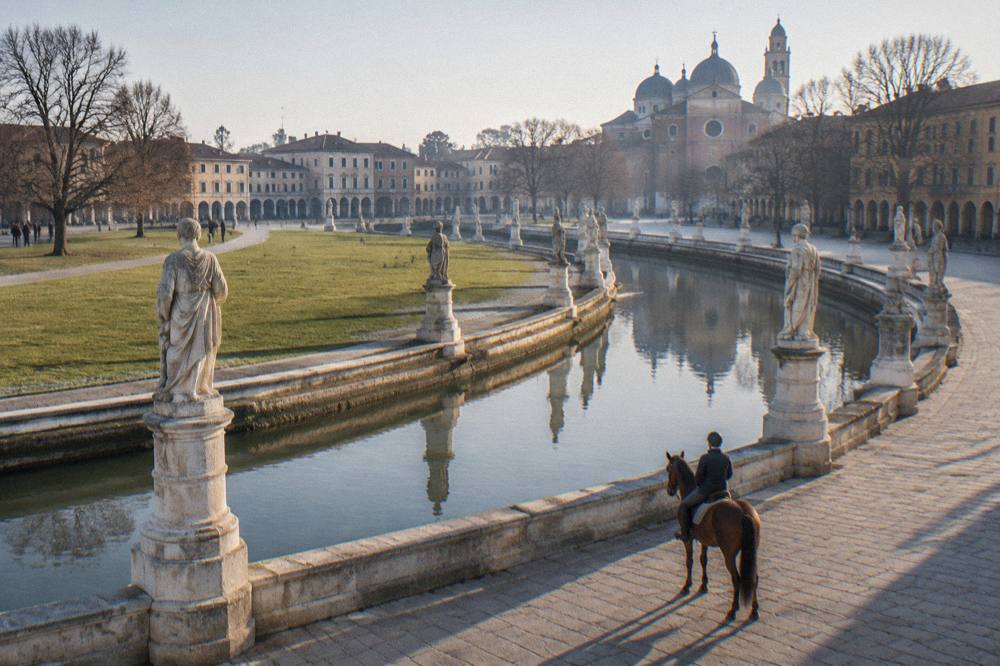
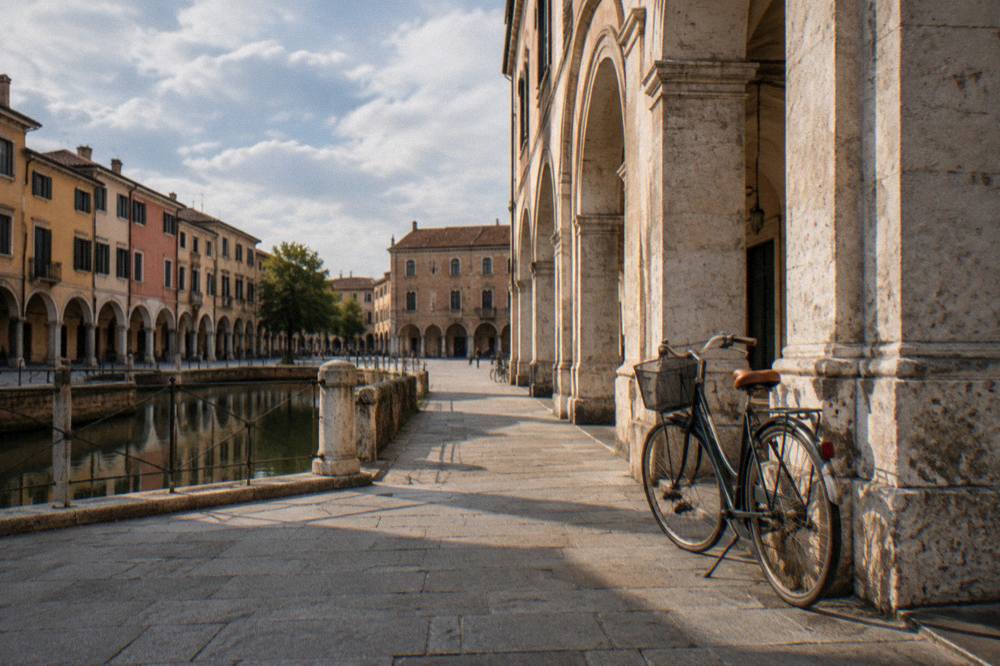
The three rides that string Padua's sights together are a centre loop linking the Scrovegni Chapel, the Eremitani complex, Piazza delle Erbe and the Basilica of Saint Anthony; a walls-and-gates ride out to Porta Portello, which OSM also names Porta Ognissanti, the same gate under two names; and a southern run to Prato della Valle, the vast square with its canal and double ring of numbered statues that the Venetian Senate declared communal space in 1767.
Each is a short ride, and each ends at a sight with its own entry rules.
The centre loop is the workhorse. Start at the Scrovegni Chapel, where entry is timed only, at most 25 people every 15 minutes, with about 15 minutes inside after a wait in the climate-control waiting room, and be there 5 minutes before the slot on the ticket: the chapel's own how-to-visit page states that latecomers are denied re-entry without a new paid booking. The daytime ticket at EUR 15 full also covers the Musei Civici Eremitani and Palazzo Zuckermann. From there the arcades lead down through the market squares to the Basilica of Saint Anthony, which the sources list as free to enter, with a dress code suitable for a church; its hours are not in the published material for this page, so check before riding over. The Scrovegni ticket guide covers booking in detail.
The walls ride follows the old city ramparts to Porta Portello on the river, where the Bacchiglione path begins. The southern run ends at Prato della Valle, next to the Basilica of Santa Giustina and the university's botanical quarter; on Saturdays the square also hosts the Prato della Valle market, 8:00 to 20:00 in summer and 8:00 to 19:00 in winter per the Comune's listings, and every third Sunday of the month the antiques market fills the square and via Umberto I from 8:00 to 20:00.
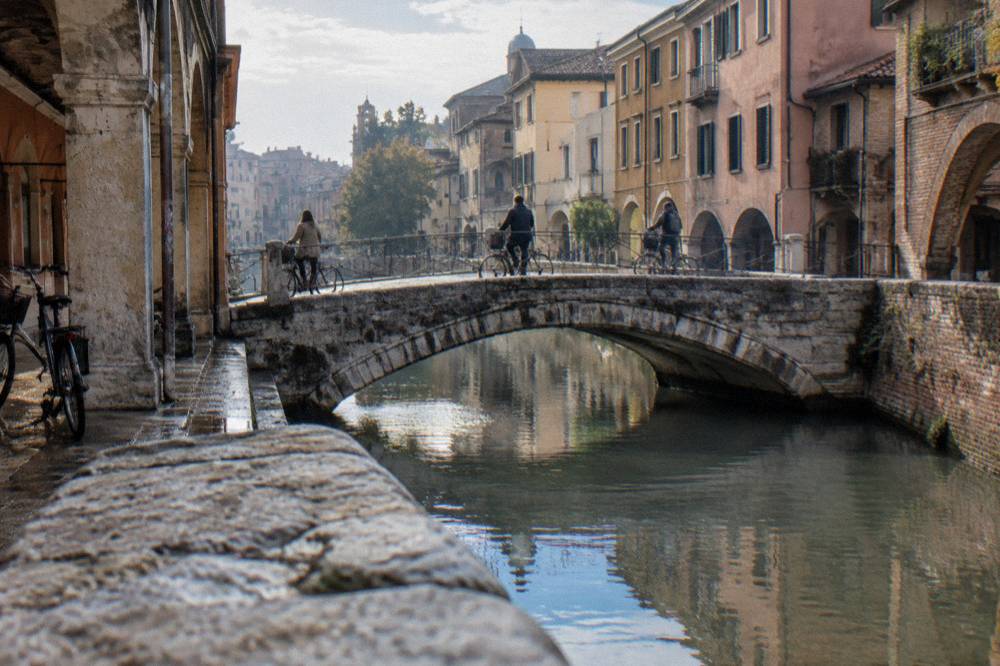
If pedalling is off the table for part of your group, the golf cart alternative is worth a look alongside the tram: the Check availability link shows the operator's live listing for a guided cart circuit of the same squares.
| Route | Key stops | Entry facts to know |
|---|---|---|
| Centre loop | Scrovegni Chapel, Chiesa degli Eremitani, Piazza delle Erbe, Caffe Pedrocchi quarter, Basilica of Saint Anthony | Chapel EUR 15 full plus EUR 1 booking fee, timed; Basilica free |
| Walls and gates | The old ramparts, Porta Portello (Porta Ognissanti), river Bacchiglione | Open public space |
| Southern run | Prato della Valle, Basilica di Santa Giustina, Orto Botanico quarter | Orto Botanico EUR 15 full from 1 September 2026, EUR 12 winter |
| University thread | Palazzo del Bo, Via VIII Febbraio, the student quarter | Palazzo del Bo guided tour EUR 10 full, about 45 minutes |
The Orto Botanico line in that table deserves its own sentence. The garden's ticket page lists EUR 15 full for visitors aged 26 to 64 from 1 September 2026, EUR 12 in winter from November to February, with reductions to EUR 10 and EUR 8, and it is closed on non-holiday Mondays: a UNESCO World Heritage site since 1997, founded in 1545, and one half of Padua's pair of UNESCO listings alongside the fourteenth-century fresco cycles inscribed in 2021.
Which Day Trips From Padua Suit A Bike Or A Bike-Plus-Train Day?
The day trips that sit within cycling or easy train range of Padua are the Euganean Hills towns, with Abano Terme about 8 km and Montegrotto Terme about 11 km away in a straight line, Arqua Petrarca about 20 km and Monselice about 21 km, plus Villa Pisani on the Brenta Riviera about 11 km and Vicenza about 30 km, the latter better reached by train in a reported 16 to 25 minutes. All distances are straight-line kilometres, not route lengths.
The Euganean Hills are the classic bike-and-train territory. Arqua Petrarca's Casa del Petrarca charges EUR 6 full, EUR 4 reduced, and closes on non-holiday Mondays plus 8 December, 25 and 26 December and 1 January, per the village's own visitor page, so time the ride to a day it opens. Villa dei Vescovi at Luvigliano di Torreglia, a FAI property, lists EUR 11 adult entry with seasonal hours. For hills riding under your own power, the Euganean Hills guide maps the towns; for the thermal towns specifically, see Abano Terme and Montegrotto Terme.
Straight-line distance is not saddle time, and no route or gradient figures are published in the sources for this page, so treat the table below as a map of what is near, not a promise of how long it takes. The train is the honest companion for the longer hops: regional trains to Vicenza take a reported 16 to 25 minutes at about EUR 6, and to Venice a reported 26 to 40 minutes at about EUR 5, figures reported by journey planners rather than the operator, so check Trenitalia when you buy.
| Destination | Straight-line distance from Padua | Entry fact on the ground |
|---|---|---|
| Abano Terme | About 8 km | Thermal town |
| Villa Pisani, Stra | About 11 km | Maze with timed, limited access per the villa's site |
| Montegrotto Terme | About 11 km | Thermal town |
| Arqua Petrarca | About 20 km | Casa del Petrarca EUR 6 full |
| Monselice | About 21 km | Hill town |
| Este | About 26 km | Town with a castle |
| Vicenza | About 30 km | Teatro Olimpico EUR 12 full |
| Venice | About 36 km | Day-tripper access fee trial ended 27 July 2026 |
One Venice note belongs on every Padua cycling page. Venice itself is not a cycling destination, and you would not ride the 36 km anyway: the bridge traffic and the lagoon city's no-bike lanes make the train the tool. The Venice day-tripper access fee trial ended on 27 July 2026, per Venezia Unica, and no decision for 2027 had been announced, so do not budget for it on that basis. The Venice day trip guide and Padua as a base for Venice cover the practicalities.
What Does Getting Around Padua Cost Without A Car?
The fares for car-free movement in Padua are the EUR 1.70 TU1 urban ticket valid 90 minutes from Busitalia, the EUR 13 one-way airport bus to Venice Marco Polo taking about 45 minutes, the EUR 5 per 6 hours station left luggage, and the EUR 4.70 daily bus ticket, alongside the sharing tariffs of EUR 5 per week on GoodBike and about EUR 1 per 20 minutes on RideMovi. Together they make a car-free stay straightforward.
The airport bus deserves its own line: Busitalia runs the Padova to Venezia Aeroporto link at EUR 13 one-way for an adult, EUR 6.50 for a child up to 11, with a same-day return at EUR 23, 54 runs a day at 40-minute intervals from 05:30 to 22:50, and a journey of about 45 minutes. If you land at Marco Polo with a folding bike or plan to rent in the city, that bus plus a sharing pass covers the whole arrival. The airport transfer guide goes deeper.
| Item | Fare | Source |
|---|---|---|
| TU1 urban ticket, 90 minutes | EUR 1.70 | Busitalia's own page |
| TU1 daily ticket | EUR 4.70 | Reported by Busitalia listings |
| Airport bus to Venice Marco Polo, one-way | EUR 13 | Busitalia's own page |
| Airport bus child fare | EUR 6.50 | Busitalia's own page |
| Regional train to Venice | About EUR 5 | Reported by journey planners |
| Regional train to Vicenza | About EUR 6 | Reported by journey planners |
| Station left luggage | EUR 5 per 6 hours | Turismo Padova page |
A caution on the table's "reported" rows: those are figures carried by journey planners and operator listing pages rather than confirmed tariffs printed on a ticket, so treat them as planning numbers and verify at purchase. The same discipline applies to anything about driving: the ZTL limited-traffic rules and fines need checking at source, and the ZTL and parking guide is the place to look before you bring a car at all. For the wider car-free picture, getting around Padua pulls the networks together.
When Is The Best Time Of Year To Cycle In Padua?
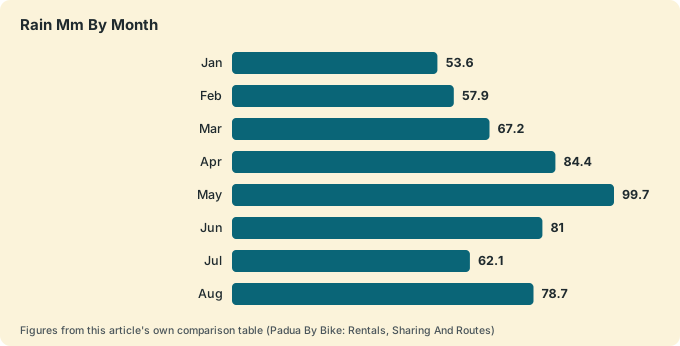
The ERA5 reanalysis for Padua, 1991-2020, puts the July and August mean daily high at 28.8 C and the January mean daily low at -0.2 C, with the year's rain peaking in November at 114.0 mm and September and October both near 105 mm, so the shoulder months carry milder mean highs, 13.7 C in March and 17.6 C in April, against summer heat and late-autumn rain. Read the table as modelled climate normals for the grid cell, not a weather forecast.
What that means on a saddle is simple. Summer midday rides run warm, so the market hours are the pattern to ride around: the Piazza delle Erbe stalls run 7:30 to 13:30 on weekdays and to 20:00 on Saturday, which leaves early mornings and long evenings for the centre loop. November is the month with the highest rain total in the normals at 114.0 mm, and it is also the month the Scrovegni Chapel closes entirely, from 16 to 27 November 2026, for the annual fresco inspection, so a wet-week plan should lean on museums and the covered Sotto il Salone market under Palazzo della Ragione.
| Month | Mean high C | Mean low C | Rain mm |
|---|---|---|---|
| Jan | 7.3 | -0.2 | 53.6 |
| Feb | 9.4 | 0.6 | 57.9 |
| Mar | 13.7 | 3.9 | 67.2 |
| Apr | 17.6 | 7.8 | 84.4 |
| May | 22.1 | 12.4 | 99.7 |
| Jun | 26.2 | 16.6 | 81.0 |
| Jul | 28.8 | 18.9 | 62.1 |
| Aug | 28.8 | 19.2 | 78.7 |
| Sep | 23.6 | 14.9 | 105.5 |
| Oct | 18.4 | 10.6 | 105.4 |
| Nov | 12.6 | 5.5 | 114.0 |
| Dec | 7.8 | 0.7 | 69.9 |
Snow is rare and becoming rarer: a long climate study covering 1725 to 2024 reports an average of about 4.4 snowy days per year in the 1995 to 2024 period, down from about 10.4 in 1785 to 1814, and seasons with none at all are not uncommon. Winter cycling in Padua is therefore mostly a cold-air problem, not an ice problem, and the Padua weather and best time to visit pages carry the fuller picture.
What Should You Know Before Cycling In Padua?
The five things the published sources support are these: bike theft is described as common in the safety summaries, so invest in a serious lock; the Scrovegni Chapel needs a pre-booked timed slot with arrival 5 minutes early and closes 16 to 27 November 2026; the tourist tax, collected by your accommodation, is capped at five consecutive nights; the tram line SIR1 runs north to south while SIR3 remains in testing with no opening date to promise; and the station left-luggage office at platform 1.
Booking discipline matters more here than in a city of walk-up attractions. The Scrovegni Chapel has no same-day online booking; the chapel's own page tells unbooked visitors to check availability at the museum ticket office in person. Advance slots run 9:00 to 18:45 and were bookable up to 10 February 2027 through the chapel's site or the call centre at +39 049 2010020. If a bike-and-basilica day is the plan, the Basilica of Saint Anthony guide and the Saint Anthony page cover what the sources do and do not list for that building, including the Tredicina, which ran 31 May to 12 June in 2026 with the feast on 13 June.
For riders who want depth over distance, the university thread rewards a stop. The Palazzo del Bo guided tour costs EUR 10 full, about 45 minutes, with alternating Italian and English slots, and passes the anatomical theatre inaugurated in 1594, the room holding Galileo's chair, and the memory of Elena Lucrezia Cornaro Piscopia, who graduated in philosophy on 25 June 1678 as the first woman university graduate in recorded history. The Palazzo del Bo and University of Padua pages carry the full detail.
Can You Combine Cycling With Padua's Food And Fresco Circuits?
Yes, and the combination is the point of the city's layout: the eight buildings of the Padova Urbs Picta UNESCO inscription, listed in 2021, all stand within the rideable old centre, from the Scrovegni Chapel to the Oratorio di San Giorgio and the Battistero della Cattedrale, while the market squares and the Sotto il Salone food market under Palazzo della Ragione sit on the same loop, so a single day on a bike can join frescoes, food stalls and the Basilica of Saint Anthony without leaving the walls.
The Urbs Picta list is worth carrying in a pocket. Eight complexes earned the 2021 inscription under the name of Padua's fourteenth-century fresco cycles: the Cappella degli Scrovegni, the Chiesa dei Santi Filippo e Giacomo agli Eremitani, Palazzo della Ragione, the Cappella della Reggia Carrarese, the Battistero della Cattedrale, the Basilica e Convento di Sant'Antonio, the Oratorio di San Giorgio and the Oratorio di San Michele. Not all are equally easy to enter, and ticketing differs by building, so the Urbs Picta UNESCO guide is the practical companion. Palazzo della Ragione itself lists EUR 8 full and EUR 6 concession, Tuesday to Sunday 9:00 to 19:00.
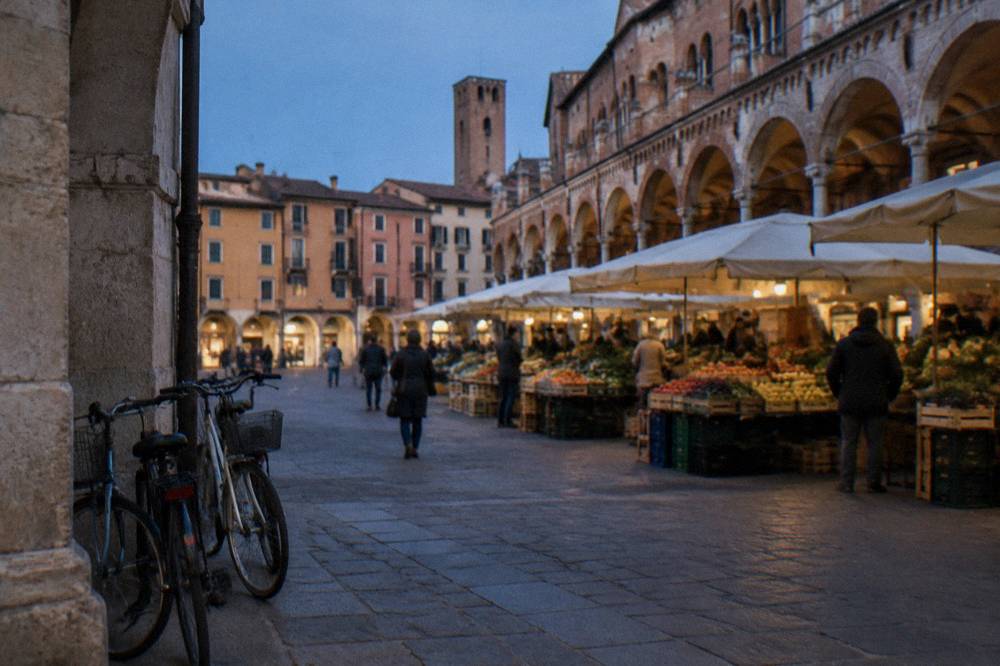
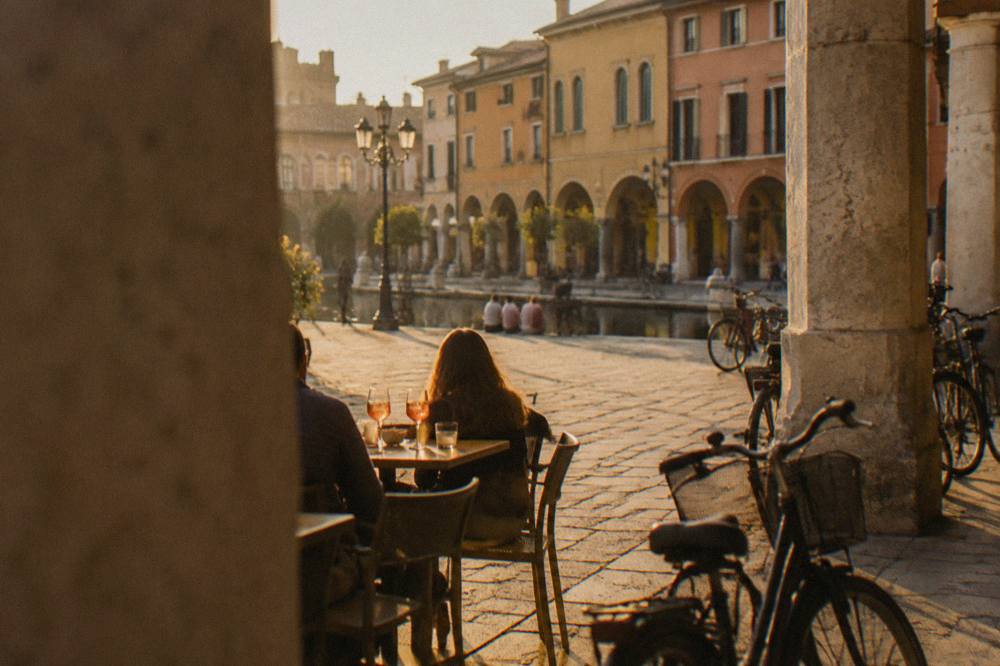
Food stops slot between them. The Piazza dei Frutti market runs food stalls Monday to Wednesday 8:00 to 14:00 and Thursday to Saturday 8:00 to 19:00, and the permanent Sotto il Salone market under Palazzo della Ragione, described by the tourism board as a covered market of eight centuries' standing, trades through the day. For the spritz culture of the evening squares, which has its own Padua story: Aperol was created in Padua in 1919 by the Barbieri brothers, and the spritz in Padua page tells it.
How Does A Bike Day Fit Into A Longer Padua Stay?
A bike day slots naturally into a two or three day Padua itinerary because the rides described here, the centre loop, the walls, Prato della Valle and a hills or Brenta excursion, map one-to-one onto the standard itinerary blocks, and the city's compactness means adding a bike rarely adds cost beyond a weekly sharing pass at a reported EUR 5 or a handful of EUR 1.70 transit tickets.
First-time visitors should pair one centre ride with one day trip and leave the Scrovegni booking to the calendar, not the day.
The itinerary pages do the sequencing. Padua in one day fits the centre loop and the chapel slot; Padua in two days adds Prato della Valle and the university; Padua in three days makes room for the Euganean Hills. Visitors working back and forth with Venice should read one day in Padua from Venice and Venice to Padua, since the reported 26 to 40 minute regional train at about EUR 5 turns a Venetian stay into a Paduan ride. Where you sleep matters for lock-ups and morning light alike: the where to stay page breaks down the quarters, and remember the tourist tax exists, is collected by the accommodation and is capped at five consecutive nights per person.
Common Questions About Cycling In Padua
How much does bike sharing cost in Padua?
Reported tariffs put GoodBike Padova at EUR 5 per week, EUR 10 per month and EUR 30 per year, with the first 30 minutes of each ride free and EUR 0.50 per further 30 minutes, and RideMovi at about EUR 1 per 20 minutes with a 30-day pass around EUR 9.90. Confirm the current operator in the app before relying on either.
Is Padua good for cycling?
The city's core sights, the Scrovegni Chapel, the market squares, the Basilica of Saint Anthony and Prato della Valle, all sit inside one continuous ride, the tram line SIR1 runs a 10.5 km north-south spine, and about 76,000 students per the university's own figures keep the streets oriented to bikes and public transport. Bike theft is described as common, so use a solid lock.
Can you cycle from Padua to the Euganean Hills?
Yes, as a destination set: Abano Terme lies about 8 km and Montegrotto Terme about 11 km from Padua in a straight line, Arqua Petrarca about 20 km and Monselice about 21 km. The published sources give straight-line distances only, with no route lengths or gradients, so plan the actual ride from a cycle map and consider the regional bus network for the return.
Do you need a bike at all in Padua?
No. The TU1 urban ticket costs EUR 1.70 for 90 minutes and works with a contactless card tap on board, and the whole historic centre walks between its main sights. A bike simply compresses the distances and makes the walls, Prato della Valle and the river easy add-ons.
When is the Scrovegni Chapel closed?
The chapel closes 16 to 27 November 2026 for the annual fresco inspection, plus 1 May, 25 and 26 December and 1 January. Entry is timed only, at most 25 people every 15 minutes, with arrival 5 minutes before the slot, and there is no same-day online booking.
Can you take a bike on Padua's tram or trains?
The published sources for this page do not state the carriage rules for bikes on the SIR1 tram or on Trenitalia services from Padova station, so check with Busitalia and the rail operator before planning a bike-plus-train day trip.