Chioggia: The Lagoon Fishing Town
Chioggia sits on the southern Venetian lagoon, about 38 km in a straight line from Padua, and makes a half-day or full-day escape from the arcades and frescoed halls of the city.
Short answer
Chioggia is a working fishing town on the southern edge of the Venetian lagoon, about 38 km in a straight line southeast of Padua. Regional transport links it to the Padua area, and its canals, fish market and adjoining Sottomarina beach make it a quieter lagoon alternative to Venice.
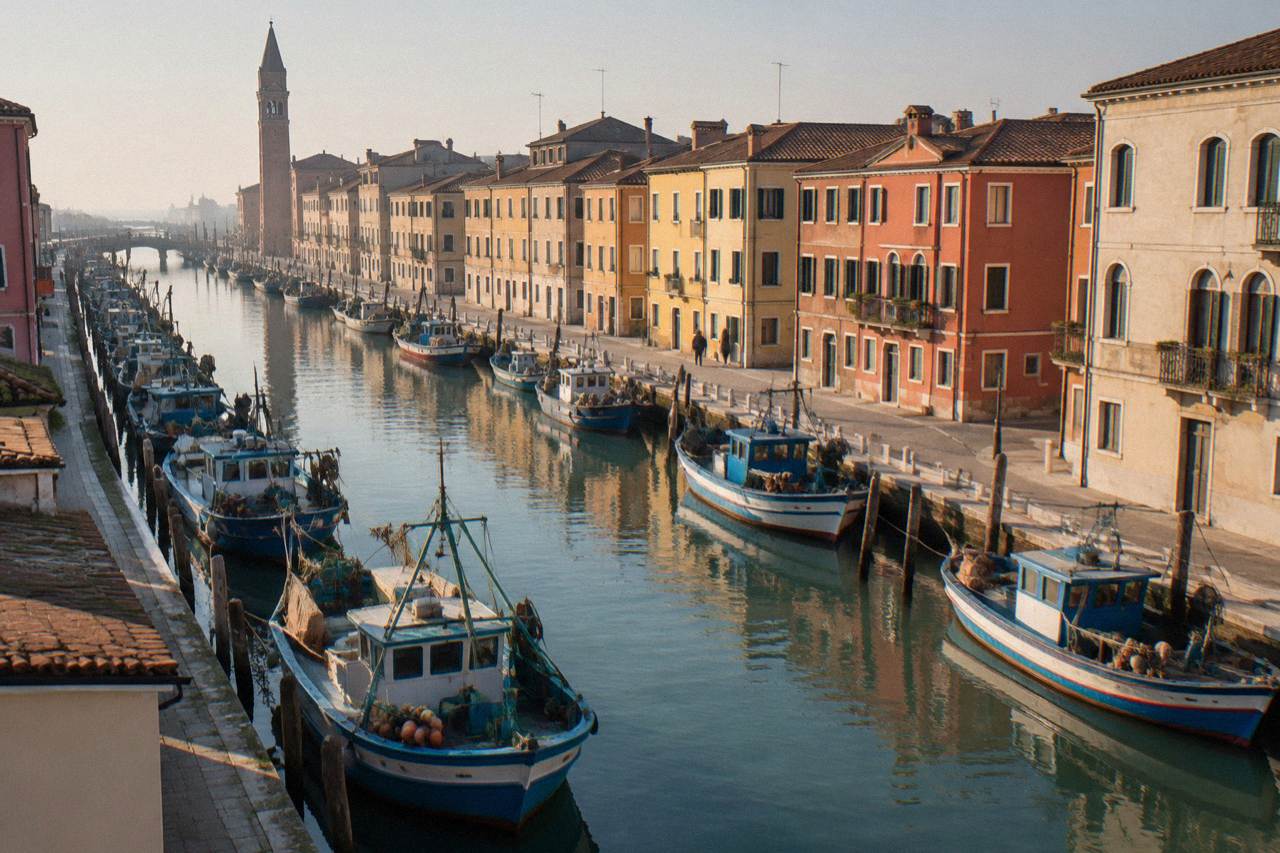
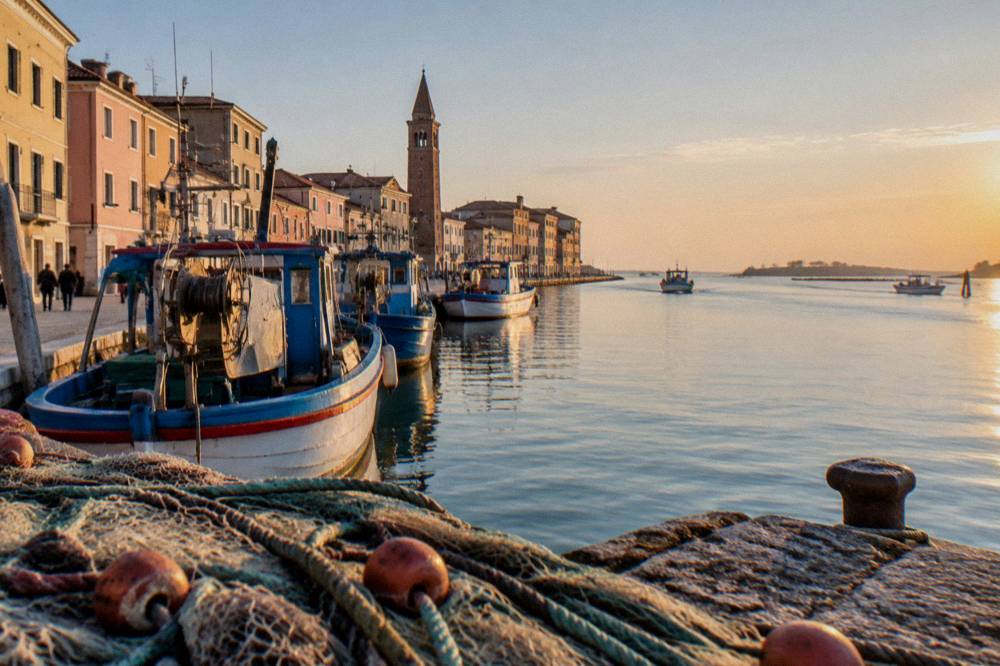
Chioggia is a fishing town on the southern edge of the Venetian lagoon, about 38 km in a straight line from Padua, the inland frescoed city in the Veneto where this guide is based. Padua itself sits on the Bacchiglione, not on the lagoon or the sea, and Chioggia is one of the day trips that gives a Padua stay its taste of open water without the same weight of tourism that descends on Venice, about 36 km away in a straight line. The town is built around the Canale Vena, crossed by bridges and lined with houses whose ground floors have served the fish trade for generations, and it adjoins the beach quarter of Sottomarina on the Adriatic side of the narrow spit of land.
This page sets out what the sources support about Chioggia: the geometry of the trip from Padua, the transport options and fares that can be stated with figures, what the town itself offers, and how a Chioggia day fits alongside the other excursions covered across Padua Travel Guide, from the Euganean Hills to the Brenta Riviera. Where a figure is not supported, the page stays qualitative and points to checking the operator directly.
Where Is Chioggia Relative To Padua?
Chioggia lies about 38 km in a straight line southeast of Padua, on the southern rim of the Venetian lagoon where the Brenta and Adige rivers meet the Adriatic. Padua is an inland city, so Chioggia is the closest taste of lagoon and sea life on this guide's day-trip list, slightly further from the centre than Venice at about 36 km straight line.
The distinction matters because Padua is sometimes described as a lagoon city, and it is not. Padua sits on the Bacchiglione and its canals, about 36 km in a straight line from Piazza San Marco, with Chioggia a few kilometres further out in a different direction, at the bottom of the lagoon. Chioggia guards the southern entrance to the Venetian lagoon, and the channel that passes it, the Chioggia mouth, is one of the three openings through which the tide exchanges water between the lagoon and the Adriatic.
That position explains the town's character. The lagoon around Chioggia is a working landscape of fishing stakes, mussel farms and dredged channels rather than a museum piece, and the fish market in the town centre is a trading hub for the catch, not a showcase put on for visitors. The Comune di Padova's own market pages describe how markets anchor the trading rhythm of the Padua area; Chioggia's fish market plays the equivalent role for the southern lagoon.
For scale, here is how Chioggia sits among the straight-line distances from the centre of Padua:
| Destination from Padua | Straight-line distance |
|---|---|
| Venice | about 36 km |
| Chioggia | about 38 km |
| Vicenza | about 30 km |
| Treviso | about 41 km |
| Bassano del Grappa | about 42 km |
| Verona | about 69 km |
| Ferrara | about 66 km |
| Bologna | about 110 km |
Distances are computed straight-line kilometres, not road distances, and no drive time is stated for any of them. The practical planning point is simple: Chioggia is a near neighbour of Venice in distance terms, and the two can even be combined across separate days, one for the frescoes of Padua's Scrovegni Chapel and one for the lagoon.
How Do You Get From Padua To Chioggia?
Chioggia is reached from Padua by regional train and bus services that run across the Padua plain to the lagoon edge, so schedules should be checked on the Trenitalia site or the local operator's planner before the day. Within Padua itself the urban 90-minute ticket costs EUR 1.70, and a contactless bank card can be tapped on board tram and bus.
The transport facts this guide can state with figures concern the Padua end of the journey. Busitalia's urban fares give the 90-minute TU1 ticket at EUR 1.70 for the city zone, with a daily ticket at EUR 4.70, and the contactless tap option covers the same EUR 1.70 fare on board. For the Chioggia leg itself, regional trains and buses serve the corridor south-east of Padua toward the lagoon, but the constraint on this page is that no journey time, frequency or fare for Padua to Chioggia can be printed, so check the live timetables on the operator's own planner when fixing the day. Check the live timetables on the operator's own planner when fixing the day.
The airport-bus precedent shows how this corridor works. The Busitalia link between Padua and Venice Marco Polo airport runs 54 times a day, every 40 minutes from 05:30 to 22:50, costs EUR 13 one-way and takes about 45 minutes for a longer run than the Chioggia trip; it confirms that high-frequency regional coaching out of Padua is normal, even though its fares do not transfer to other routes.
Three practical notes for the outbound day:
| Leg | What to check in advance | Verified fare where one exists |
|---|---|---|
| Padua accommodation to Padova station | Tram SIR1 runs north-south; SIR3 is still in testing, so no opening date can be promised | EUR 1.70 for 90 minutes on the urban TU1 ticket |
| Padova station to Chioggia corridor | Live regional train and bus times on the operator's planner for the travel date | none printable for this route |
| Luggage or gaps between legs | Station left-luggage office, platform 1 | EUR 5 per 6 hours, daily 6:00 to 20:00 |
A comfortable pattern is to leave Padua after breakfast, spend the middle of the day around the Canale Vena and the fish market, and return in the early evening. The IAT tourist office at the station exit of platform 1, open Monday to Saturday 9:00 to 19:00 and Sundays 10:00 to 16:00, is the place to ask about service disruptions on the day.
One alternative worth naming is the water route. The Padua to Venice Boat Cruise of the Brenta Riviera travels the villas of the Brenta from Padua toward the lagoon, and it is this page's featured excursion because it reaches the lagoon world by the historical route the Venetian nobility used. Il Burchiello, the boat service listed on the operator's own site, runs the Padua to Venice stretch between March and October in both directions, though its price is not stated here. If a boat day appeals more than a bus day, check availability on the operator's live listing: Check availability.
What Are The Main Sights In Chioggia?
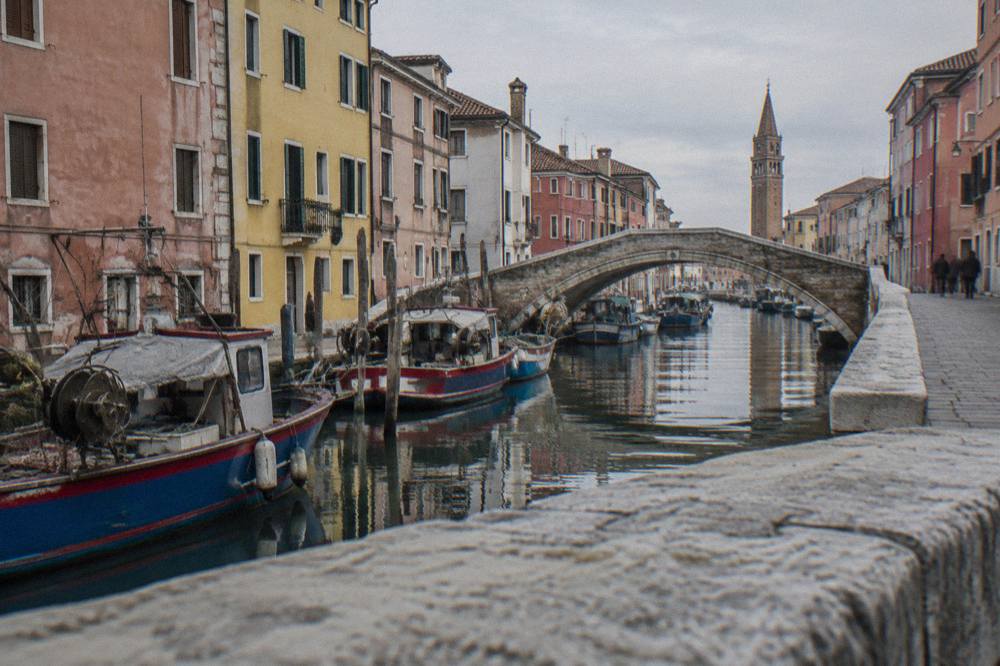
The main sights of Chioggia cluster along the Canale Vena, the water street that runs the length of the old town, crossed by the Ponte Vigo at its lagoon end, with the fish market, the churches of Sant'Andrea and San Domenico, and the towers that rise above the roofline all within a short walk of each other, so the whole historic core works as a single walking circuit.
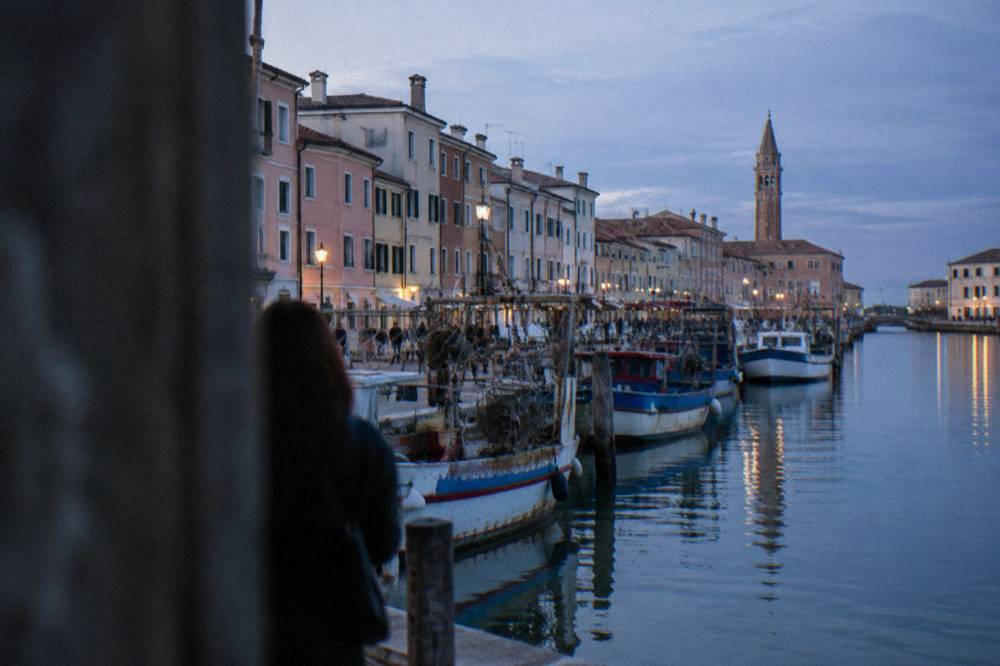
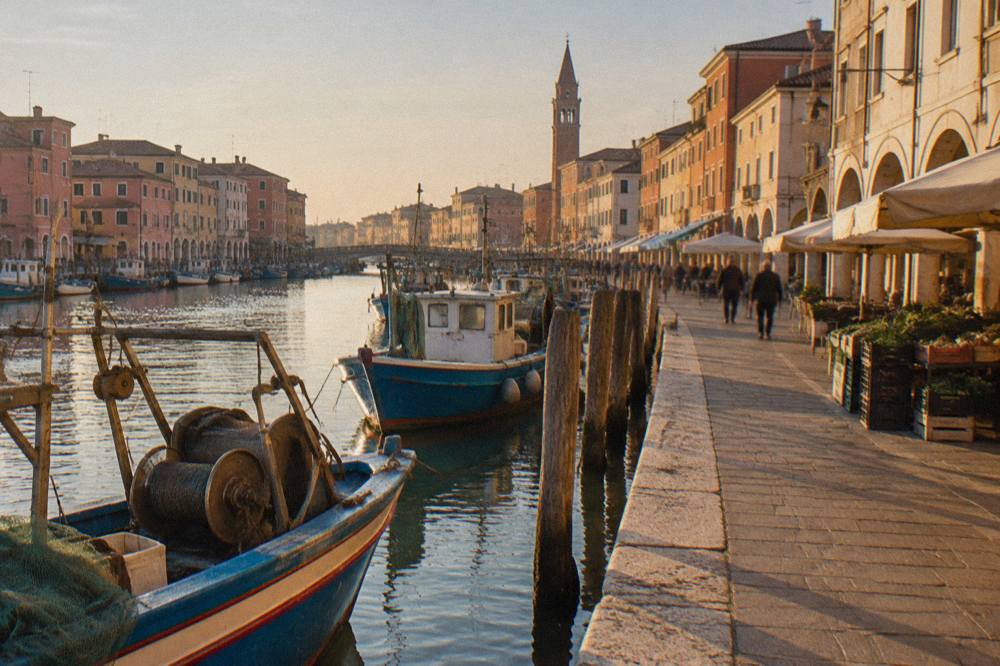
The Canale Vena is the spine of the town. Bridges join the two banks, and the water carries the small boats of the fishing fleet and the maintenance traffic of a working lagoon port. At the northern, lagoon-facing end stands the Ponte Vigo, the bridge that has given the town its ceremonial gateway from the water for centuries, with the broad basin of the lagoon opening beyond it. No ticket is needed to walk the canal, the bridges or the quays.
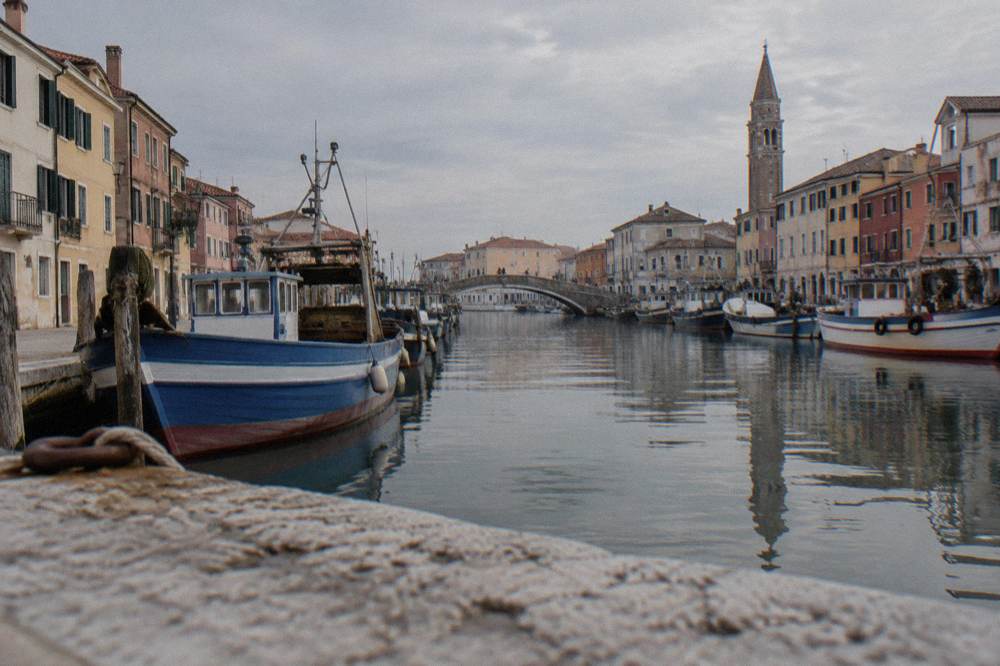
The fish market sits at the commercial heart of the town, and the catch it sells is the reason Chioggia is known as a fishing port rather than as a resort. Around it run the shopping streets of the centro storico, which on market days carry the same rhythm of stalls and traders that the Comune di Padova documents for Padua's own Piazza delle Erbe, where 52 stalls trade Monday to Friday 7:30 to 13:30 and Saturday 7:30 to 20:00. Chioggia's equivalent trading hours should be checked locally on the day.
The churches are the built landmarks. The church of Sant'Andrea, on its own small island in the canal, carries a brick campanile that serves as the town's lookout tower, and the church of San Domenico holds a collection of paintings in a quieter setting away from the canal. This guide prints no opening hours or ticket prices for any Chioggia sight, so treat the churches as walk-up visits and confirm at the door.
A working outline for the walking circuit:
| Stop | What it is | Planning note |
|---|---|---|
| Ponte Vigo | The bridge at the lagoon end of the Canale Vena | Free to cross, open at all hours |
| Canale Vena quays | The town's water street, boats and bridges | A level walk, no ticket |
| Fish market area | The trading core of the fishing port | Hours vary; check locally on the day |
| Sant'Andrea | Church and brick campanile on the canal | Confirm opening at the door |
| San Domenico | Church with paintings, off the main canal | Confirm opening at the door |
| Sottomarina seafront | The beach quarter across the causeway | Open promenade, seasonal services |
None of these stops needs a booking, which is the practical difference between a Chioggia day and a Padua museum day. The Scrovegni Chapel in Padua, by contrast, is timed entry only, with groups of at most 25 people admitted every 15 minutes for about 15 minutes inside, booked in advance through the chapel's own site, and it closes entirely from 16 to 27 November 2026 for the annual fresco inspection.
How Does A Chioggia Day Compare With A Venice Day From Padua?
Venice lies about 36 km in a straight line from Padua and Chioggia about 38 km, with the Venice train run at about 26 to 40 minutes and a regional fare of about EUR 5, while no comparable journey time or fare can be printed for Chioggia, so the choice between them comes down to what the day is for: the museums and crowds of Venice or the working lagoon life of Chioggia.
The sourced numbers frame the comparison. Venice is the shorter, better-documented trip: regional trains cover the 26 to 40 minute run from Padova to Venezia Santa Lucia for about EUR 5, and this guide's Venice day-trip page covers it in full. Chioggia is fractionally further in straight-line terms, with transport details that need checking on the day.
| Venice | Chioggia | |
|---|---|---|
| Straight-line distance from Padua | about 36 km | about 38 km |
| Verified train time from Padua | about 26 to 40 minutes | none printable |
| Verified regional fare | about EUR 5 | none printable |
| Character | Museum city on the lagoon | Working fishing port on the lagoon |
| Tickets needed in advance | Scrovegni-style planning applies to major sights; the Venice day-tripper access fee trial ended 27 July 2026 and no 2027 decision has been published | No advance sight bookings this guide can name |
One point of clarity on Venice fees: the 2026 day-tripper access fee trial ended on 27 July 2026, and from that date the fee has not applied. No 2027 decision had been announced, so a Padua traveller planning a Venice leg should not be told the fee must be paid, and should simply check the city's official access-fee page close to travel.
Chioggia and Venice are not rivals so much as two ends of the same lagoon. A reader with three or four days in Padua can take Venice on one day, Chioggia on another, and still have time for the Scrovegni Chapel, the Basilica of Saint Anthony and the Prato della Valle, whose canal and double ring of statues the official tourism page describes, along with the Venetian Senate's 1767 declaration of the space as communal. The things to do in Padua overview gathers the full in-city list.
What And Where Do You Eat In Chioggia?
Eating in Chioggia means the lagoon's own catch, with fish and seafood from the town's market at the centre of the kitchen, and the dining sits around the Canale Vena and the lanes of the centro storico, so the practical advice is to follow the fish market's rhythm and eat what the port landed that morning, checking opening and closing days of individual kitchens locally.
The fish trade is the town's economy, and the kitchen follows it. The lagoon and the Adriatic supply the grills and frying pans of the old town, and the Veneto staples this guide covers on the Padua food pages, from baccalà to bigoli, appear on Chioggia tables in their coastal form, with shellfish and fried lagoon fish alongside. Aperol itself was created in Padua in 1919 by the Barbieri brothers, and the spritz culture that grew around it runs down the canal-side tables here as it does in Padua's Piazza delle Erbe.
No restaurant, bar or bakery is named on this site, and no meal or drink price is printed, because none is confirmed for Chioggia in the research pack. The planning approach is the same as the one this guide gives for Padua's trattorie: eat where the fish market points, ask what came in that morning, and treat the fixed-price tourist menus that line any port with the scepticism a market town earns. Tipping in Italy is not obligatory; five to ten percent for excellent service is appreciated beyond any coperto already on the bill.
A short table of the eating landscape:
| Where | What to expect | Verified figure |
|---|---|---|
| Fish market area | The morning trade in the lagoon catch | none; check hours locally |
| Canal-side tables | Spritz and lagoon fish at the water's edge | none; no drink prices printable |
| Centro storico lanes | Small kitchens and food shops | none; no names or prices printable |
| Sottomarina seafront | Seasonal beach-side eating | none; seasonal, check locally |
The one number worth carrying is the timing discipline of the return leg: Italian smaller kitchens commonly close through the early afternoon, and the Padova station left-luggage office, useful for a late return, shuts at 20:00. Plan the last meal of the day so the journey back does not depend on a kitchen reopening.
Is Sottomarina Worth Adding To The Chioggia Trip?
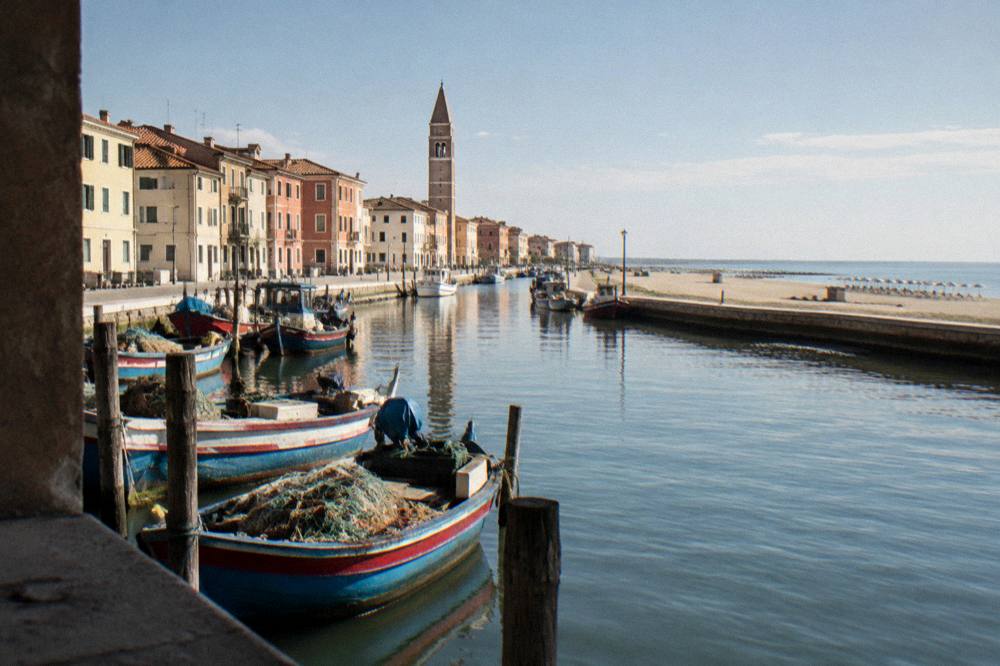
Sottomarina is the beach quarter immediately south of Chioggia's old town, joined to it across a short causeway, and it gives the day a stretch of Adriatic sand and seafront without changing transport, which makes it the natural second half of a Chioggia trip for anyone travelling in the warm months, when the ERA5 reanalysis for the region shows July and August mean highs of 28.8 C.
The two halves of the town face different waters. Chioggia's centro storico looks inward to the lagoon, at the quiet, tide-fed end of the Venetian lagoon system; Sottomarina faces the open Adriatic across a sandy barrier island that carries the beach, the promenade and the seasonal resort trade. Walking between them takes minutes, and no separate ticket or transport is involved.
The climate context comes from the ERA5 reanalysis, 1991-2020, for the Padua grid cell, the nearest modelled series this guide prints:
| Month | Mean daily high | Mean daily low | Rain |
|---|---|---|---|
| June | 26.2 C | 16.6 C | 81.0 mm |
| July | 28.8 C | 18.9 C | 62.1 mm |
| August | 28.8 C | 19.2 C | 78.7 mm |
| September | 23.6 C | 14.9 C | 105.5 mm |
September carries a higher rain total than August in the modelled normals, 105.5 mm against 78.7 mm, so a late-season beach day is a trade between thinner crowds and a wetter month, and the sea itself stays warm well past the summer peak. No beach-club price, lido charge or season date is printable here, so check with the operator or the local tourist office for the stretch of sand you choose.
For families, the pairing works well: the morning in the fish-market lanes gives children the boats and bridges of a small port, and the afternoon on the sand gives them the sea. Padua's own family itinerary, covered on the Padua with kids page, pairs the city's tortoises and anatomy theatre with exactly this kind of half-day escape.
How Does Chioggia Fit A Multi-Day Padua Itinerary?
Chioggia slots into a Padua stay as the lagoon-and-sea day alongside Venice's museum day, the Euganean Hills' wine and spa day and the Brenta Riviera's villa day, and a four-excursion week built this way covers coast, lagoon, hills and villas without repeating a landscape, using Padua's regional transport and the day-trip distances this guide covers.
A sample week, using only the excursions this site documents:
| Day | Base | Excursion | Verified figure |
|---|---|---|---|
| 1 | Padua | Scrovegni Chapel and the fresco circuit | EUR 15 full ticket plus EUR 1 booking fee |
| 2 | Padua | Venice | train about 26 to 40 minutes, regional about EUR 5 |
| 3 | Padua | Chioggia and Sottomarina | about 38 km straight line |
| 4 | Padua | Euganean Hills, Arqua Petrarca | Casa del Petrarca EUR 6 full |
| 5 | Padua | Brenta Riviera villas, Villa Pisani | Villa Pisani about 11 km straight line |
| 6 | Padua | Vicenza, Teatro Olimpico | EUR 12 full, train 16 to 25 minutes |
The hills day deserves its note: the Arqua Petrarca page covers Casa del Petrarca at EUR 6 full and EUR 4 reduced, closed non-holiday Mondays, and the Villa dei Vescovi and Valsanzibio garden trip is the region's villa-and-garden pairing, with Villa dei Vescovi itself at EUR 11 for adults on the FAI's own page. The Bassano del Grappa run adds the Poli Grappa Museum, which has free entry, and the Ponte degli Alpini, about 42 km straight line out.
Two cautions that apply to any Padua day-trip week. First, the Scrovegni Chapel's November 2026 closure, from the 16th to the 27th, falls inside a low-season week and needs booking around; the chapel's own site is the source for alternative slots. Second, the tourist tax on Padua accommodation runs per person per night for at most five consecutive nights, collected by the accommodation, with under-16s exempt; the amount appears on the booking rather than in this guide.
What Should You Check Before A Chioggia Day Trip?
A Chioggia day trip needs three checks before departure: the live regional train and bus times for the travel date, because no journey time or fare for the route is printable from this guide's research; the weather, because the lagoon and beach halves of the town serve different conditions; and the return cut-off, because the Padova station left-luggage office closes at 20:00 and the last regional services run earlier than a city traveller expects.
The transport check matters most. Everything this page states with figures about Padua transport is urban: the EUR 1.70 90-minute ticket, the EUR 4.70 daily, the EUR 13 airport bus. The Chioggia corridor's own times and fares change with the season and the operator, so the day should be booked around the live planner rather than around a remembered number. The same discipline applies to the boats: Il Burchiello's March-to-October season is listed on its own site, but its price and sailing days should be checked there too.
The weather check is a lagoon check. The ERA5 reanalysis, 1991-2020, gives the Padua grid's November rain total as 114.0 mm, the highest month of the year, against January's 53.6 mm, and a wet day changes the shape of a Chioggia visit more than it changes a museum day in Padua, where the Padua in the rain itinerary exists precisely for that swap.
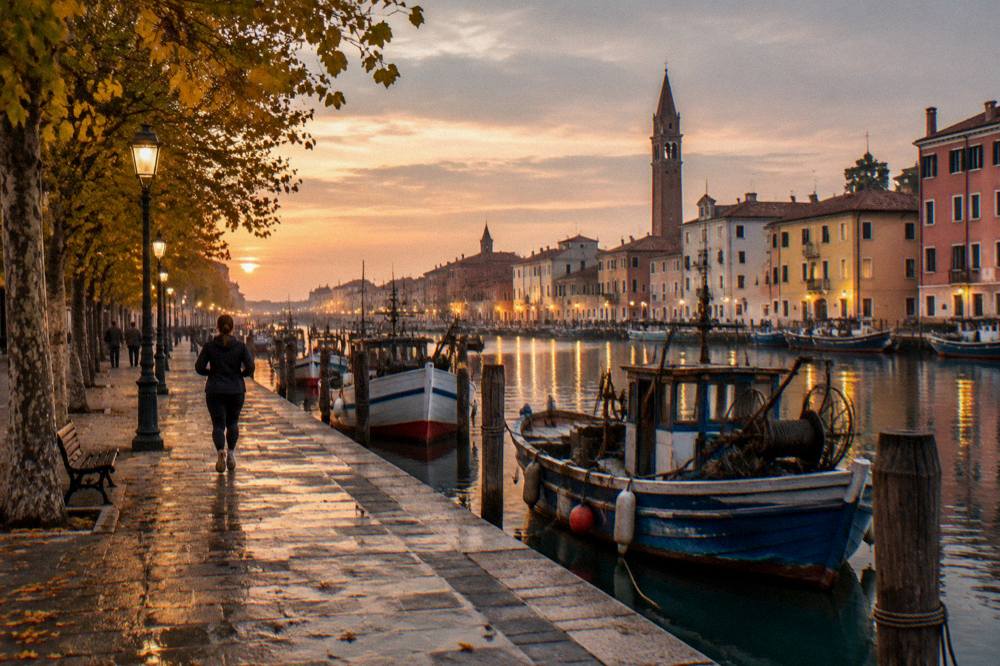
The return check is the quiet one that catches people out. Regional services thin in the evening, the left-luggage office at platform 1 keeps its 6:00 to 20:00 window, and a beach afternoon can run long. Fix the last departure before the first spritz, and the day ends as it began, with the lagoon at the edge of an inland city's reach.
Common Questions About Chioggia
How far is Chioggia from Padua?
Chioggia lies about 38 km in a straight line from the centre of Padua, slightly further than Venice at about 36 km. No drive time or road distance is printable from this guide's research, so check the live planner for the journey itself.
Is Chioggia worth visiting from Padua?
Chioggia is a working lagoon fishing town rather than a museum city, and it suits a traveller who wants canals, a fish market and the Sottomarina beach without a Venice-scale day. What it offers is qualitative rather than ticket-based: no advance sight booking is needed for anything this guide can name there.
How do you get from Padua to Chioggia?
Regional trains and buses link the Padua area with Chioggia, so schedules should be checked on the operator's planner for the travel date. Within Padua the urban 90-minute ticket costs EUR 1.70.
Is Chioggia a cheaper day trip than Venice?
No fare comparison can be printed, because only the Venice regional fare, about EUR 5, is available. What differs is the spending pattern: Venice concentrates spending on museum tickets, while Chioggia's costs sit in meals and any beach-club choice, whose prices are not printable here.
Can you combine Chioggia and Venice in one day from Padua?
They sit at opposite edges of the same lagoon, and a rushed combination is possible in principle, but this guide recommends separate days: Venice needs the timed-entry planning that its sights demand, and Chioggia rewards the slower rhythm of the fish market and the seafront.
When is the best time of year for a Chioggia trip?
The ERA5 reanalysis, 1991-2020, for the Padua grid shows July and August mean highs of 28.8 C, and November the highest monthly rain total at 114.0 mm. The warm months serve the Sottomarina beach half of the town; the canal core works year-round with a coat.