What Is The Most Famous Church In Padua, Italy?
The most famous church in Padua is the Basilica of Saint Anthony, known as the Santo, begun in 1232 and still a pilgrimage destination. Here is what it holds and how it compares with the Scrovegni Chapel.
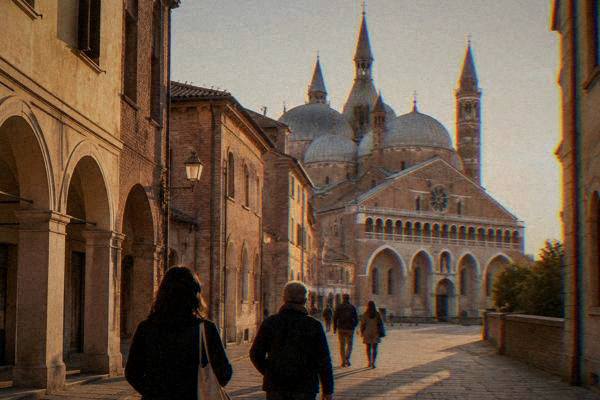
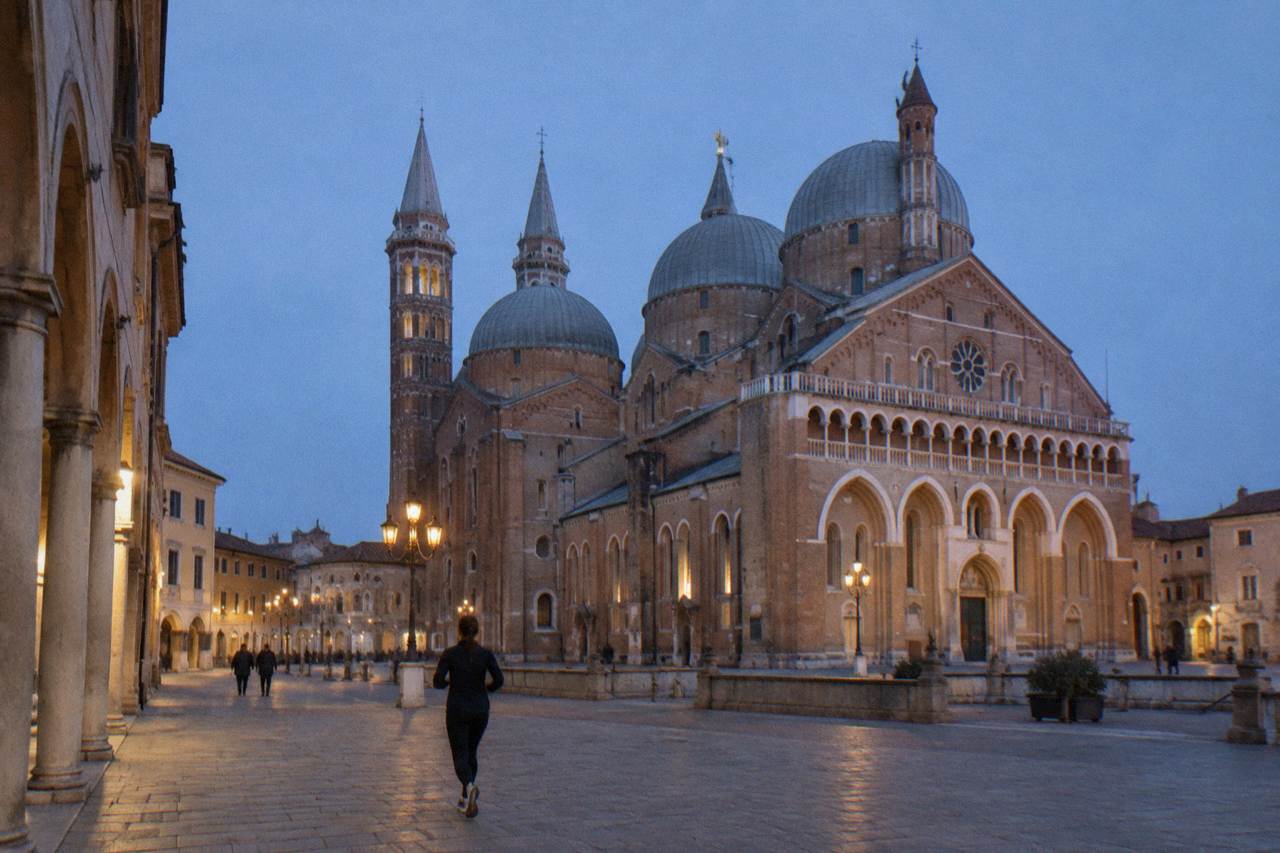
Padua, the Italian city of Padova in the Veneto, northern Italy, is a city of churches stacked close together in a small historic centre: an inland city of arcaded streets about 36 km in a straight line from Venice, with two UNESCO World Heritage listings and a university founded in 1222. Ask which of its churches is the most famous and the answer is clear, because one of them is an international pilgrimage destination and the home of a saint whose name the whole world knows. That church is the Basilica of Saint Anthony of Padua, called the Santo, begun in 1232, a year after the saint's death in the city on 13 June 1231.
There is a second answer, though, and it matters for anyone planning a visit. The Scrovegni Chapel, frescoed by Giotto between 1303 and 1305, is a chapel rather than a parish church, but in fame and in ticket demand it rivals the Santo, and it is the site that draws art travellers from across the world. The two sit about ten minutes' walk apart, and a day in Padua is really the story of these two buildings. This page, from the Padua Travel Guide editorial desk, sets out what each holds, what the sources say about visiting them, and how the city's other famous churches compare.
What Is The Most Famous Church In Padua, Italy?
The most famous church in Padua, Italy, is the Basilica of Saint Anthony of Padua, universally known as the Santo, whose construction began in 1232, a year after Saint Anthony died in the city on 13 June 1231. It holds the saint's tomb and relics, it is a major pilgrimage basilica, entry is free, and in 2021 it became one of the eight complexes of the UNESCO Padova Urbs Picta listing for fourteenth-century fresco cycles.
The basilica's standing rests on two things: the saint and the art. Saint Anthony of Padua, born in Lisbon, died near Padua in 1231 and was canonised within a year, and the basilica raised over his tomb became one of the great pilgrimage churches of Europe. The Tredicina, the thirteen days of prayer before the feast, ran from 31 May to 12 June in 2026 with the procession on the feast day itself, 13 June; it is an annual event, and the dates for 2027 had not been announced. Pilgrims come to the Chapel of Saint Anthony at the tomb and to the Chapel of the Relics, which the basilica's own descriptions place near the sanctuary.
The art inside is by one name above all: Donatello. The main altar and presbytery, the basilica's account notes, hold Donatello's masterpieces from 1448 onward, including the Crocifisso, and outside on Piazza del Santo stands his equestrian monument to Erasmo da Narni, the condottiero known as Gattamelata. Entry to the basilica is free, per the Padova Urbs Picta visitor information, and the dress rule on santantonio.org states plainly that dress must be suitable to a church environment. Opening hours vary and visits pause during services, so check the basilica's own site before setting out.
| Church in Padua | What it is known for | Entry |
|---|---|---|
| Basilica of Saint Anthony (the Santo) | Tomb and relics of Saint Anthony, Donatello's altar and the Gattamelata outside, pilgrimage destination, UNESCO Urbs Picta complex | Free |
| Scrovegni Chapel (Cappella degli Scrovegni) | Giotto's fresco cycle painted 1303 to 1305, UNESCO Urbs Picta complex | EUR 15 full, plus EUR 1 booking fee, timed entry |
| Chiesa degli Eremitani | UNESCO Urbs Picta complex, the church of the Augustinian friars next to the Scrovegni Chapel and the civic museums | Included in the Scrovegni daytime ticket |
| Padua Cathedral and Baptistery | The Baptistery's frescoes are part of the Urbs Picta cycle of eight complexes | Check the current price on the official ticket page |
If the question is really about which church to give your limited time to, the pairing of the Santo and the Scrovegni Chapel covers both halves of Padua's fame, the devotional and the artistic. The tour that pairs them directly is the Exclusive Padua Tour with Scrovegni Chapel and Basilica, a private walk that moves between the two, or you can read the wider rundown on the things to do in Padua page.
Why Is The Scrovegni Chapel Almost As Famous As The Basilica?
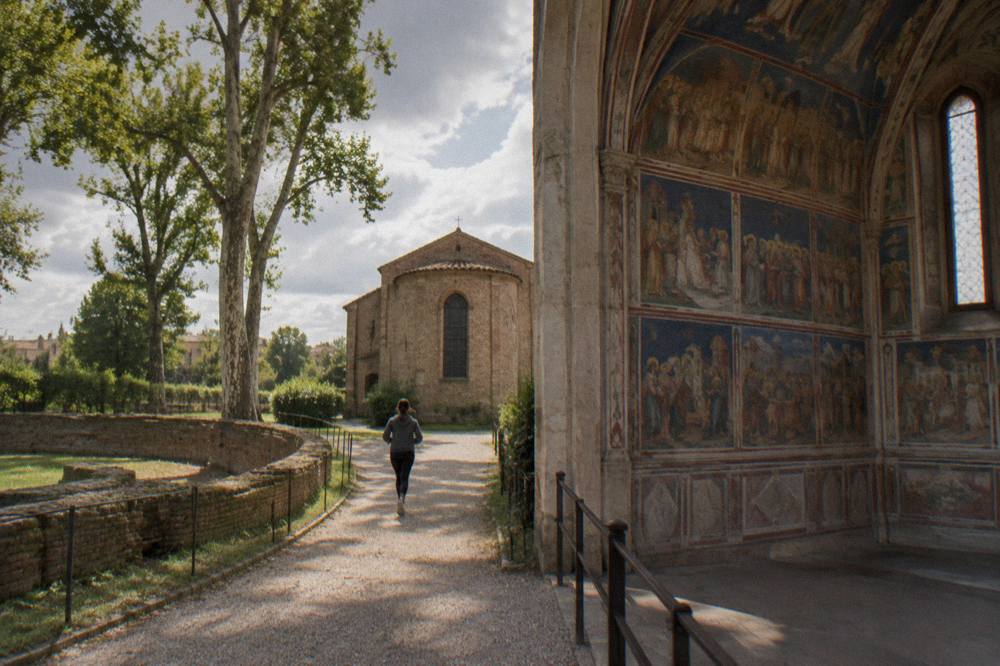
The Scrovegni Chapel is famous because Giotto painted its entire fresco cycle between 1303 and 1305, a body of work the UNESCO listing of 2021 recognises as one of the founding masterpieces of European art, and because visiting it is deliberately rationed: at most 25 people enter every 15 minutes, for about 15 minutes inside, and tickets must be booked ahead. The chapel was commissioned by Enrico degli Scrovegni and built after 1300 on land that included the remains of Padua's Roman amphitheatre, which is why it is also called the Arena Chapel, a name that has nothing to do with the Arena di Verona.
The chapel's own site is blunt about the practical rules, and they shape every visit. There is no same-day online booking: anyone without a reservation should check availability in person at the museum ticket office. Visitors pass first into a climate-controlled waiting room and must arrive 5 minutes before the slot printed on the ticket; latecomers are denied re-entry without a new paid booking. The daytime ticket, EUR 15 full price plus a EUR 1 booking fee, also covers the Musei Civici Eremitani and Palazzo Zuckermann, while the evening visits, 25 March to 1 November from 19:00 to 22:00, are chapel only.
| Scrovegni Chapel visit fact | Detail |
|---|---|
| Daytime hours | 9:00 to 19:00, last entry 18:45 |
| Entry rhythm | Max 25 people every 15 minutes, about 15 minutes inside |
| Booking | In advance only, no same-day online booking, EUR 1 fee |
| Full ticket | EUR 15, includes Musei Civici Eremitani and Palazzo Zuckermann |
| 2026 closure | Closed 16 to 27 November 2026 for the annual fresco inspection |
The closure in November 2026 catches out travellers every year: the chapel shuts for its annual inspection by the Istituto Centrale per il Restauro, and in 2026 that means 16 to 27 November. Why the frescoes matter so much is covered in detail on the page why the Scrovegni Chapel is famous, and the mechanics of the short visit on how long it takes to visit the Scrovegni Chapel. For a guided version there is also Check availability on the guided chapel tour's live listing, where the operator handles the timed reservation.
Which Other Churches In Padua Are Famous?
Beyond the Santo and the Scrovegni Chapel, Padua's famous churches include the Chiesa degli Eremitani, part of the UNESCO fresco listing and the neighbour of the Scrovegni Chapel, the Cathedral's Baptistery with its own fourteenth-century fresco cycle, the Basilica di Santa Giustina beside Prato della Valle, and the Oratory of San Giorgio, another of the eight Urbs Picta complexes. Each carries a piece of the same story, the fourteenth-century painting campaign that earned the city its 2021 UNESCO inscription under criterion (ii).
The Chiesa degli Eremitani stands a few steps from the Scrovegni Chapel and is included in the chapel's daytime ticket through the Musei Civici Eremitani. Its Ovetari Chapel frescoes by Mantegna were largely destroyed when the church was bombed in 1944, a loss the parish and museum histories record plainly, and what survives is enough to explain why the church earned its place in the listing. More on that building is on the Chiesa degli Eremitani page.
The Baptistery of the Cathedral, with Giusto de' Menabuoi's frescoes, and the Oratory of San Giorgio complete the set of painted spaces within walking distance of Piazza delle Erbe. The Basilica di Santa Giustina faces Prato della Valle, the great square with its canal and double ring of statues of famous figures, declared communal space by the Venetian Senate in 1767. For hours and tickets at any of these, check the current price on the official ticket page before booking, since several sit outside the civic museum list.
Is Saint Anthony Really Buried In The Basilica?
Yes. Saint Anthony's tomb is inside the Basilica of Saint Anthony in Padua, in the Chapel of Saint Anthony, and the basilica also keeps his relics in the Chapel of the Relics: per the basilica's own description, the skeleton except the jawbone and left forearm, which are held in a crystal urn, along with the habit and vocal apparatus. He died nearby at Arcella on 13 June 1231, and the basilica built over the following decades became his shrine.
That tomb is the reason the church exists at all and the reason pilgrims still fill it, above all during the Tredicina, which ran 31 May to 12 June in 2026 with the feast and procession on 13 June. The festival is annual and the 2027 dates had not been announced. The full story of the burial and the relics, including where each relic is kept, is set out on the page is Saint Anthony buried in Padua, and the saint's life and the basilica's history have their own longer treatment in the site's Basilica guide.
What this means in practice is that the most famous church in Padua is not a museum. The basilica runs services around its visitors, visits pause during functions, and the dress code asks for clothing suitable to a church. Combine the two halves of the city's sacred fame, the Santo's tomb and Giotto's chapel, and you have the core of a single day in Padua; how much time to allow is covered on how many days you need in Padua.
Can You Visit The Most Famous Church In Padua And The Scrovegni Chapel On The Same Day?
Yes, and that is the standard way to do it. The Basilica of Saint Anthony, the Scrovegni Chapel, the Chiesa degli Eremitani and Prato della Valle all sit within a compact, walkable historic centre roughly a kilometre across, so one long morning and afternoon covers the Basilica, a booked Scrovegni slot, the included civic museums and still leaves time for the markets of Piazza delle Erbe. The only fixed point is the chapel reservation, which sets the day's timetable.
Build the day around the timed chapel entry, since it is the one thing that cannot be improvised. Book the slot first, then work outward: the Basilica of Saint Anthony and Prato della Valle to the south, the chapel and the Eremitani museums to the north, and the food markets of Piazza delle Erbe and Piazza della Frutta in the middle, open Monday to Friday 7:30 to 13:30 and Saturday 7:30 to 20:00 per the Comune di Padova's market page. The Saturday market at Prato della Valle runs 8:00 to 19:00 in winter and 8:00 to 20:00 in summer, and the antiques market fills the square every third Sunday of the month.
| Stop | What to book or know |
|---|---|
| Scrovegni Chapel | Timed entry, book ahead, EUR 15 full plus EUR 1 fee, about 15 minutes inside |
| Basilica of Saint Anthony | Free entry, check hours on the basilica's own site, dress suitable for a church |
| Musei Civici Eremitani and Palazzo Zuckermann | Included in the chapel daytime ticket |
| Markets of Piazza delle Erbe | Mon to Fri 7:30 to 13:30, Sat 7:30 to 20:00 |
Travellers arriving from Venice should remember two things: Padua is about 36 km in a straight line inland, reached by train in about 26 to 40 minutes, and the Venice day-tripper access fee trial ended on 27 July 2026, so no Padua-based or Padua-day-trip plan needs to budget for it, with no 2027 decision published. Whether the city justifies more than a dash through is argued on is Padua worth visiting.
Common Questions About The Most Famous Church In Padua
What Is The Most Famous Church In Padua, Italy?
The Basilica of Saint Anthony of Padua, known as the Santo. It was begun in 1232, a year after the saint's death in the city, holds his tomb and relics, includes Donatello's altar, and is one of the eight complexes of the UNESCO Padova Urbs Picta listing of 2021. Entry is free.
Is The Basilica Of Saint Anthony Free To Enter?
Yes, entry to the Basilica of Saint Anthony is free, per the Padova Urbs Picta visitor information. Dress must be suitable to a church environment, and visits pause during services, so check the basilica's own site for current hours before going.
Is The Scrovegni Chapel More Famous Than The Basilica?
Both are world famous, but for different audiences. The Basilica of Saint Anthony is the pilgrimage landmark and the city's principal church; the Scrovegni Chapel is the art landmark, holding Giotto's frescoes of 1303 to 1305. Both belong to the same UNESCO listing, Padova Urbs Picta, inscribed in 2021.
Can You Walk Into The Scrovegni Chapel Without A Booking?
No. Entry is timed, with at most 25 people admitted every 15 minutes for about 15 minutes inside, and there is no same-day online booking. Unreserved visitors should check availability at the museum ticket office in person, and the chapel is closed 16 to 27 November 2026 for its annual fresco inspection.
What Is The Dress Code At The Basilica Of Saint Anthony?
The basilica's own regulation states that dress must be suitable to a church environment. No further detail is specified, so apply the standard you would at any Italian basilica: covered shoulders and knees are the safe rule.
How Far Apart Are The Basilica And The Scrovegni Chapel?
They sit at opposite ends of Padua's compact historic centre, about ten minutes apart on foot through the arcaded streets, with Piazza delle Erbe and the Palazzo della Ragione between them, so visiting both in one morning or afternoon is straightforward.