What To Buy In Padua?
What to buy in Padua: the market stalls of Piazza delle Erbe and Piazza della Frutta, Sotto il Salone, local food products, Euganean Hills wine and olive oil, and spritz gifts.
Padua (Italian: Padova) is an inland city in the Veneto, northern Italy, about 36 km in a straight line from Venice, and its shopping life centres on the market squares of the historic centre rather than on flagship boutiques. The Comune di Padova's own markets page lists the stalls of Piazza delle Erbe, Piazza della Frutta and the Saturday market at Prato della Valle, while the local tourism board catalogues the food products the city is known for. This page gathers what those sources support: the categories worth buying, where the stalls stand, and which local foods travel home well. For the wider sightseeing picture, the things to do in Padua overview covers the rest of the city.
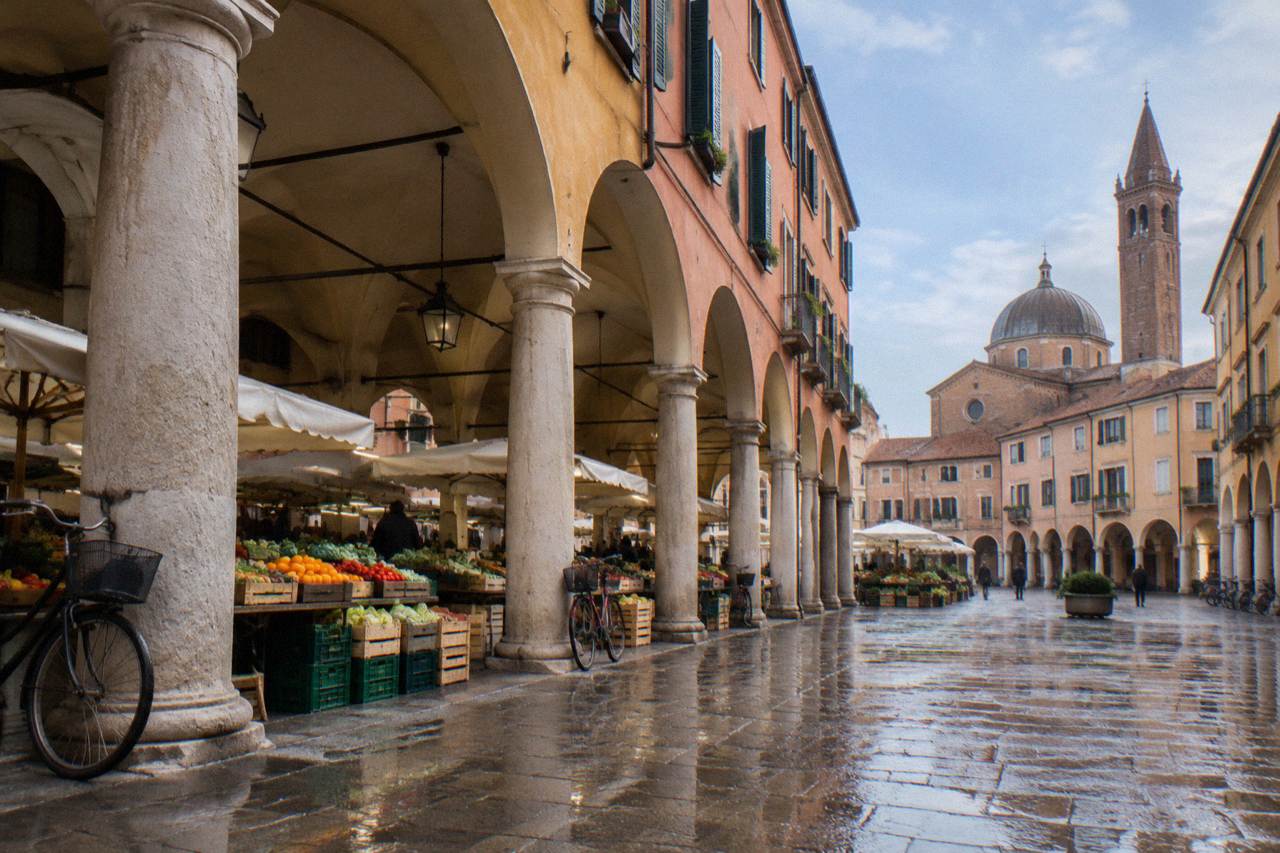
What To Buy In Padua?
The categories the sources support are market goods and local food: fresh flowers, fruit and vegetables from the Piazza delle Erbe stalls, cheese, cured meat and specialty products from the covered Sotto il Salone market under Palazzo della Ragione, dried pasta such as bigoli, local cakes like torta pazientina, and bottles of Euganean Hills wine and olive oil bought at the source. The city's tourism board also names Saint Anthony items among the recognisable local purchases.
No single shop stands out on its own, so buy by category, not by name.
That is the honest shape of a Padua shopping trip. The Comune di Padova runs and publishes the market schedule, which makes the squares the most reliable part of the answer: you know where the stalls are and when they trade. Food is the other reliable thread. The tourism board's gastronomy pages name the city's signature products, and the surrounding Euganean Hills add wine and olive oil to the list, both reachable as a short day trip. If the question behind the question is whether Padua rewards a slower, food-led visit, is Padua worth visiting? addresses that separately.
Which Local Food Products Make The Best Souvenirs From Padua?
The tourism board's own recipe pages name risotto ricco alla Padovana, cappone alla canevera made with gallina padovana, and torta pazientina as the three patented local recipes, and the standard local mentions add bigoli pasta and baccalà. Of these, bigoli, torta pazientina, rice for the risotto, and gallina padovana products are the ones that can travel: dried pasta and rice pack flat, the cake keeps, and preserved or frozen poultry products can be checked with luggage rules.
Bigoli is the thick, coarse spaghetti of the Veneto and the pasta most tied to a Padua table. Torta pazientina, a layered cake with zabaglione and chocolate, is the city's named sweet. Rice matters because risotto ricco alla Padovana is one of the three recipes the tourism board singles out, so a bag of quality riso from a market stall is a defensible souvenir, not a generic one. Baccalà, salted cod, is more of a dish to eat in Padua than a thing to carry home unless you buy it already salted and packed. The full food picture, dish by dish, is in what food is Padua known for?.
| Product | What it is | Travels well? |
|---|---|---|
| Bigoli | Thick coarse dried pasta, a Veneto staple | Yes, packs flat |
| Risotto rice | Base of risotto ricco alla Padovana | Yes |
| Torta pazientina | Layered cake with zabaglione and chocolate | Short trip only |
| Gallina padovana products | The local breed behind cappone alla canevera | Preserved forms only |
| Baccalà | Salted cod | Salted form travels |
The practical rule for all food shopping is to buy from the covered market and the regular stalls rather than hunting for a named store. Sotto il Salone, the permanent covered market under Palazzo della Ragione, is described by the tourism board as a market of local products stretching back centuries under the great hall. Do not print hours for it; check locally when you arrive. The same caution applies to prices: no stall price list is published by the Comune, so treat anything a stallholder quotes as the live price and compare across a few stalls before filling a basket.
Where Do Padua's Markets Sell Flowers, Food And Antiques?
The Comune di Padova's markets page places the main food market in Piazza delle Erbe, 52 stalls trading mostly fruit, vegetables and flowers, Monday to Friday 7:30 to 13:30 and Saturday 7:30 to 20:00. Piazza della Frutta runs food stalls Monday to Wednesday 8:00 to 14:00 and Thursday to Saturday 8:00 to 19:00, Prato della Valle hosts a Saturday market, and an antiques market fills Prato della Valle and via Umberto I every third Sunday of the month.
The antiques market is the one date-dependent purchase window worth planning around: the Comune confirms it runs on the third Sunday of each month, and the tourism board adds that it fills the Prato and via Umberto I together. Everything else repeats weekly. Because the squares sit a few minutes' walk from each other in the compact centre, and the centre itself is easily covered on foot, a single morning can take in Erbe, della Frutta and the Salone; is Padua walkable? covers the distances in detail.
| Market | Where | When (Comune di Padova) |
|---|---|---|
| Piazza delle Erbe | 52 stalls, fruit, vegetables, flowers | Mon-Fri 7:30-13:30, Sat 7:30-20:00 |
| Piazza della Frutta (food) | Piazza dei Frutti | Mon-Wed 8:00-14:00, Thu-Sat 8:00-19:00 |
| Saturday market | Prato della Valle | Sat, winter 8:00-19:00, summer 8:00-20:00 |
| Antiques market | Prato della Valle and via Umberto I | Third Sunday of the month, 8:00-20:00 |
A self-guided walk ties the squares together neatly for anyone who wants structure without a fixed group time. The Padova Self-Guided Walking City Tour & Scavenger Hunt routes past the city's landmarks as a sight hunt you follow at your own pace, and it costs about the same as a couple of coffees at a historic cafè, with details and current price on the operator's listing: Check availability.
Can You Bring Wine And Olive Oil Home From The Euganean Hills?
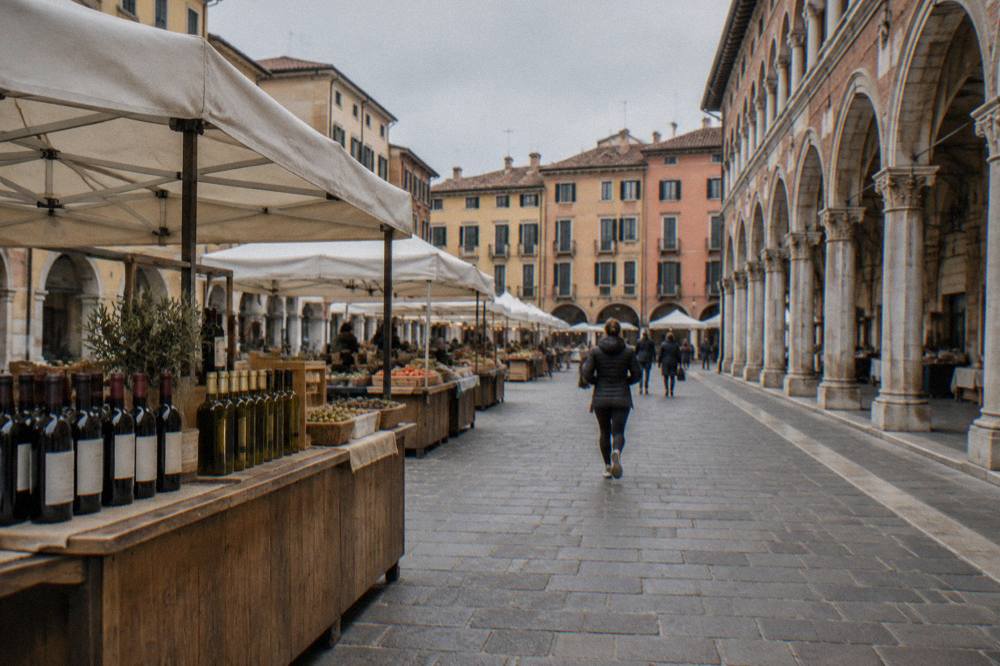
Yes, and the hills are close: Arqua Petrarca sits about 20 km in a straight line from Padua's centre and Abano Terme about 8 km, with Montegrotto Terme about 11 km, all reachable as half-day or full-day trips. The Euganean Hills are wine and olive oil country, and organised options exist for visitors who want tastings without driving, including a wine-focused hills tour and an olive oil and wine excursion that both depart from Padua.
Buying at the source changes what you can carry. A winery visit means bottles packed for travel by people who ship wine for a living, and the Colli Euganei denomination covers both red and white styles plus olive oil from the same slopes. Two tours in the site's roster fit the errand directly: a guided trip through the Prosecco hills and a combined olive oil and wine excursion into the Euganean Hills. Both are day trips out of the city, so budget a full half day at minimum. Check your airline's checked-baggage allowance for liquids before committing to a case; the winery can usually advise on packing, but the carrier's rule is the one that decides. Other pages covering the same trip are gathered on Padua Travel Guide.
If the plan is a food-shopping base with hills around it, the length of stay matters: how many days do you need in Padua? works through the arithmetic, and the general answer is that one day covers the centre while two or three let the hills in.
Is Aperol A Legitimate Padua Souvenir?
Yes, with a real local anchor: Aperol was created in Padua in 1919, presented by the Barbieri brothers at the city's fair, which makes a bottle of it a more place-specific purchase than the same bottle bought anywhere else. The spritz culture the tourism board promotes around the piazzas of Piazza delle Erbe and Piazza dei Signori is the city's evening ritual, and the tourism board's own pages present those squares as the centre of aperitivo life.
The gift logic is straightforward. Aperol is available worldwide, but a bottle bought in the city where it was created in 1919 carries the story, and the spritz glasses and bitter bottles of a Padua market or covered stall let you rebuild the ritual at home. A prosecco bottle from the nearby hills completes the set, since the same denomination sits within a day trip of the city. For visitors who want the ritual explained rather than just the bottle, a guided spritz walk through the city is one of the bookable options, and the tourism board's gastronomy pages frame the piazzas as the place the evening drink belongs.
What Role Do The Historic Cafè And Saint Anthony Items Play?
Caffè Pedrocchi, opened in 1831 and described by the tourism board as the historic cafè of Padua, gives the city a named food souvenir in its signature drink, the caffè Pedrocchi alla menta, a coffee with mint cream, while the tourism board's pages also place Saint Anthony items among the recognisable local purchases, tied to the Basilica of Saint Anthony where the Saint's tomb stands. Neither is a shop recommendation: they are categories with a source behind them.
The caffè, built to a neoclassical design and known historically as the cafè without doors, is a stop in itself, and its mint coffee is the item most tightly attached to its name. Saint Anthony items, devotional objects and images connected to the Santo, are sold around the basilica and are the city's oldest continuous souvenir trade, connected to a pilgrimage tradition that still fills the basilica each June. The background on that tradition sits in what is Padua famous for?, which covers the chapel, the basilica and the university in one place.
Common Questions About Shopping In Padua
What To Buy In Padua?
Market goods and local food: flowers, fruit and vegetables from Piazza delle Erbe, specialty products from Sotto il Salone, bigoli pasta, risotto rice, torta pazientina, Saint Anthony items around the basilica, and wine and olive oil from the nearby Euganean Hills.
When is the antiques market held in Padua?
Every third Sunday of the month, from 8:00 to 20:00, in Prato della Valle and along via Umberto I, per the Comune di Padova's antiques market page.
What food products is Padua known for?
The tourism board's patented recipes are risotto ricco alla Padovana, cappone alla canevera and torta pazientina; bigoli, baccalà and gallina padovana are the other standard local mentions.
Where can you buy wine near Padua?
In the Euganean Hills, about 20 km by straight line to Arqua Petrarca and closer at Abano and Montegrotto Terme, where wineries sell at the source; organised wine tours from Padua exist in the site's roster.
Is Aperol from Padua?
Yes, it was created in Padua in 1919 by the Barbieri brothers, presented at the city's fair, which is why a bottle makes a place-specific souvenir.
