Is Padua The Oldest University?
No, Padua is not the oldest university: it was founded in 1222 and is reported as the second-oldest in Italy after Bologna. Here is what that means and what to see.
Padua (Italian: Padova) is a city in the Veneto, northern Italy, about 36 km in a straight line from Venice, and one of the things it is famous for is its university. The question "Is Padua the oldest university?" has a short answer and an interesting one. The short answer is no. The interesting answer is that a founding year of 1222 still puts Padua among a handful of institutions that have taught continuously for eight centuries, and the city it shaped, from the Scrovegni Chapel's patrons to the anatomical theatre of 1594, still shows that history on its streets. This page, from the Padua Travel Guide editorial desk, sets out what the sources actually say about the founding, the ranking and the things a visitor can still see.
Is Padua The Oldest University?
No, Padua is not the oldest university. The Studium Patavinum was founded in 1222, and the university's own history pages report it as the second-oldest in Italy after Bologna, which is the institution generally credited as the oldest in the Western world. A 1222 founding still places Padua among the oldest universities anywhere, and it has operated continuously since, but the title of oldest belongs to Bologna.
The ranking matters less than the origin story. According to the university's own account, the Studium Patavinum was set up in 1222 by students and teachers who came from Bologna, and that founding population shaped how the institution grew: Padua developed in a city that was already a prosperous commune, and the university became deeply woven into Padua's economy and identity. Today the university reports an enrollment of about 76,000 students across its departments, a figure that makes it one of the largest student populations in Italy relative to a city of about 208,000 residents.
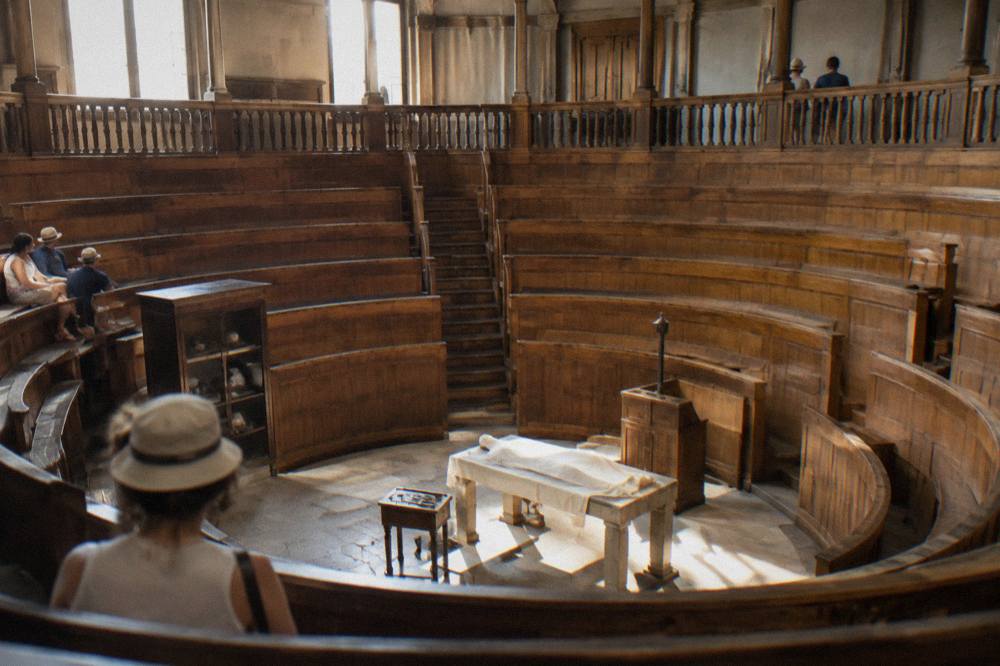
The distinction between "oldest" and "among the oldest" is worth holding onto, because Padua's claim is often overstated in travel copy. The university itself does not claim to be the oldest; its history pages describe a 1222 founding and a place behind Bologna in Italy. What Padua can claim outright are several firsts within its walls: the Orto Botanico, founded in 1545, is described by the university as the world's first university botanical garden, and the anatomical theatre inaugurated in 1594 was the first permanent theatre of its kind. So the honest formulation is simple: not the oldest university, but the oldest of several specific things that happened inside a university.
When Was The University Of Padua Founded?
The University of Padua was founded in 1222 as the Studium Patavinum, by students and teachers who arrived from Bologna, according to the university's own profile pages. That single date, 1222, is the anchor for every age claim about the institution, and it appears on unipd.it, the university's official site, which also notes the garden of 1545 and the anatomical theatre of 1594.
The context around 1222 is what makes the founding unusual. Medieval Italian universities often grew around a charter or a papal licence; Padua's grew around a migration. The university's account presents the arriving Bolognese scholars as the founders, and the commune of Padua as the host that gave them a place to teach. Within two centuries the institution had attracted names that still draw visitors: by 1592 Galileo held the chair of mathematics, and the university's pages quote him calling his Padua years, which lasted until 1610, "the best eighteen years of all my life". His observations in Padua led to the Sidereus Nuncius, published in 1610.
A dated timeline helps keep the milestones straight, because the university's history is long enough that its own records span multiple eras of the city, from the communal period through the Carrara lordship, which ran from 1318 to 1405, and the long Venetian rule that followed from 1405 to 1797.
| Year | Milestone at the University of Padua |
|---|---|
| 1222 | Studium Patavinum founded by students and teachers from Bologna |
| 1545 | Orto Botanico founded, the first university botanical garden |
| 1592 | Galileo arrives to the chair of mathematics, staying until 1610 |
| 1594 | First permanent anatomical theatre inaugurated |
| 1610 | Sidereus Nuncius published from Galileo's Padua observations |
| 1678 | Elena Lucrezia Cornaro Piscopia graduates in philosophy, the first woman on record to take a university degree |
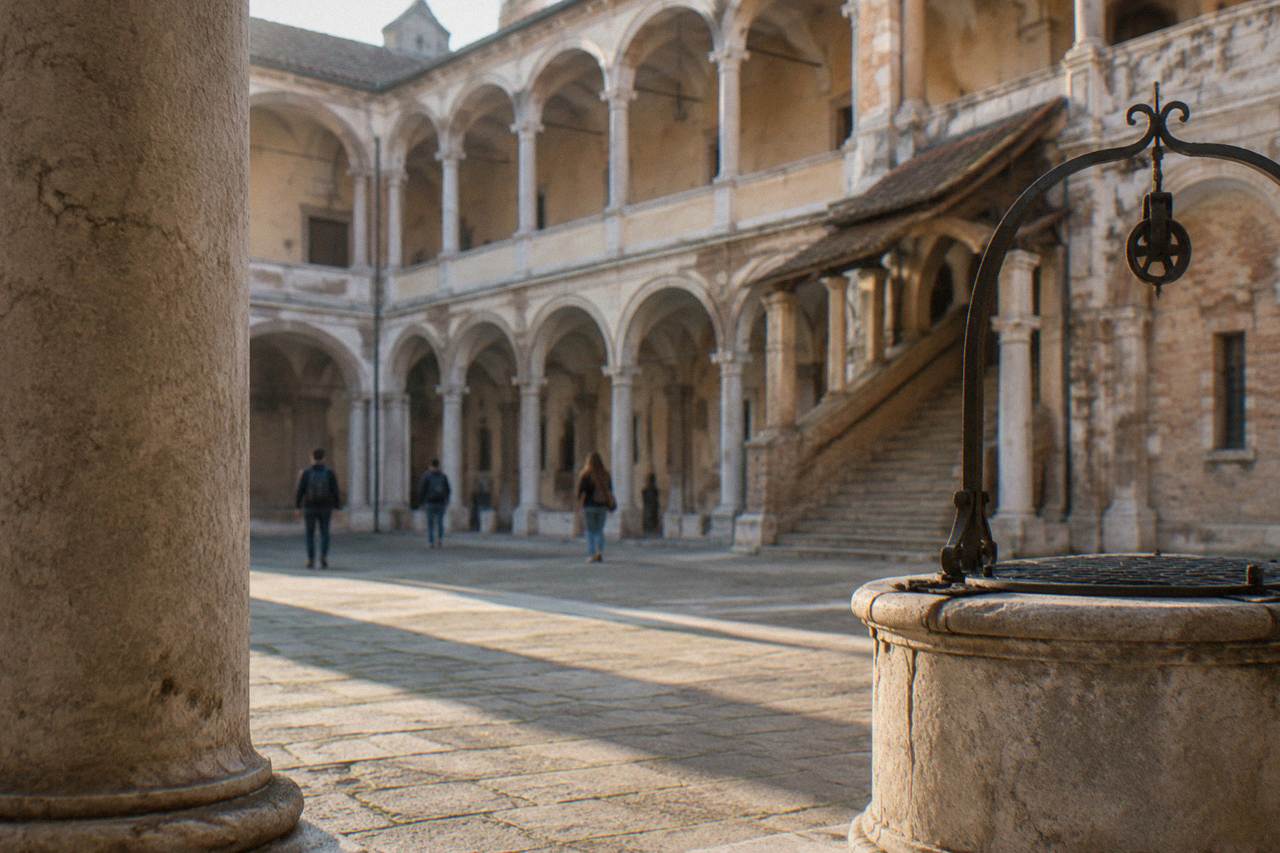
For visitors, that timeline has a physical form. The historic seat of the university is Palazzo del Bo, and its guided "Giro storico" walk passes the Aula Magna, Galileo's chair in the Sala dei Quaranta, the anatomical theatre of 1594, the Medicine and Law halls and the statue of Elena Cornaro. The university's information page lists the tour at EUR 10 full price for ages 26 to 64, with reductions to EUR 8, EUR 6 and EUR 5 by category, lasting about 45 minutes, with Italian and English slots alternating through the day and a booking centre at 049 827 3939. An integrated ticket called "Padova Citta della Scienza" combines the Bo with the Orto Botanico and the Museo della Natura e dell'Uomo. Our dedicated guide to the University of Padua covers the visit in detail.
A walking tour is a practical way to take the university quarter in, because Palazzo del Bo sits inside the historic centre and the city around it, arcaded streets, the markets of Piazza delle Erbe and the Scrovegni Chapel a short walk north, is compact enough to cover on foot. The city walking tour listed above routes through these landmarks with a guide, and Check availability on the operator's live listing if that format suits your plans.
Who Was Elena Cornaro Piscopia?
Elena Lucrezia Cornaro Piscopia was the first woman on record to take a university degree, awarded a doctorate in philosophy by the University of Padua on 25 June 1678, according to the university's own pages dedicated to her. Her graduation is one of the institution's proudest firsts, and her statue stands inside Palazzo del Bo today, on the route of the guided historical tour.
The university's own page on Cornaro describes the 1678 doctorate as the first awarded to a woman in recorded history. That she took the degree in philosophy, at Padua specifically, ties the university into a broader history of firsts in science and learning: the botanical garden of 1545, the anatomical theatre of 1594, Galileo's chair, and then a woman graduating in 1678, nearly two centuries before most European universities admitted women at all. Her statue in the Bo is one of the stops named on the university's own tour description.
How Does Padua Compare With Bologna?
Bologna is older: the University of Padua's own history pages report their institution as the second-oldest in Italy after Bologna, which is generally described as the oldest university in the Western world. Padua's 1222 founding makes it the younger of the two by roughly a century, but both belong to the small group of European universities that have taught continuously since the thirteenth century.
The comparison comes up often because the two cities are linked in other ways too. Bologna lies about 110 km in a straight line from Padua and is reachable by train, and the two universities share a migration story: Padua's founders came from Bologna in 1222. What Padua can set against Bologna's greater age is a set of documented firsts that happened in Padua rather than elsewhere: the first university botanical garden in 1545, now a UNESCO World Heritage site inscribed in 1997, the first permanent anatomical theatre in 1594, and the first recorded woman graduate in 1678. Bologna's age and Padua's firsts are different kinds of distinction, and both are real.
It also matters that the claim "oldest university in the world" is contested terrain outside Italy. Institutions in other countries date their origins by different rules, counting charters, teaching evidence or continuous operation, and rankings shift depending on the rule applied. Within Italy the order is clearer, and the University of Padua's own wording, second-oldest after Bologna, is the formulation this site reports. Readers wondering about the city's parallel age claim can see our separate page on whether Padua is the oldest city in Italy, where the Antenor legend and the Roman city of Patavium are treated as what they are: a founding legend and a Roman municipium, with Livy reported born there in 59 BC.
What Can You See Of The University Today?
The university's past is visible in three places: Palazzo del Bo with its anatomical theatre and Galileo's chair on a guided tour, the Orto Botanico garden of 1545 with its own entry ticket, and the wider student city itself, where about 76,000 enrolled students, as reported by the university, share the historic centre with the Scrovegni Chapel and the Basilica of Saint Anthony.
Palazzo del Bo is the anchor. The guided "Giro storico" is the only way into the historical rooms, and the university's page gives the practicalities: EUR 10 full, EUR 8 reduced for visitors 65 and over, teachers and mixed groups of 10 to 30, EUR 6 special reduced for ages 6 to 25, EUR 5 for school groups, about 45 minutes, alternating Italian and English departure times through the afternoon, and a booking line at 049 827 3939. The route lists the Aula Magna, the Sala dei Quaranta with Galileo's chair, the anatomical theatre, the Medicine and Law halls and the Elena Cornaro statue, with the caveat that not every room is guaranteed every day.
The Orto Botanico is the university's second unmissable site. Founded in 1545 and inscribed by UNESCO in 1997, it charges EUR 15 full price for ages 26 to 64 under the tariffs in force from 1 September 2026, EUR 12 full in winter from November to February, EUR 10 reduced for visitors 65 and over, teachers and Padua province residents, and EUR 8 winter reduced. Hours are seasonal and it closes on non-holiday Mondays, so check the dates against your trip; the full detail is on our Orto Botanico page. An integrated "Padova Citta della Scienza" ticket exists that combines the Bo, the garden and the Museo della Natura e dell'Uomo, which can suit a day built around the university.
The third sight is the city itself. Padua is compact and walkable, and the university's presence shows in the markets, the evening life of the piazzas and the scale of the historic centre, which was built for a city of students and merchants long before it was a destination. For the broader picture of what the city offers beyond the university, start with our page on whether Padua is worth visiting.
Why Does The Founding Year Matter To Visitors?
The 1222 founding explains why Padua looks and feels the way it does: a city of arcaded streets and market squares that grew around one of Europe's great schools, where Galileo taught, where the first woman graduated, and where the Scrovegni Chapel's patron Enrico Scrovegni, Giotto's frescoes of 1303 to 1305, and the university's institutions all belong to the same medieval and Renaissance world.
The chapel and the university are closer in history than their settings suggest. Giotto painted the Scrovegni cycle between 1303 and 1305, less than a century after the 1222 founding, and both belong to the period when Padua was a wealthy commune investing heavily in art and learning. The Basilica of Saint Anthony, begun in 1232, a year after the Saint's death in 1231, rose in the same era. A visitor who understands the 1222 date reads the whole city differently: the anatomy theatre, the botanical garden, the chapels and the basilica are not isolated monuments but the output of a university town at its peak.
Common Questions About The University Of Padua
Is Padua the oldest university?
No. The University of Padua was founded in 1222 and is reported by its own history pages as the second-oldest in Italy after Bologna. It is among the oldest universities in the world, but not the oldest.
When was the University of Padua founded?
In 1222, as the Studium Patavinum, founded by students and teachers who came from Bologna, according to the university's own account on unipd.it.
Can you visit the inside of Palazzo del Bo?
Yes, on the guided "Giro storico" tour, which lasts about 45 minutes and costs EUR 10 full price with reductions to EUR 8, EUR 6 and EUR 5, bookable through the university's booking centre at 049 827 3939. The route includes the anatomical theatre of 1594 and Galileo's chair.
Was Galileo a professor in Padua?
Yes. Galileo held the chair of mathematics at the University of Padua from 1592 to 1610 and described those years as the best eighteen years of his life. The Sidereus Nuncius was published in 1610.
Who was the first woman to graduate from a university?
Elena Lucrezia Cornaro Piscopia, awarded a doctorate in philosophy by the University of Padua on 25 June 1678, the first woman on record to take a university degree. Her statue stands in Palazzo del Bo.
Is the Orto Botanico part of the university?
Yes. It was founded in 1545 as the world's first university botanical garden, is inscribed on the UNESCO World Heritage list since 1997, and can be combined with Palazzo del Bo on the integrated "Padova Citta della Scienza" ticket.
