Is Padua Close To Rome?
No: Padua sits in the north of Italy while Rome is far to the south, and no figure on this page's fact pack makes the two neighbours. What that means for trains, day trips and planning.
Padua (Italian: Padova) sits in the Veneto, in the north of Italy, an inland city of arcaded streets about 36 km in a straight line from Venice. Rome is at the other end of the country, in Lazio, in the centre-south of the Italian peninsula. The two are not close, and nothing in the distance data puts them in each other's orbit: the farthest destination from Padua on this site's computed list is Bologna, at about 110 km in a straight line, and Bologna itself is still in the north. Rome belongs to a different tier of Italian geography altogether, the kind of journey you plan as an overnight move or a separate leg of a trip, never as a hop.
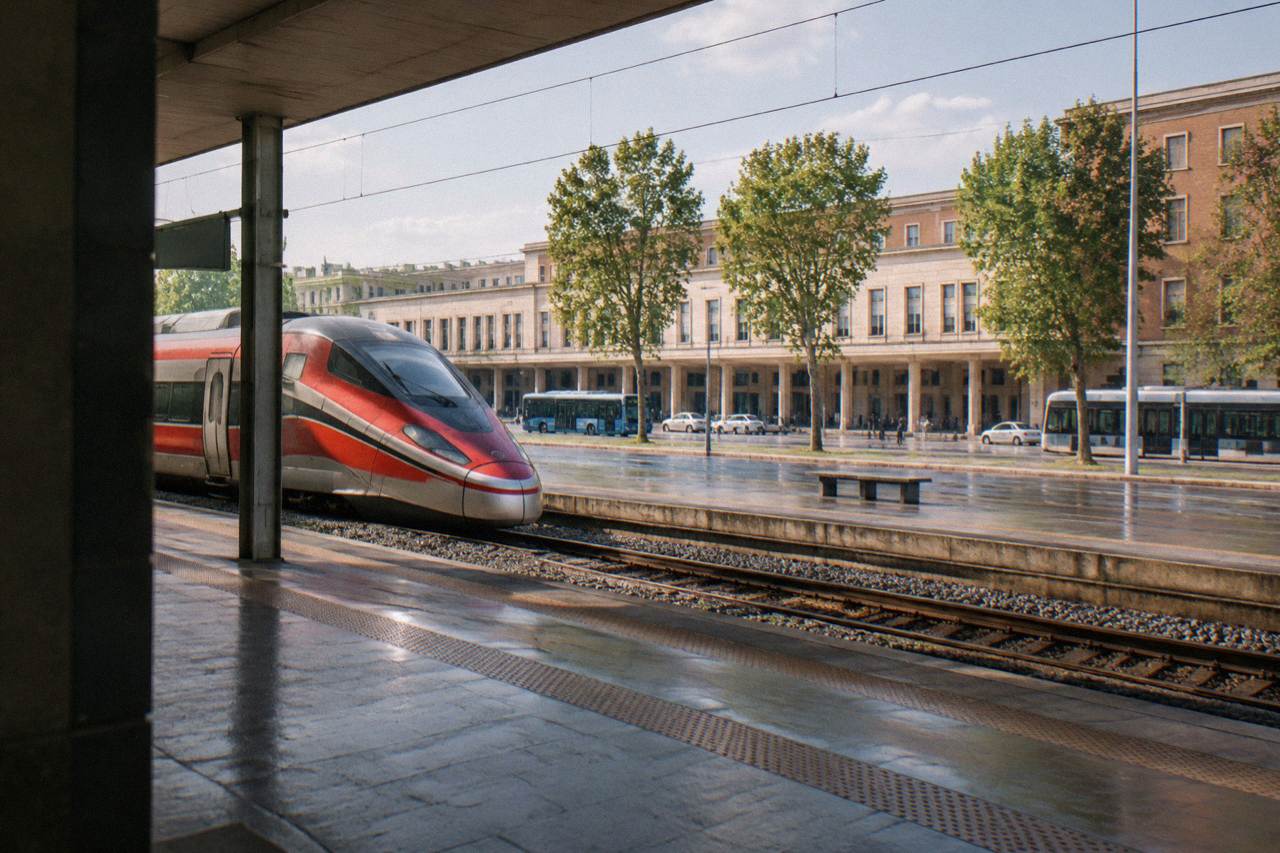
That answer shapes everything else on this page. If Padua is your base, your realistic day-trip ring runs from Venice in the east to Verona in the west and the Euganean Hills just to the south, not to the capital. And if Rome is your main destination, Padua works as a northern add-on reached by the rail spine that connects the two, a route travelled by high-speed trains on the Venice to Milan line that passes through Padova station. More on the practicalities below.
Is Padua Close To Rome?
No, Padua is not close to Rome: Padua is an inland city in the Veneto in northern Italy, while Rome lies in Lazio in the centre-south of the peninsula, separated by the whole width of northern and central Italy. For scale, Bologna, at about 110 km in a straight line from Padua, is the southernmost destination on this site's computed distance list, and Rome is far beyond even that. Rome is a separate trip leg, not a day trip from Padua.
The geography is the whole answer. Padua's neighbouring cities by straight-line distance, computed from the map data this site uses, are Venice at about 36 km, Vicenza at about 30 km, Treviso at about 41 km, Chioggia at about 38 km and Verona at about 69 km. Those are the places that sit inside a day-trip radius. Bologna at about 110 km already marks the outer edge of comfortable territory, and it is still a northern city. Rome is roughly halfway down the country and then some, on the Tyrrhenian side. A traveller who looks at a map of Italy and squints can see the problem immediately: everything the fact pack can measure from Padua clusters in the north.
This matters for planning in a way that generic Italian itineraries often gloss over. A first trip to Italy that lists Rome, Florence, Venice and "Padua" in one breath is really describing a north-to-south (or south-to-north) route with several long legs, not a cluster of nearby stops. Padua rewards a different approach: two or three nights in the city itself, with the Scrovegni Chapel's timed-entry frescoes, the Basilica of Saint Anthony and the Orto Botanico (a UNESCO listing since 1997, one of Padua's two), plus day trips outward. The fourteenth-century fresco cycles of Padova Urbs Picta, inscribed by UNESCO in 2021, are the city's second listing and give a themed thread through eight complexes in the old centre.
How Far Is Padua From The Cities Around It?
Padua's measured distances run from about 30 km to Vicenza, about 36 km to Venice, about 41 km to Treviso, about 69 km to Verona and about 110 km to Bologna, all straight-line kilometres computed from the centre of the city. Those are the journeys the data supports, and each one except Bologna sits comfortably inside a day trip. Rome does not appear in that set, because it sits far outside it.
Here is the ring around Padua in one view. The table below carries only straight-line distances, which is how this site measures: driving distances and drive times are not quoted anywhere on these pages.
| Destination from Padua | Straight-line distance |
|---|---|
| Vicenza | about 30 km |
| Venice | about 36 km |
| Chioggia | about 38 km |
| Montagnana | about 37 km |
| Treviso | about 41 km |
| Bassano del Grappa | about 42 km |
| Valdobbiadene | about 56 km |
| Conegliano | about 63 km |
| Verona | about 69 km |
| Ferrara | about 66 km |
| Sirmione, Lake Garda | about 99 km |
| Bologna | about 110 km |
The pattern is plain. Padua is a northern hub with a dense ring of Veneto and Lombardy-Veneto neighbours inside 70 km, and a looser ring of regional cities inside 110. Every one of those is reachable by train from Padova station on the Venice to Milan line: reported regional times run about 26 to 40 minutes to Venezia Santa Lucia, about 16 to 25 minutes to Vicenza and about 43 to 60 minutes to Verona, with the Venice fare at about EUR 5 and the Vicenza fare at about EUR 6. Those reported figures come from journey planners rather than the operator, so check Trenitalia before locking a plan. Rome has no place in this table, and that is the point: the capital is not in Padua's neighbourhood by any measure this site can print.
If the distances above have convinced you the region, not the capital, is where Padua's day trips live, these escorted options cover the near hills:
Can You Day Trip From Padua To Rome?
No, and no honest itinerary pretends otherwise: Rome is a separate destination reached by a long intercity rail leg, and the day-trip maths that works for Venice, Vicenza or Verona does not work for a city at the far end of the peninsula. The site's fact pack carries no Rome journey time because none belongs on a day-trip page about Padua. Treat Rome and Padua as two stops on one route, in whichever order suits you.
The practical structure of an Italy trip that includes both is straightforward. High-speed trains on the Venice to Milan line stop at Padova, and Rome connects to that spine through the national network; schedules and fares are dynamic, so the only correct instruction is to check Trenitalia or the operator's app for the exact leg you want, on the exact date. What can be said firmly is the shape: a north-to-south route that pairs, say, Venice and Padua first, then moves to Florence or Rome, is the standard way Italians and visitors alike cover the distance. Padua sits 36 km from Venice by straight line, so the two northern stops genuinely do pair.
Two or three days in Padua itself is the pairing this site recommends rather than a rushed single afternoon between trains. The Scrovegni Chapel alone forces planning: entry is timed, at most 25 people every 15 minutes, booked in advance, with about 15 minutes inside and arrival expected five minutes before the slot, per the chapel's own booking pages. The chapel is closed 16 to 27 November 2026 for its annual fresco inspection. The daytime ticket, EUR 15 full plus a EUR 1 booking fee, also covers the Musei Civici Eremitani and Palazzo Zuckermann. Questions like why the Scrovegni Chapel is famous and how long it takes to visit have their own answers if you are weighing the stop.
For the time between the trains and the frescoes, the Euganean Hills to the south of the city are the near countryside: Abano Terme about 8 km away in a straight line, Montegrotto Terme about 11 km, Arqua Petrarca about 20 km and Monselice about 21 km. A guided trip such as the Check availability link beside the Villa dei Vescovi and Valsanzibio Garden tour covers villa and garden stops in that landscape without any transport planning on your part.
Where Does Padua Sit If Not Near Rome?
Padua sits in the Veneto, the inland plain and hill country of northern Italy, about 36 km in a straight line west of Venice, about 30 km east of Vicenza and about 69 km south-east of Verona. Its region borders the lagoon city's province and the pre-Alpine hills, not Lazio: the city belongs to the northern Italian rail and cultural network, with the university founded in 1222 at its centre.
The city's identity follows that geography. Padua is a university town, with the Studium Patavinum founded in 1222 and about 76,000 students reported in the 2026/27 academic year, and its sights cluster in a walkable old centre: the Scrovegni Chapel, the Basilica of Saint Anthony, Palazzo della Ragione, the double-ring canal of Prato della Valle and the Orto Botanico, founded 1545 and inscribed by UNESCO in 1997. Galileo held the chair of mathematics here from 1592 to 1610, years he later called the best eighteen of his life, and Elena Lucrezia Cornaro Piscopia took the first recorded woman's doctorate here in 1678. None of that history points south toward Rome; all of it points into the Veneto plain.
For orientation questions, where Padua is in Italy and how far Padua is from Venice have dedicated answers. The short version for anyone landing from Rome: Padova station is on the Venice to Milan line, the IAT tourist office at the exit of platform 1 is open Monday to Saturday 9:00 to 19:00 and Sunday and holidays 10:00 to 16:00, and the urban 90-minute ticket at EUR 1.70 covers the bus and tram network, with contactless tap on board.
What Are The Best Day Trips From Padua Instead?
The best-supported day trips from Padua are the ones inside its measured ring: Venice at about 36 km by regional train in about 26 to 40 minutes, Vicenza at about 30 km in about 16 to 25 minutes, Verona at about 69 km in about 43 to 60 minutes, and the Euganean Hills towns of Abano Terme, Arqua Petrarca and Monselice all inside about 21 km. Each has a clear entry point, from the Teatro Olimpico to Villa dei Vescovi to Casa del Petrarca.
A few concrete anchors, all from the fact pack. In Vicenza, the Teatro Olimpico charges EUR 12 full and EUR 9 reduced, and the Vicenza Gold Card covering 11 sites over 12 days costs EUR 22 full. At Villa dei Vescovi in the Euganean Hills, the FAI property charges adults EUR 11, with 6 to 18 at EUR 6 and a family ticket at EUR 28. Casa del Petrarca in Arqua Petrarca is EUR 6 full and EUR 4 reduced, closed non-holiday Mondays. Il Burchiello runs a boat cruise between Padua and Venice along the Brenta Riviera villas from March to October in both directions. These are the trips that make Padua worth a longer stay, and the question is Padua worth visiting and the guide to how many days you need in Padua cover the stay itself.
| Day trip from Padua | Straight-line distance | Reported regional train time | Verified entry price at the destination |
|---|---|---|---|
| Venice | about 36 km | about 26 to 40 min | Scrovegni Chapel EUR 15 full plus EUR 1 booking fee |
| Vicenza | about 30 km | about 16 to 25 min | Teatro Olimpico EUR 12 full, EUR 9 reduced |
| Verona | about 69 km | about 43 to 60 min | check the official ticket page before booking |
| Arqua Petrarca | about 20 km | not given | Casa del Petrarca EUR 6 full, EUR 4 reduced |
| Villa dei Vescovi area | about 11 km to Montegrotto Terme | not given | Villa dei Vescovi EUR 11 adult, EUR 6 ages 6 to 18 |
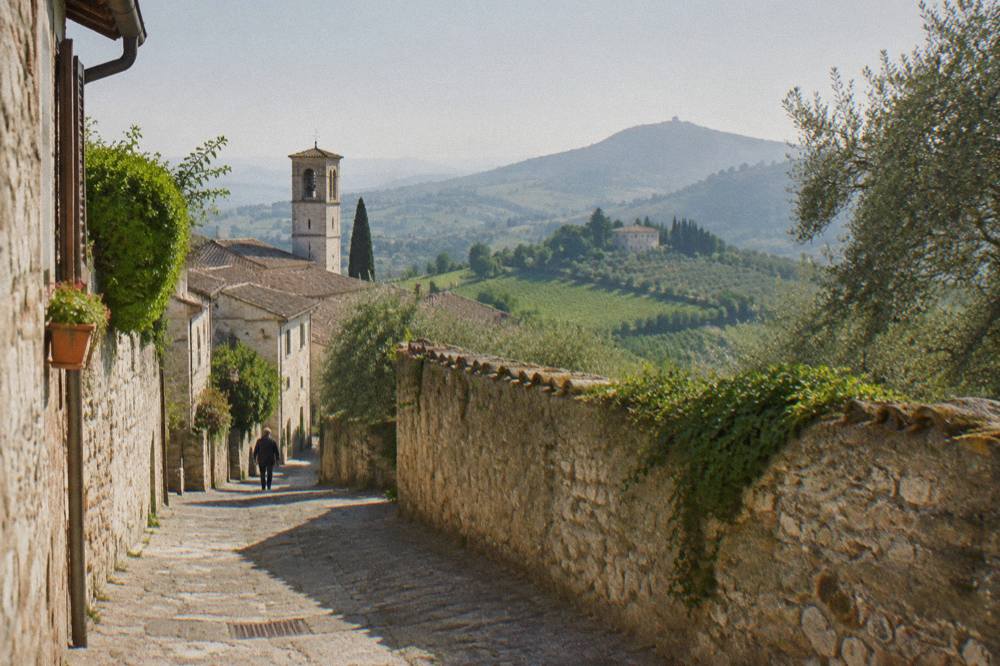
The hills are the trip that rewards a guide, because the terrain spreads the stops out and the tastings run on local schedules. Beyond the pair already mentioned above, these three cover the range:
Common Questions About Padua And Rome
Is Padua Close To Rome?
No. Padua is in the Veneto in northern Italy and Rome is in Lazio in the centre-south, separated by the width of northern and central Italy. Bologna, at about 110 km in a straight line from Padua, is the farthest destination on this site's computed list, and Rome lies well beyond it.
Can You Visit Rome From Padua In One Day?
No sensible plan does so. Rome is a separate leg of an Italian itinerary reached by long-distance train, not a day trip from Padua. The reported regional times this site carries, such as about 26 to 40 minutes to Venice, describe Padua's real day-trip ring.
Which Cities Are Actually Close To Padua?
Vicenza at about 30 km, Venice at about 36 km, Chioggia at about 38 km, Treviso at about 41 km, Bassano del Grappa at about 42 km and Verona at about 69 km, all straight-line kilometres from the centre of Padua.
Is Padua Worth Stopping In Between Rome And Venice?
Yes, as a stop on a north-south route. Padua sits on the Venice to Milan rail line about 36 km from Venice, holds two UNESCO listings, and its Scrovegni Chapel needs a pre-booked timed slot, so plan the stop in advance rather than treating it as a spare hour.
Does A Train Run Between Padua And Rome?
High-speed services on the national network connect the Venice to Milan line, which serves Padova station, with Rome. Journey times and fares change by date and operator, so check Trenitalia for the specific leg before booking.
The verdict stands: Padua and Rome are two separate chapters of an Italian trip, and the chapters that border Padua are Venice, Vicenza, Verona and the Euganean Hills, Padua Travel Guide covers all of them.
