Is Padova A Safe City To Visit?
Is Padova a safe city to visit? A plain-language safety briefing for Padua in the Veneto, covering reported petty-theft risks, the station area after dark, transport, tap water and the 112 emergency number.
Padua, or Padova as Italians call it, is an inland city in the Veneto about 36 km in a straight line from Venice, home to about 208,000 people and a university of roughly 76,000 students, and the honest answer to the safety question is a calm one. No crime statistic for Padua and no official tourist warning appear in the sources available to this desk, so this page prints none. What a travel source does report is that the risks a visitor is likely to meet are petty: pickpocketing at the station, in crowded piazzas and markets, and on buses and trams. Violent crime against visitors is described as rare. That is the shape of it, and the rest of this page fills in the details, from the station area after dark to tap water and the single European emergency number, 112.
For planning beyond safety, the things to see across Padua and the question of whether Padua is worth visiting at all are covered elsewhere on this site.
Is Padova A Safe City To Visit?
Yes, Padova is generally described as a safe city to visit, with an important qualification: the sources describe a low-risk urban environment where petty theft, not violent crime, is the concern a traveller should plan around. A travel source reports that pickpocketing at the station, in crowded piazzas and markets, and on buses and trams is the main risk, that bike theft is common in this student city, and that violent crime against visitors is rare.
No Padua crime figure, no "safest city" ranking and no official government warning against travel appears in the material this desk works from, and none is invented here. What can be said is structural: Padua is a mid-sized inland city, about 36 km in a straight line from Venice, whose daily rhythm is set by a university founded in 1222 with about 76,000 students. A city built around students, markets and pilgrimage has the safety profile of a busy regional centre, and the practical advice below follows from that.
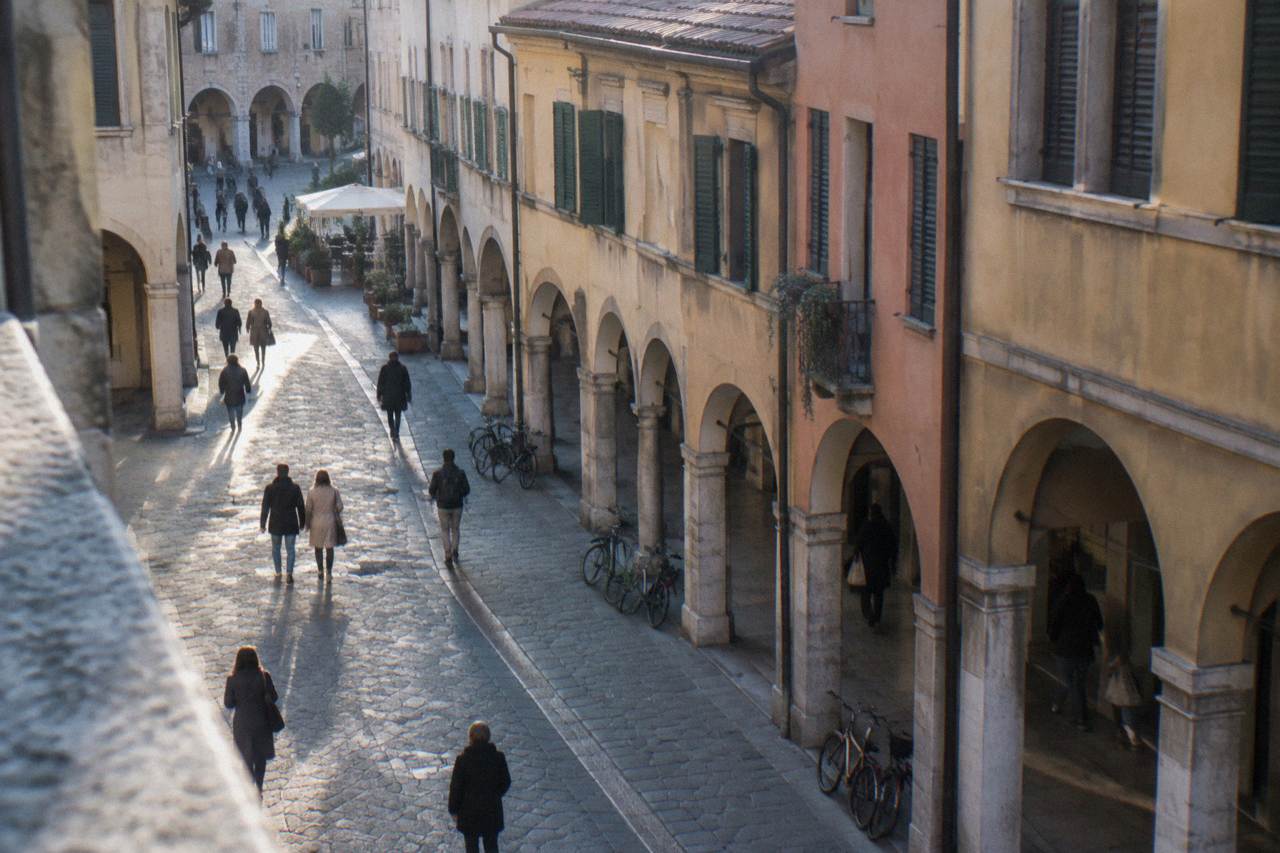
Two framing facts help. First, the historic centre is compact and arcaded, which keeps walking routes on inhabited commercial streets; the question of whether Padua is walkable is answered in detail on its own page. Second, the city sits in the Schengen area of Italy, uses the euro, and shares the single European emergency number, 112, with the rest of the continent, so help works the same way it does across most of Europe.
What Are The Reported Risks For Visitors In Padua?
The reported risks for visitors in Padua are petty theft and pickpocketing concentrated at Padova station, in the crowded market squares, and on buses and trams, plus bicycle theft, which a travel source describes as common in this student city. The same source reports the station area feels scruffier after dark, while violent crime against visitors is described as rare. These are reported observations, not statistics, and no numbers are attached to them here.
Pickpocketing follows crowds, and Padua's crowds follow markets and transport. The market squares are the practical hotspots: Piazza delle Erbe runs Monday to Friday 7:30 to 13:30 and Saturday 7:30 to 20:00, Piazza dei Frutti has food stalls from 8:00, and the Prato della Valle Saturday market runs 8:00 to 19:00 in winter and 8:00 to 20:00 in summer, all per the Comune di Padova's own market pages. At those hours, with cash changing hands and stalls packed together, the standard city precautions do the work: front pockets, zipped bags worn forward, and nothing valuable in a backpack's outer pocket.
Buses and trams carry the same risk at peak times. The urban network uses a EUR 1.70 ticket valid 90 minutes in the Orange Zone, and contactless cards can be tapped on board, which matters here because a traveller fumbling with a ticket machine at a crowded tram door is exactly the moment a pickpocket works. Buying in the app before boarding, or tapping a card, removes that moment.
Bike theft deserves its own line because Padua is a student city where bicycles are everyday transport. If you rent a bike, use a proper lock and do not leave it locked to itself. That is the whole of the reported bike picture; nothing more specific is in the sources.
How Safe Is Padua After Dark?
Evening safety in Padua follows the same pattern as the daytime one: the reported risk is petty theft and a station area that a travel source describes as feeling scruffier after dark, not violent crime. The arcaded centre around Piazza delle Erbe and Piazza dei Signori is the city's reported evening scene, with the spritz and aperitivo culture the tourism board itself promotes. Ordinary city judgement, lit streets and the 112 number cover the rest.
The distinction worth holding onto is between the centre and the station district. Padova station and its immediate surroundings, on the north side of the historic centre, are where the travel source places both the scruffier evening feel and a share of the pickpocketing risk. That is a reason to keep your wits about you with luggage there late at night, not a reason to avoid it: the station has a staffed left-luggage office at platform 1, open daily 6:00 to 20:00 at EUR 5 per 6 hours, and the IAT tourist office at the platform 1 exit keeps long hours itself.
The historic centre after dark is a different picture. The tourism board's own enogastronomia pages point visitors to the piazzas for the evening spritz culture, and Aperol itself was created in Padua in 1919, as this site's spritz page retells. Evening culture in Padua also includes the Scrovegni Chapel's "Giotto sotto le stelle" openings, 19:00 to 22:00 every 20 minutes from 25 March to 1 November, so an evening in the centre can be more than dinner.
A table of evening-relevant facts, all from official pages:
| Evening-relevant fact in Padua | Detail | Source basis |
|---|---|---|
| Station left-luggage office | Platform 1, daily 6:00 to 20:00, EUR 5 per 6 hours | Tourism board page |
| Scrovegni evening visits | 25 March to 1 November, 19:00 to 22:00, every 20 minutes, last entry 21:20 | Chapel's own site |
| Scrovegni closure | 16 to 27 November 2026 for the annual fresco inspection | Chapel's own site |
| Urban 90-minute ticket | EUR 1.70, also payable by contactless tap on board | Busitalia page |
| Piazza delle Erbe Saturday market | Until 20:00, per the Comune di Padova | Comune market page |
If knowing the centre with a local at your side sounds like the comfortable way to start a trip, a guided introduction such as the Private Tour of Padua with Scrovegni Chapel covers the historic centre and the chapel in one walk: Check availability.
Is Public Transport In Padua Safe To Use?
Public transport in Padua is safe to use in the sense the sources support: the reported risk on buses and trams is pickpocketing in crowded vehicles, not violence, and the network itself is a modern one, with the SIR1 tram line running north to south and a EUR 1.70 contactless or app ticket valid 90 minutes. A second tram line, SIR3, is reported to be in pre-service testing, with service targeted by the end of 2026, and no opening date is promised here.
The practical safety advice on buses and trams is short. Keep your bag in front of you and a hand on your phone when the vehicle is packed. Buy the ticket before boarding, in the Busitalia Veneto app or via DropTicket, or tap a contactless debit or credit card on board, one tap per vehicle within the time limit. Ticket inspection is part of the system everywhere in Italy, and an unvalidated fine risk is a worse travel memory than any pickpocket.
Getting to and from the airports is the same story by bus. The Busitalia link between Padua and Venice Marco Polo airport runs 54 times a day, about every 40 minutes, from 05:30 to 22:50 out of Padua, costs EUR 13 one-way for an adult, and takes about 45 minutes. It is an ordinary scheduled airport service, and the normal precautions about luggage and phones on any airport bus apply.
For train day trips, the regional service to Venezia Santa Lucia takes about 26 to 40 minutes and costs about EUR 5, and Vicenza is about 16 to 25 minutes for about EUR 6, per journey-time aggregators rather than the operator, so treat both as approximate and confirm on Trenitalia's own channels before travelling. Station platforms in Padua and Venice carry the same reported pickpocketing risk as any busy Italian station.
Is The Tap Water Safe To Drink In Padua?
The tap water in Padua is reported to be safe to drink citywide, with the municipal supply meeting European Union standards, and public drinking fountains are reported to be generally safe where they are labelled potable and maintained. Filling a bottle instead of buying one is therefore a reasonable choice in Padua, and it also removes a small piece of street crime exposure, since you are not standing at a kiosk counting change.
That is a reported finding rather than a laboratory claim by this desk, but it is consistent across the practical sources. The city also runs a free municipal Wi-Fi network, PADOVAweb, in the piazzas and public buildings, available around the clock without registration, which reduces the need to hunt for café Wi-Fi with an unlocked phone in a crowded square. The rest of the planning pages sit on Padua Travel Guide.
Two small hygiene points carry over from anywhere in Italy. In the warmest months, July and August mean daily highs averaging 28.8 C in the ERA5 reanalysis for Padua, 1991-2020, so water matters more in summer than in January, when the mean high is 7.3 C. And in a student city with about 76,000 students reported for the 2026/27 academic year, the fountains in parks and squares see real daily use, which is itself a good sign about them.
What Emergency Help Exists For Visitors In Padua?
The single European emergency number, 112, works in Padua for police, medical and fire emergencies, and it is the one number a visitor needs to memorise. Beyond it, the city's practical safety net includes staffed tourist information offices at the station and at Piazza delle Erbe 52 with long daily hours, a station left-luggage office open 6:00 to 20:00, and hotels that collect the city tourist tax and can point to local services.
The IAT offices are the visitor-facing layer of help. The station office, at the exit of platform 1, runs Monday to Saturday 9:00 to 19:00 and Sundays and holidays 10:00 to 16:00; the centro office at Piazza delle Erbe 52 runs 9:00 to 19:00 every day. Both close only 25 and 26 December and 1 January. Their staff handle the mundane emergencies that make up most of a visitor's bad days: a lost passport, a missed connection, a booking that vanished.
| Help point in Padua | What it covers | Hours or figure |
|---|---|---|
| 112 | Police, medical, fire emergencies | Any time, any phone |
| IAT Stazione, platform 1 exit | Tourist information and orientation | Mon to Sat 9:00 to 19:00, Sun 10:00 to 16:00 |
| IAT Centro, Piazza delle Erbe 52 | Tourist information in the centre | Daily 9:00 to 19:00 |
| Station left luggage, platform 1 | Bag storage | Daily 6:00 to 20:00, EUR 5 per 6 hours |
| Tourist tax | Collected by your accommodation | Per person per night, capped at five nights |
One administrative point that surprises nobody but is worth knowing: the tourist tax, the imposta di soggiorno, is collected by your accommodation, is charged per person per night, and is capped at five consecutive nights, with under-16s and hostel guests exempt, per the Comune di Padova's tax page. It is a legitimate charge, not a scam, whatever a late-night internet search may suggest.
Does Padua's Student Character Change The Safety Picture?
Padua's character as a university city of about 76,000 students shapes its safety picture in two reported ways: bicycle theft is described as common, and the city keeps a busy, populated rhythm through term time that an ordinary visitor experiences as lively streets rather than risk. The university was founded in 1222, making it among the oldest in the world in the institution's own wording, and that daily population of students is part of why the centre rarely feels empty.
The university's history also produced a city of institutions rather than industrial zones. The Palazzo del Bo, the historic university building, runs guided visits of the anatomical theatre inaugurated in 1594 and Galileo's chair in the Sala dei Quaranta, alternating Italian and English slots on the university's own schedule. None of this is safety advice in the narrow sense, but it explains why a mid-sized city has such a dense, foot-traffic-heavy centre, which is the environment the pickpocketing reports describe.
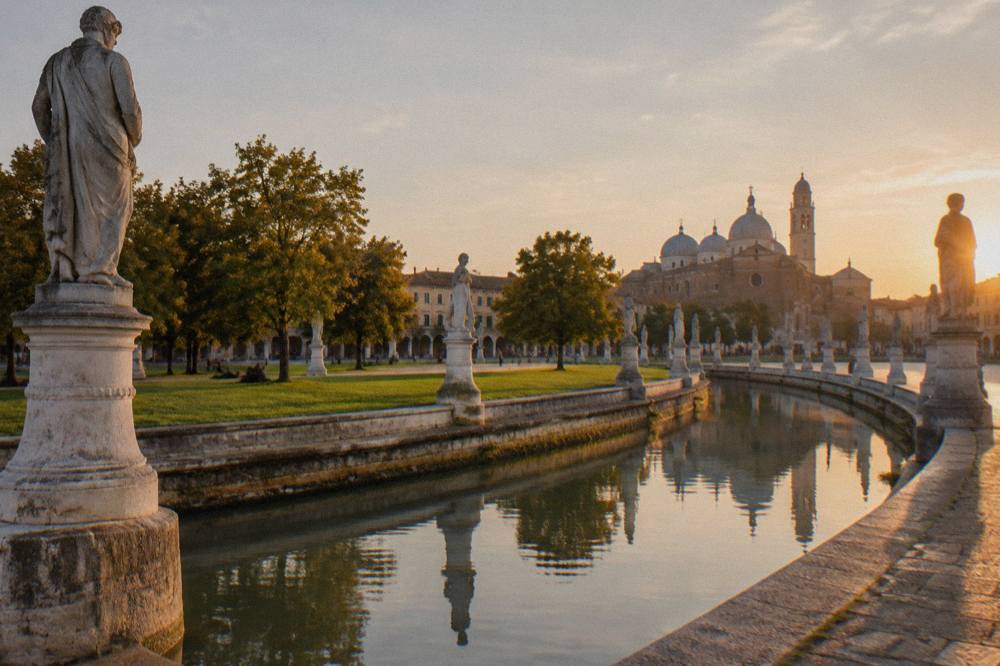
Student crowds also mean the calendar moves. The Sherwood Festival ran 10 June to 12 July in 2026 at the Park Nord near the Stadio Euganeo, and the Padova Marathon is set for 18 April 2027, starting at the Stadio Euganeo at 8:30 and finishing at Prato della Valle. Big events are exactly when the crowded-space precautions matter, in Padua as in any city.
How Should You Prepare Before Visiting Padua?
Preparation for Padua is ordinary northern-Italian city preparation: keep valuables front and zipped in crowds, treat the station area after dark with the usual caution a travel source's report suggests, carry nothing you cannot afford to lose on market day, know that 112 reaches all emergency services, and book the Scrovegni Chapel ahead because its timed-entry system leaves no walk-in fallback. None of this is Padua-specific drama; it is the standard kit for Venice, Verona or Bologna too.
The Scrovegni point is the one genuinely Padua-specific trap worth repeating on a safety page, because it is a planning failure rather than a crime. Entry is timed, with at most 25 people admitted every 15 minutes and about 15 minutes inside the chapel; you must be at the entrance 5 minutes before your slot, and latecomers are denied re-entry without a new paid booking. Same-day online booking does not exist; the chapel's own how-to-visit page tells unbooked visitors to check availability at the museum ticket office in person. The chapel is also closed 16 to 27 November 2026 for its annual fresco inspection. A visitor who turns up casually on a November afternoon has a wasted trip, which is a safety problem of the boring kind.
Day trips change none of the advice. Venice sits about 36 km away in a straight line, and the question of how far Padua is from Venice has its own page, including the point that Venice's 2026 day-tripper access fee trial ended on 27 July 2026 and no 2027 decision had been announced, so a Padua-based day tripper should not be told to pay it. The Euganean Hills, the Brenta Riviera and Vicenza are all regional excursions from a city that itself needs nothing more than ordinary care.
Common Questions About Safety In Padua
Is Padova A Safe City To Visit?
Yes, in the sense the available sources support: a travel source reports that the main risks are petty theft and pickpocketing at the station, in crowded piazzas and markets, and on buses and trams, that bike theft is common, and that violent crime against visitors is rare. No crime statistic for Padua appears in the sources this desk uses, so none is quoted.
Is the area around Padova station dangerous at night?
No source names it dangerous. A travel source reports the station area feels scruffier after dark and places pickpocketing risk there. Ordinary caution with luggage and phones, lit routes into the centre, and the 112 number are the reasonable response.
Is pickpocketing a problem in Padua?
Pickpocketing is the main reported risk for visitors in Padua, concentrated at the station, in the market squares such as Piazza delle Erbe and Prato della Valle on Saturdays, and on crowded buses and trams. Front pockets, zipped bags and app-bought tickets cover nearly all of it.
Can you drink tap water in Padua?
Tap water is reported safe to drink citywide, with the municipal supply meeting EU standards. Public fountains are reported generally safe where labelled potable and maintained.
What is the emergency number in Padua?
112, the single European emergency number, reaches police, medical and fire services in Padua and across Italy. Tourist information desks at the station and Piazza delle Erbe 52 handle non-emergency visitor problems during their daily hours.
Is Padua safe for solo travellers and families?
The reported risk picture, petty theft rather than violent crime, applies the same way to solo travellers and families. A compact arcaded centre, a walkable scale and staffed tourist offices make the practical side straightforward; the standard city precautions about bags and phones in crowds are the whole of the specific advice.
In short: go, keep your bag zipped in the crowds, mind your phone on the tram, and dial 112 if anything goes wrong. Padua rewards the ordinary traveller with ordinary levels of care.
